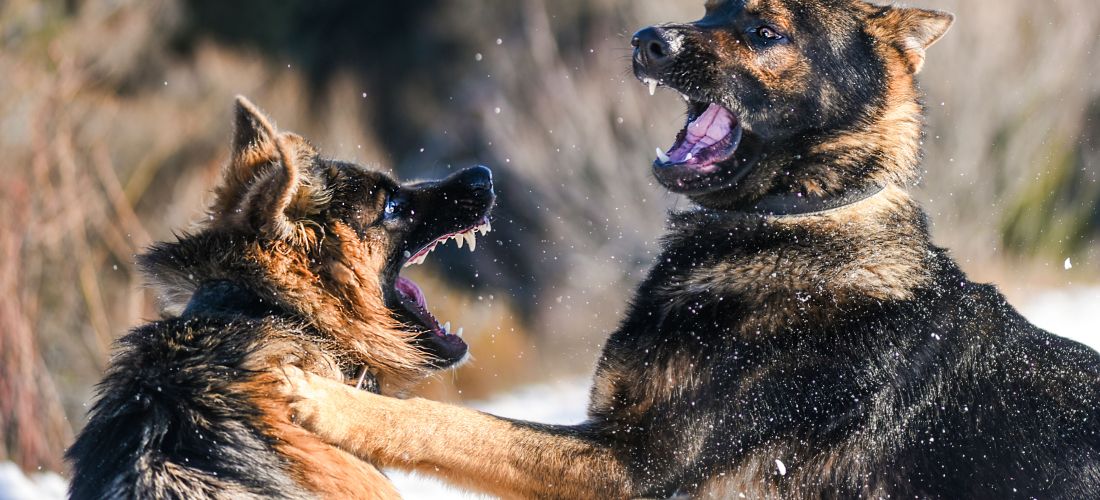
Dogs who are dog aggressive can be dog reactive but it doesn’t mean all dog reactive dogs are aggressive. Aggression is really the intention behind the behavior, whereas reactivity is the behavior itself, and therefore there is all kinds of intent behind reactivity.
What is Dog Aggression?
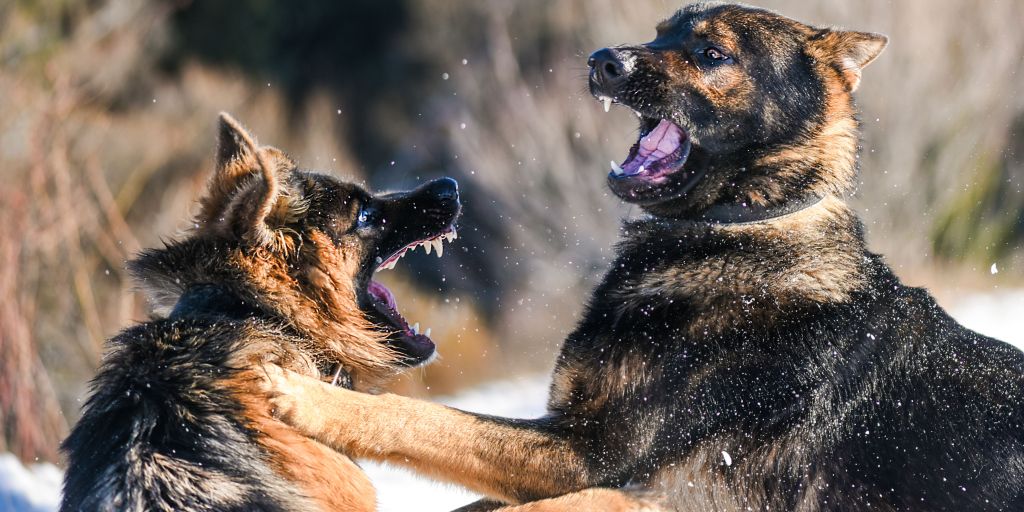
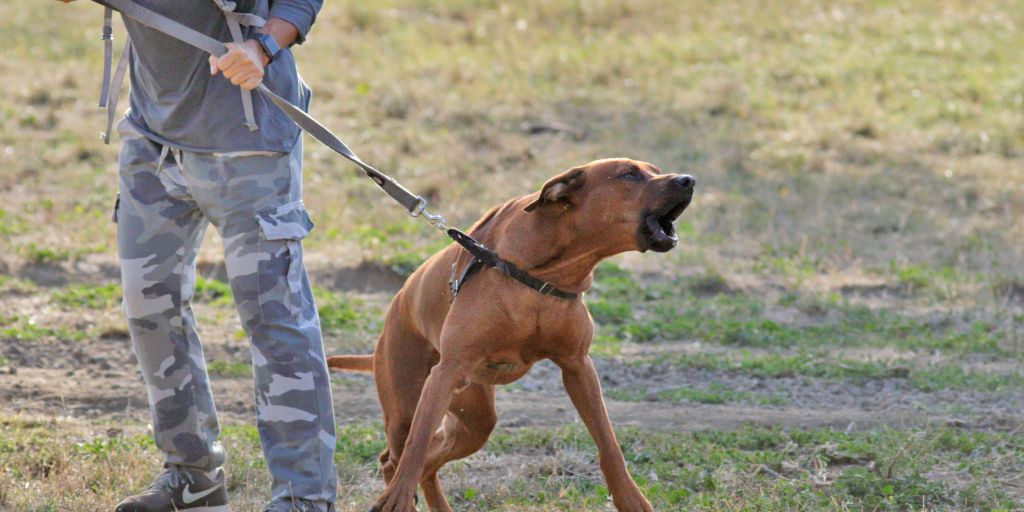
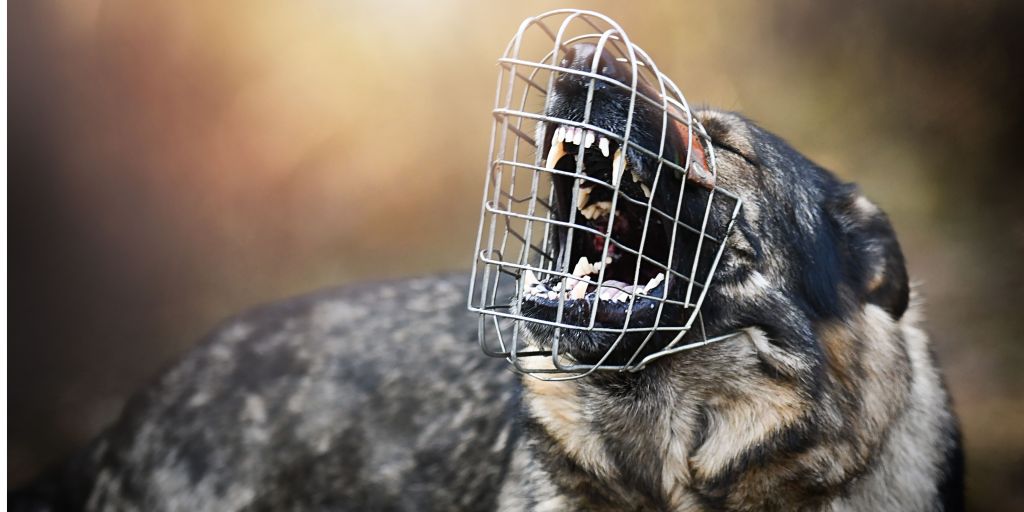
Dog aggression is when what fuels a dogs behavior is the desire to act aggressively. They want to attack another dog because they enjoy the act of attacking. Dogs who are acting aggressively will often bark, growl, snarl, lunge, hold their tails high and actually wag their tails. Something in their brain has been wired to enjoy the aggressive act. The chemical release in their brain is so rewarding when they bite, shake, tear etc that it encourages them to keep doing it. They just enjoy it.
One often missed signal is a dog wagging it’s tail when it reacts aggressively. People often think “he was wagging his tail, he wasn’t being aggressive” but the reason he was wagging his tail was because he was enjoying being aggressive.
It’s been my experience that most dog’s aren’t truly aggressive but instead fall somewhere under “reactive”.
What is Dog Reactivity?
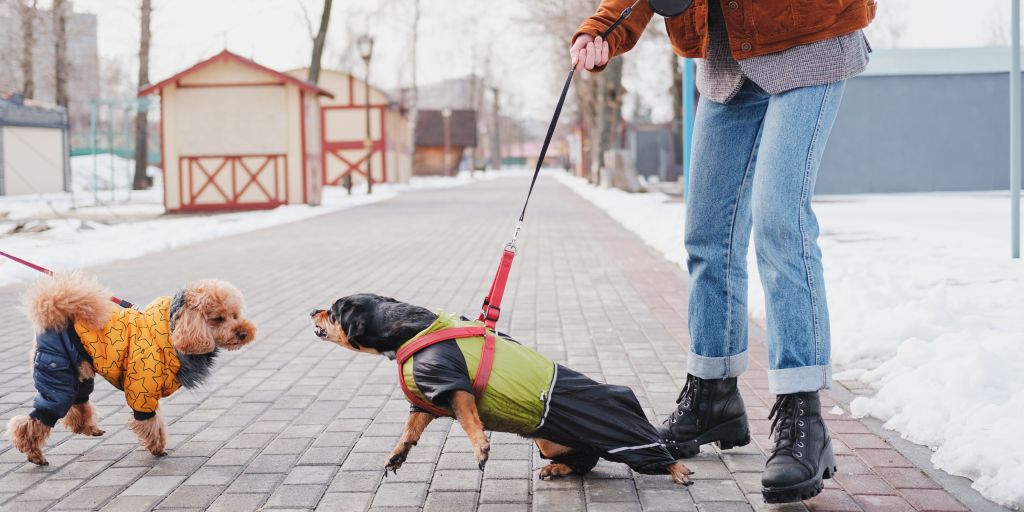
A reactive dog is one that doesn’t behave ideally when encountering other dogs, people, animals etc. A dog reactive dog will react in an undesirable way when it sees another dog. This behavior can widely vary from nervous behavior, i.e.; cowering, pulling away, rolling over, barking, and under pressure may result in a growl and eventually if pushed hard enough, a bite. There is a wide scale of dog reactivity and not all dogs will react the same.
Some reactive dogs just have no clue how to greet another dog. They get way too excited at the sight of another dog. They just want to get to them, they want to introduce themselves and become best friends. These are often the “my dog is friendly” types. The dog is friendly but way too exuberant. If on leash this can display in loud, obnoxious behavior, i.e.; jumping, barking, lunging, screeching/screaming, dragging the owner etc. When off leash these dogs bound up to everyone they meet, whether anyone else wants to meet them or not. They don’t take social cues from other dogs, they don’t seem to understand canine etiquette. They push their friendship on everyone.
Then there’s a whole myriad of dogs in between who may react in different ways when encountering another dog on a walk. Basically, any behavior other than walking calmly at their owners side is considered “reactive” behavior.
A Growl Doesn’t Always Mean Aggression
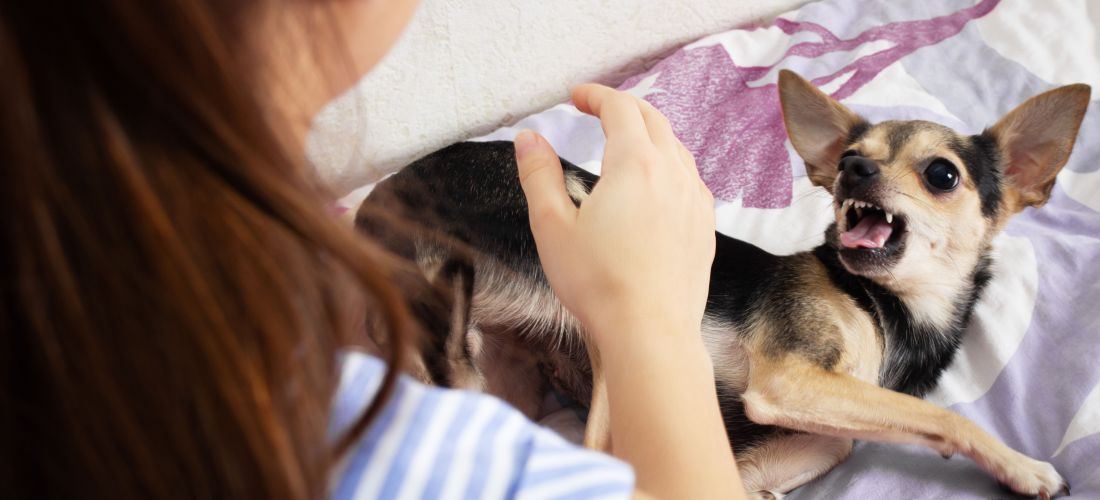
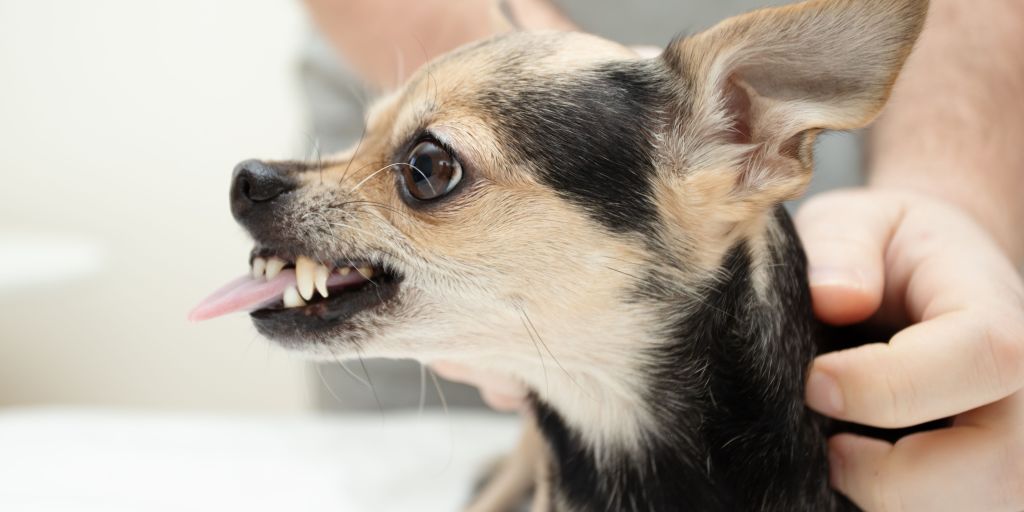
A dog’s growl is a form of communication. It doesn’t always equal aggression. In fact, really aggressive dogs don’t waste their time with a warning they just go straight to their aggressive behavior. A growl is just that; a warning. It is a way for dogs to communicate that they don’t like what someone else is doing. It’s their way of saying “I don’t like that, please stop”. A growl doesn’t indicate aggression. In fact, I think a growl is a very important tool.
If you punish your dog when they growl you are essentially teaching them that their voice doesn’t matter. You should never punish a growl. If a growl is punished enough, the dog will stop using it. They will go straight from feeling uncomfortable to biting. They will skip the warning because you’ve taught them their warning is bad. Any dog, if pushed enough, can react with a bite. Most of those dogs would rather give a warning growl firsts before resorting to a bite though.
Don’t punish a dog for growling. Instead, take it as the warning that is is, and respect your dogs wishes. Remove them (or the other dog, or whatever it may be that they growled at) and bring them back to a space (both physically and mentally) where they feel safe and secure again. Respect the growl because it’s the most respectful thing your dog can do when they’re feeling cornered, scared, or uneasy in any way.
How to Deal With Reactivity
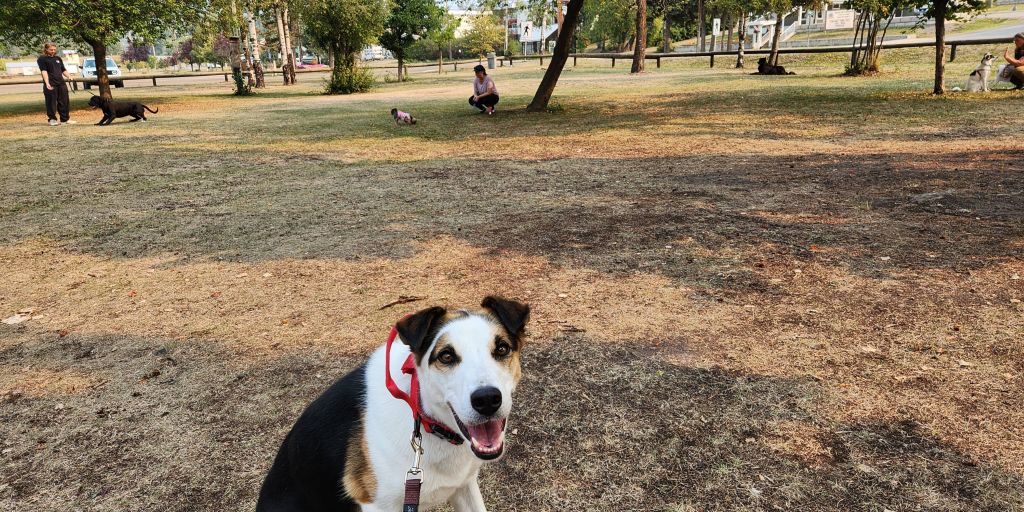
The best way to overcome your dogs reactivity is to slowly expose them to more and more to the things that they react to. You want to do it at a distance that allows your dog to be comfortable. They may show curiosity but they shouldn’t be barking, lunging, pulling etc. If they are reacting that means you need to put more distance between them and the stimuli (the dog they’re reacting to). Move to a distance they are comfortable with and then praise and refocus them with basic obedience training.
Our Pack in the Park exposure training is a great way to work with dogs that are reactive.


 Shara Walsh