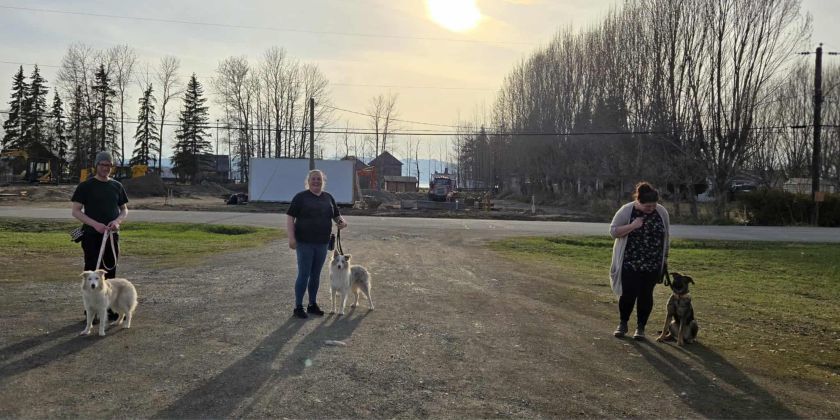
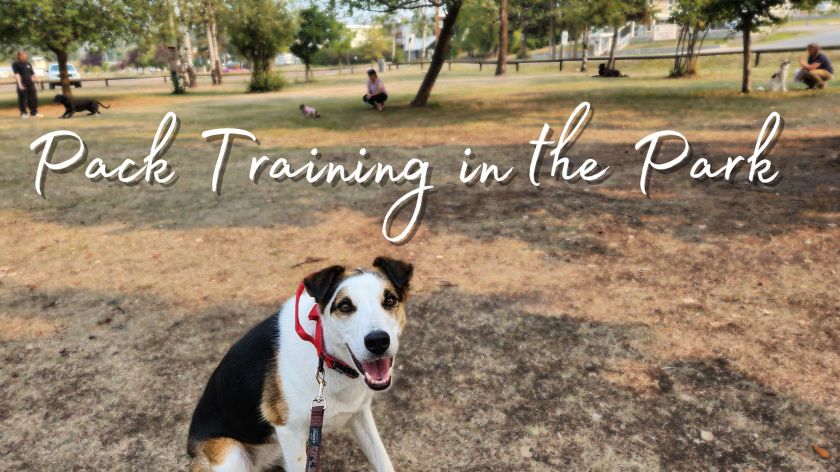
Well, October sure crept up on us quickly, didn’t it? I took the summer off from group classes and only did a couple 1:1 sessions. I spent most of my summer focusing on my kids, the house, my weekend job, and my weekly volunteer time doing Pack in the Park. Shannon helped me with hosting this summer and it’s been so great having her part of the Pack in the Park team! She hosts most Sundays at 11am (check the Fort St. James Dog Owners Facebook Group for current dates) and I spend those mornings happy at work knowing you’re in good hands with Shannon!
My weekly Pack in the Park date had to move around a bit with changes in my childcare, but currently they are held most Mondays at 11am (please note this is subject to cancellation due to poor weather).
I’ve been slowly editing my Dog Guides (I have yet to come up with a better name for them than this) and have early released a mini guide titled “Dogs and Children“. This mini guide is a portion of Guide 1: Safety, Bylaws and Care. Safety between dogs and kids is important to me, which is why I created such an in-depth section about them in Guide 1. As part of this mini guide’s early release in my shop, I’ve been posting some facts and information about dog and children safety on my Facebook Page.
Bite prevention is so important to me that I added Bite Prevention Educator to my list of certificates and this spring April and I brought the Be a Tree program (with FSJDT flair) Girl Guides and Nak’albun Elementary kindergarten students. We are reopening these presentations for the new school year! Educators and program directors can get in touch to book a presentation with us. I am currently seeking sponsorship for this program, so if your company is interested or you know of a company that may be interested in sponsoring this type of program please do get in touch.
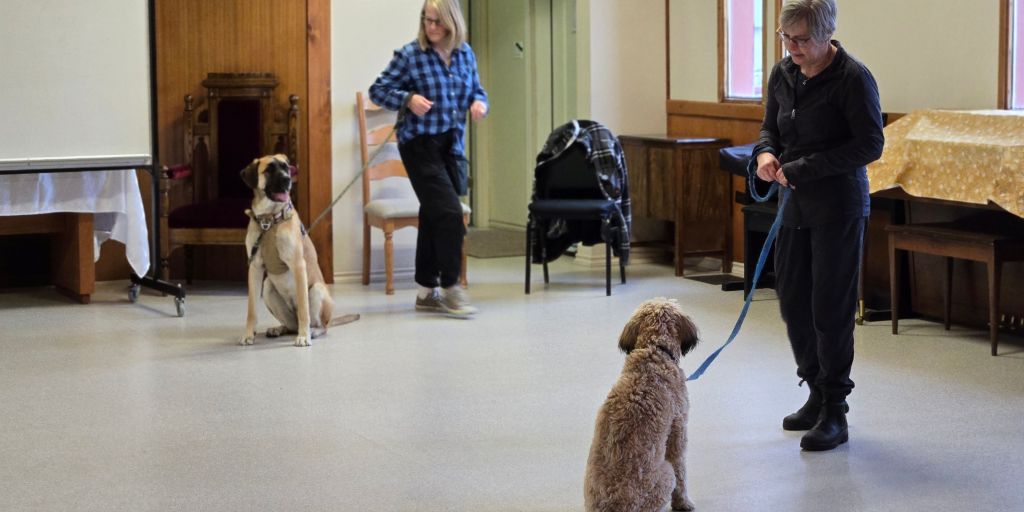
I decided to run another Basic Obedience workshop this fall, to test the waters on how receptive they would be for this time of year. It was a struggle and I still did not manage to fill the class 100% and offered drop-in. There were no drop-ins during this time, just one person who signed up late. This class was both fun and challenging with mostly puppies/young dogs with a bit of reactivity.
I’ve had a lot of interest in these group classes but unfortunately, not enough commitment. Due to this fact, I will not be offering group classes again until next year. Winter is a busy time for us with our kids, we have two birthdays and Christmas all one after the other, so I’d like to take the next couple of months to focus on those special events and make memories with my family.
I am always available for over-the-phone or email consultation. If you need help with your dog this winter while I am not offering 1:1 or group classes, then a consultation is the next best option.
Spring time came and hit so fast I feel like I could blink and miss it. My April was incredibly busy; between my daughters year-end dance performance, group classes and one-on-one training sessions my month was jam-packed. I was able to put on two training classes for April and have two more for May. My busy schedule was also due thanks to my husband being home for breakup. This has helped me open my schedule for a lot more dog training.
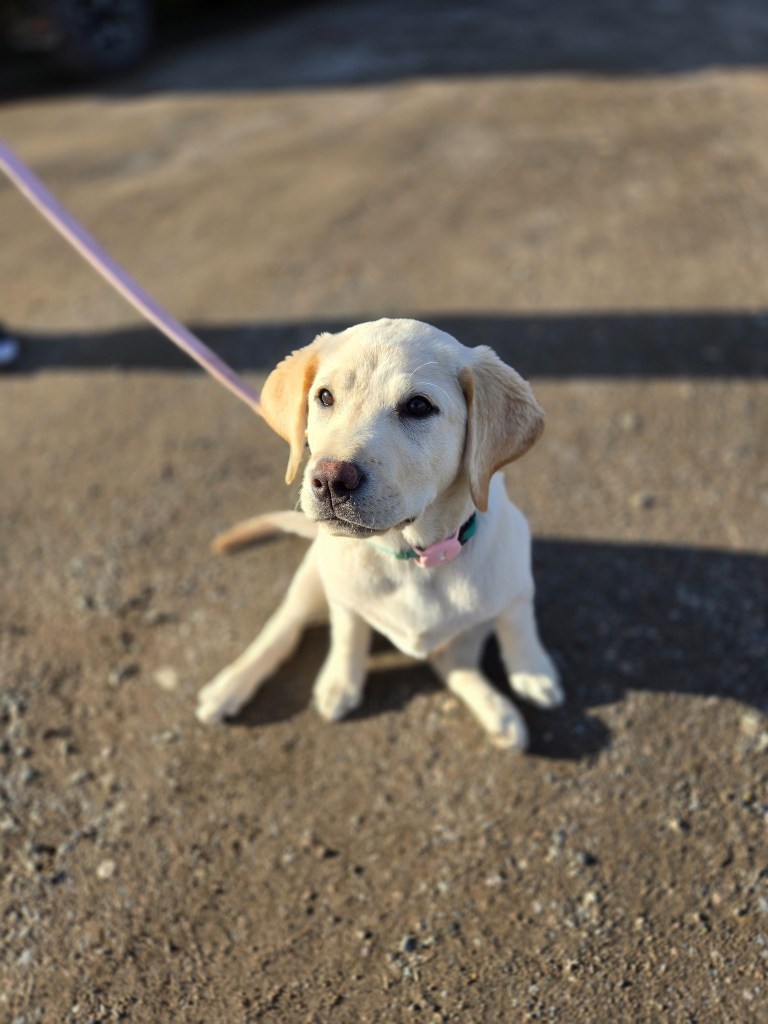
With spring time always comes “puppy season”. I had a few puppies for 1:1 sessions and those are always a blast. I absolutely love training puppies; so if you acquired yourself a puppy this spring and would like to know how to get the best start on training send me a message!
One puppy came to me for trick training, to help them reach their goal of earning their Novice Trick Dog title through Do More With Your Dog. I absolutely love trick training, and this is a personal goal of mine for my own dog.
Myself and some fellow dog enthusiasts are mulling over the idea of putting together a trick training club. If this is something that sounds up your alley, let me know! The more people we have interested in it, the more likely we will do it.
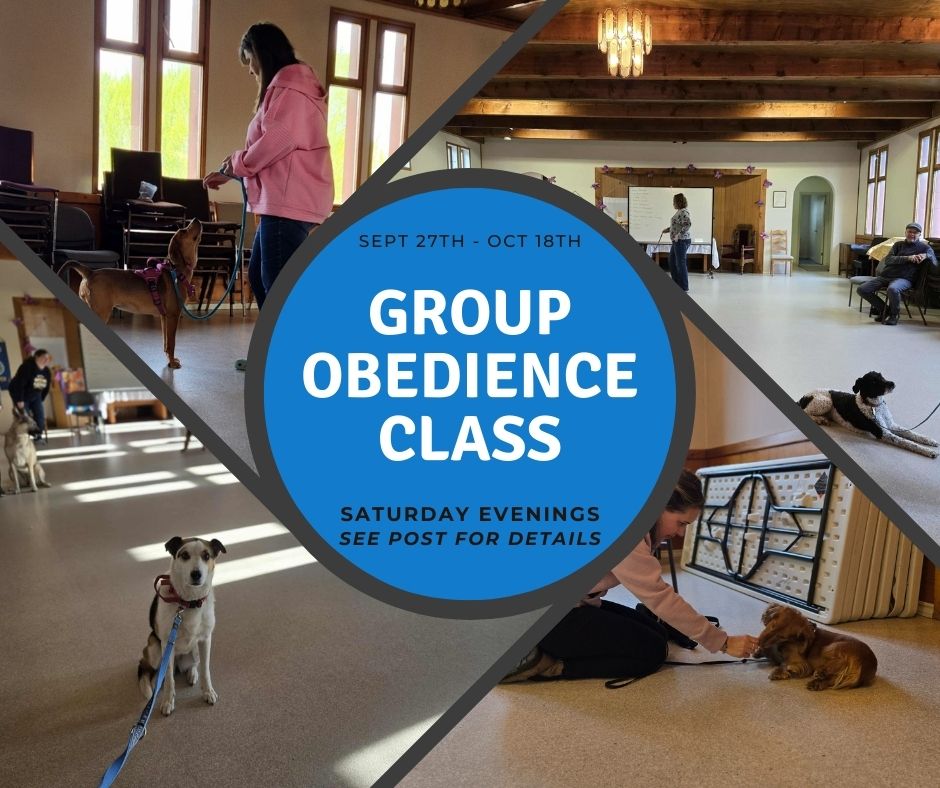
Registration for my next class has ended, but you can READ HERE more information and to add yourself to the wait list for the next class.
Running group obedience classes was always the goal but one that took me a while to check off my list. It took me a while to have the confidence to run a class, and it only came after my experience with running Pack in the Park.
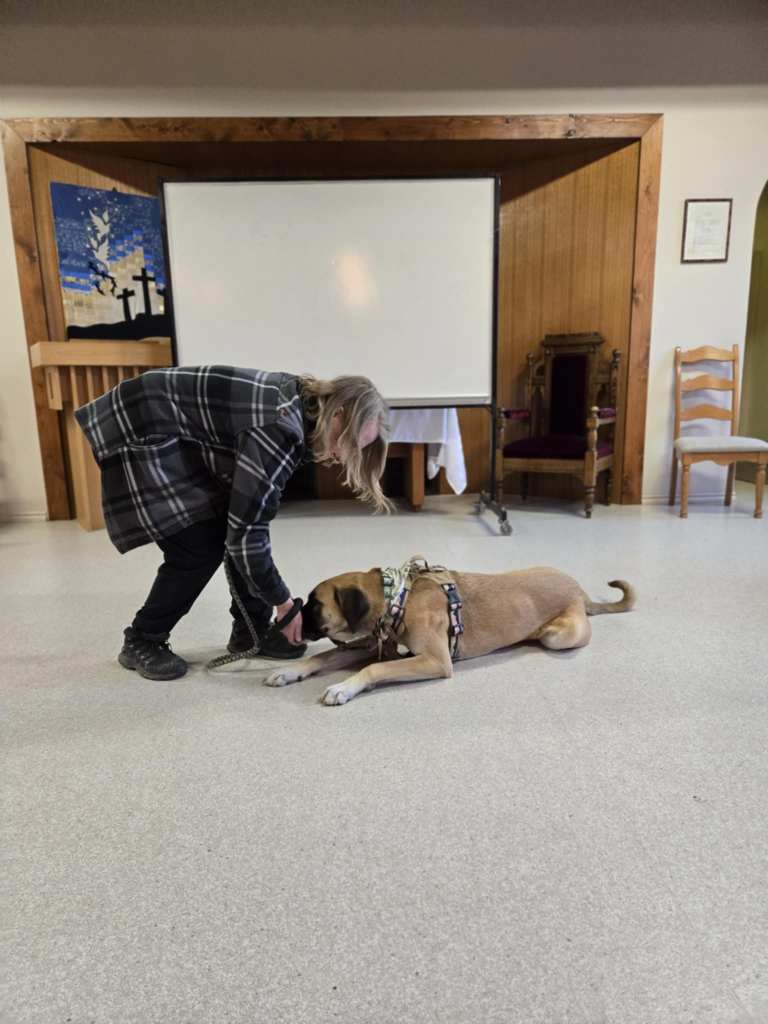
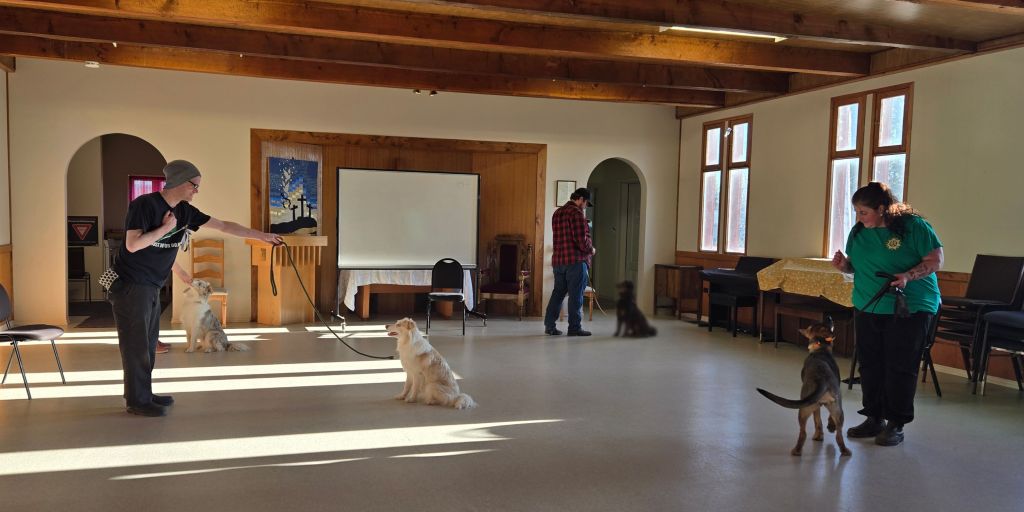
Last spring I approached the United Church about using the space for group classes. I remember there being group obedience classes there that I took my puppy to when I was about 15. I remember at the time thinking “wow, I want to do this. I want to run a class like this”, so to think back on that and realize that I not only have reached that goal I set so long ago but I’m doing it in the same space where I first set the goal is really quite bittersweet. However, last spring my group class turned into a 1:1 when I only had one person sign up for it. This made me a bit hesitant to put on classes again, but I gave it a shot and was blown away at the response I received. Not only could I put on one but TWO classes with an additional 2 more the following month. I’m not really sure what the difference between last spring and this spring is, but I’ll take it. I’m just happy to see so many people training their dogs!
Group 1 was my “Girlies”. This was a class full of women and their female dogs. It had a great vibe, despite two reactive dogs in the class, and everyone has progressed and learned so much in those 4 weeks. We have our last class tonight and then that is a wrap on Group 1.
Group 2 was a bit more challenging with many dogs and owners at varying levels. We had some owners who just needed the added level of distraction for their dogs to work in and we had others who were puppies just learning with their first-time puppy owners. This made for an interesting dynamic in class. Everyone learned in different ways and rates but everyone kept up with the same curriculum. Group 2 graduated first, as Group 1 had the Easter holiday push their classes back by a week.
As I prepare for Groups 3 and 4 I am using everything I learned from teaching Groups 1 and 2 to make the class even better. I plan to always revise it in this way, ever fine-tuning it to be more efficient and effective.
The most important thing to me is creating and supporting a safe, relaxed environment that is easy to learn in. I will keep offering this class as long as there are people who want to take it.
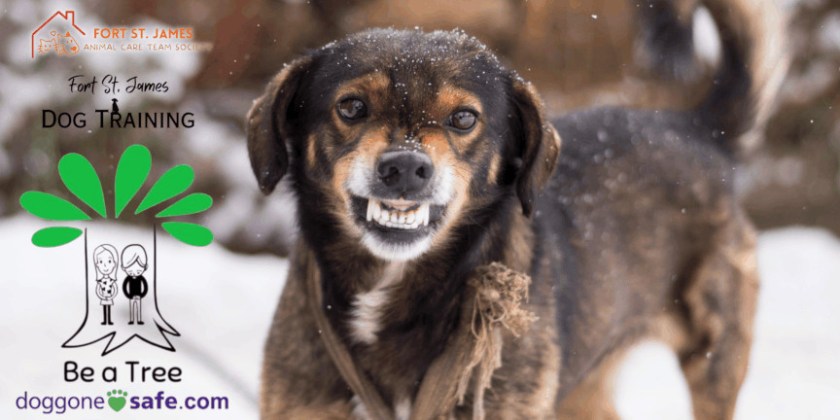
This month Fort St. James Dog Training, sponsored by the Fort St. James Animal Care Team Society (FSJ ACTS), is bringing the Be A Tree dog bite prevention program to the community’s children. We are starting with our local Girl Guides. Myself along with volunteer April Dimond will be presenting the Be a Tree information, along with some added tweaks to make the program better to understand and remember for children of a variety of ages. This program helps teach children what to do when encountering a strange dog and what types of behavior/body language they can observe and interpret to help them understand whether a dog is safe to pet or not. This information is vital for preventing dog bites in children.
This is a goal I’ve been working towards for a long time. I’m very thankful for FSJ ACTS part in helping me achieve this goal. I’m also incredibly thankful to April, for her insight into teaching children has been absolutely vital, and I’m very grateful for all the hands-on work she’s done to help me bring this program together.
Next Pack in the Park Date: May 7, 2025 Time: 11:00am Location: Goodwin Park
Pack in the Park is a FREE event for all dog owners of all skill-levels to attend. It is great for reactive dogs to learn to work within their comfort zone (you may need to add more space between your dog and others until you reach that comfort zone). This is an owner-lead event; which means you plan the type of training you would like to do with your dog. This is NOT an obedience class.
Be aware: there are dogs behind fences that bark and sometimes there are loose dogs that wander by this park. If your dog is not ready for that level of distraction then you may want to work in a quieter environment still until your dog is ready.
Rules: 1. All dogs must be on leash (NO retractable leashes) 2. Dogs must NOT meet face-to-face; this is not a play date 3. All owners must pick up after their dogs! This is a public park and if we wish to continue to bring our dogs to public spaces we must be respectful.
I’ve decided to make my three-part article about dogs and children available for free. This subject is near and dear to my heart as well as just being extremely important information. Most dog bites to children happen to the face and can be traumatizing, disfiguring or even fatal. If both dogs and children are taught from a young age how to safely and respectfully interact they can build a beautiful friendship together.
I felt like my Dogs and Children articles overlooked (or in the very least, skimmed) over a couple of very important aspects when thinking of dogs and children. Part four is my way of expanding on those aspects. If you haven’t yet, please go back and read parts one, two and three of my Dogs and Children articles to fully understand the unique yet wonderful relationship kids and dogs have.
If you’d like to see more articles about dog body language and behavior, let me know!
Always Ask Permission
One of the most important things we can teach our children about interacting with strange dogs is to always ask permission before petting them. Since we don’t know the disposition of life experiences of every dog we encounter, it’s important to err on the side of caution when introducing yourself or your child to a new dog. Always ask the owners if you can pet their dog and respect whatever their answer is. Every dog is not put on this world for us to pet (as much as we’d like them to be) and if a dog is not comfortable with being pet or an owner does not want them being pet (for whatever reason) then it’s important to respect that. Petting a dog who doesn’t want to be pet can cause lasting trauma to that dog. For all you know that dog is getting over a traumatic experience involving a persons hands and your movement towards their head just set them back by weeks. Maybe the owner is training their dog to be a service dog and you petting them is distracting from their very important job. Maybe neither dog or person likes interacting with strangers and you know what, that’s okay. How other people feel and think about you is none of your business. Just accept their response and move on with your day.
Be Mindful of HOW the Dog is Pet
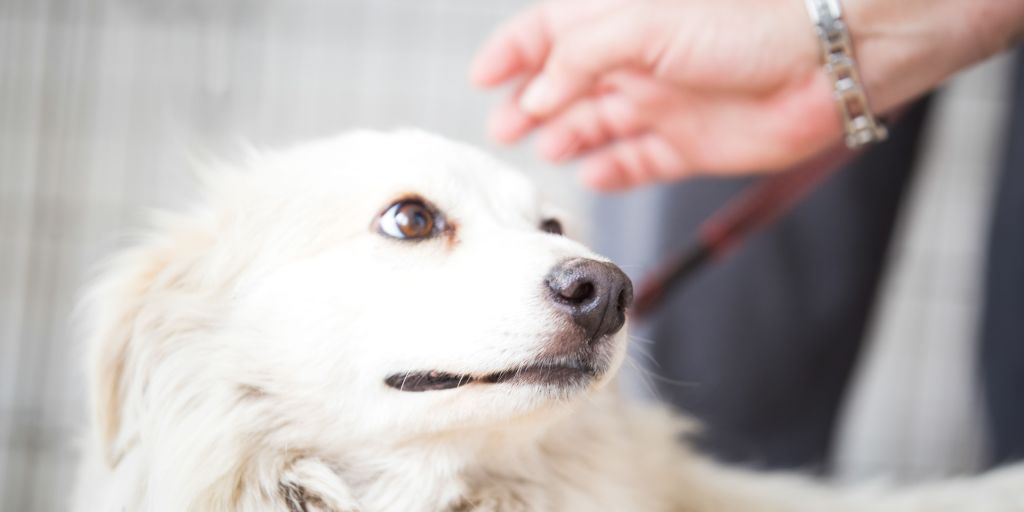
When petting a dog, especially a strange dog that you don’t know, it’s important to remember not to reach over top of the dogs head when you pet them. Not all dogs like being touched on the head, and even dogs that do, don’t usually appreciate strangers reaching over top of their head. This is a threatening move to most dogs and can be especially threatening to a nervous or unsure dog.
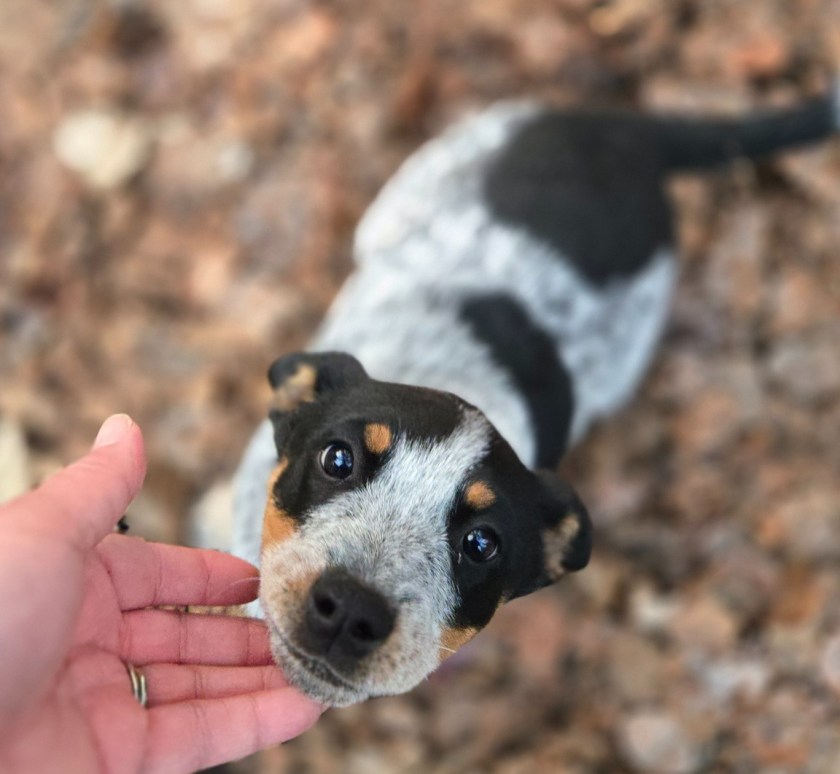
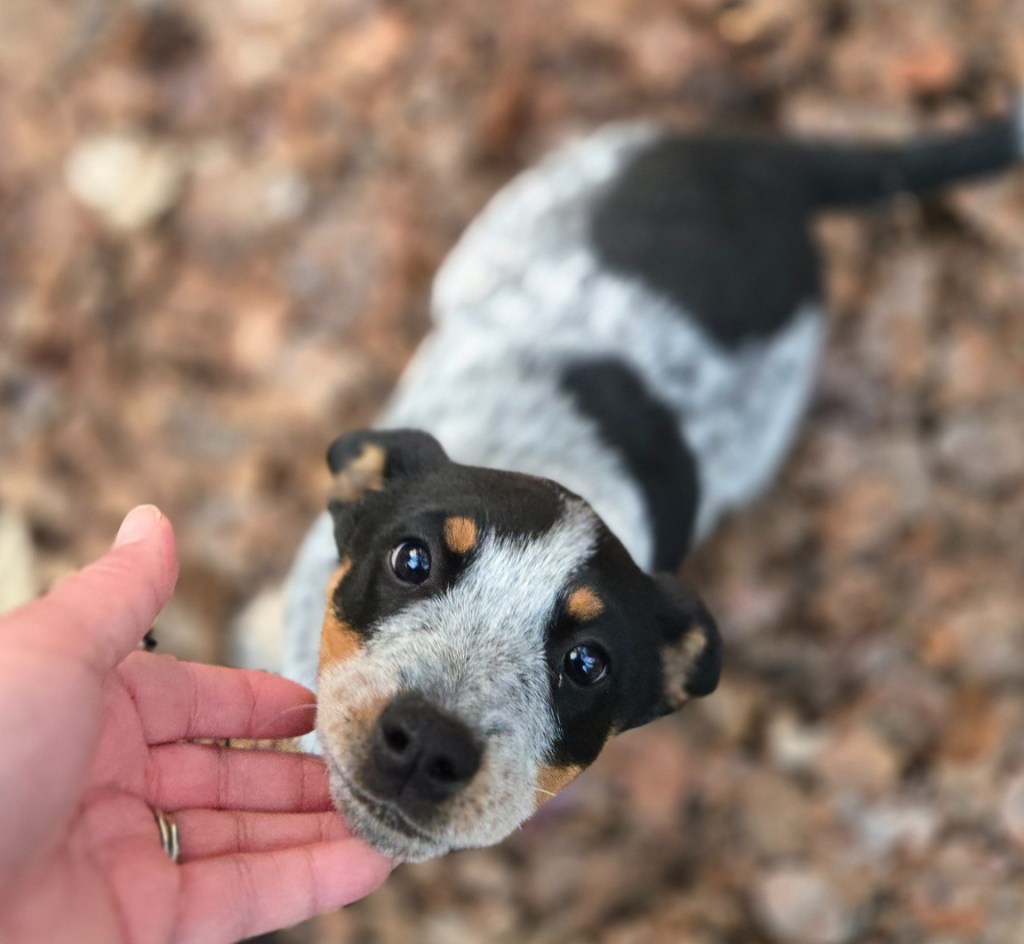
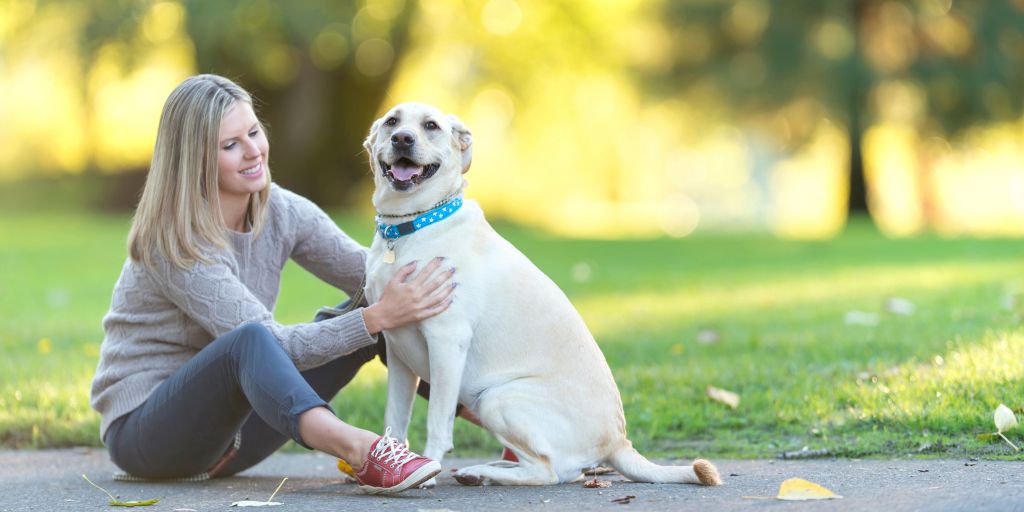
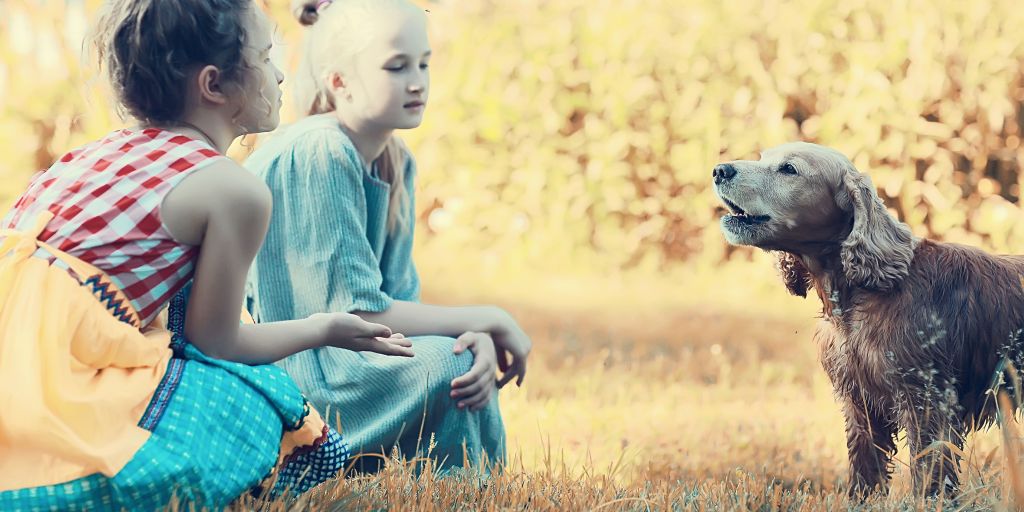
Instead, reach your hand out calmly for the dog to first sniff. Don’t bring your hand all the way to the dog, hold it out in front of you and allow the dog to come to you to sniff. Once the dog has sniffed you and seems okay with your presence then reach forward to pet their chest and shoulders. Pet slowly and calmly, don’t aggressively pat or scruff up a dog you don’t know. That kind of interaction is best saved for dogs who know you and enjoy that type of touch.
Teach your children this is the proper way to greet a strange dog. Kids tend to get bit in the face because it’s at the right height for a dog to snap at. A kid who reaches over a dogs head to pet them is a kid opening their face up to being bit if the dog is uncomfortable with being pet that way.
Understand Dog Body Language
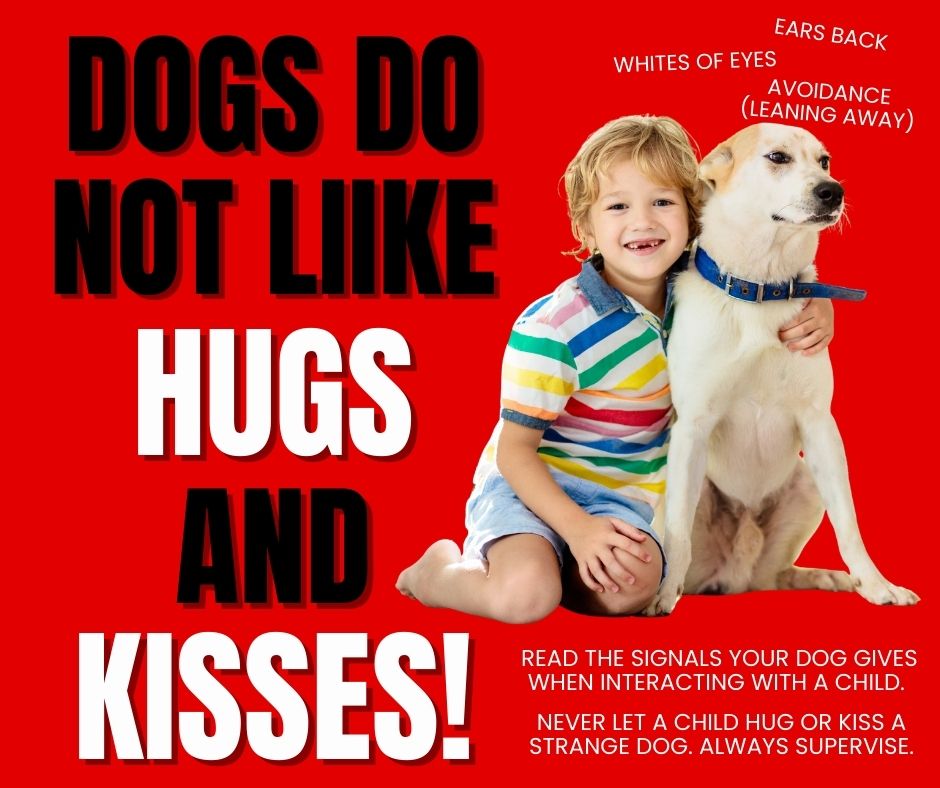
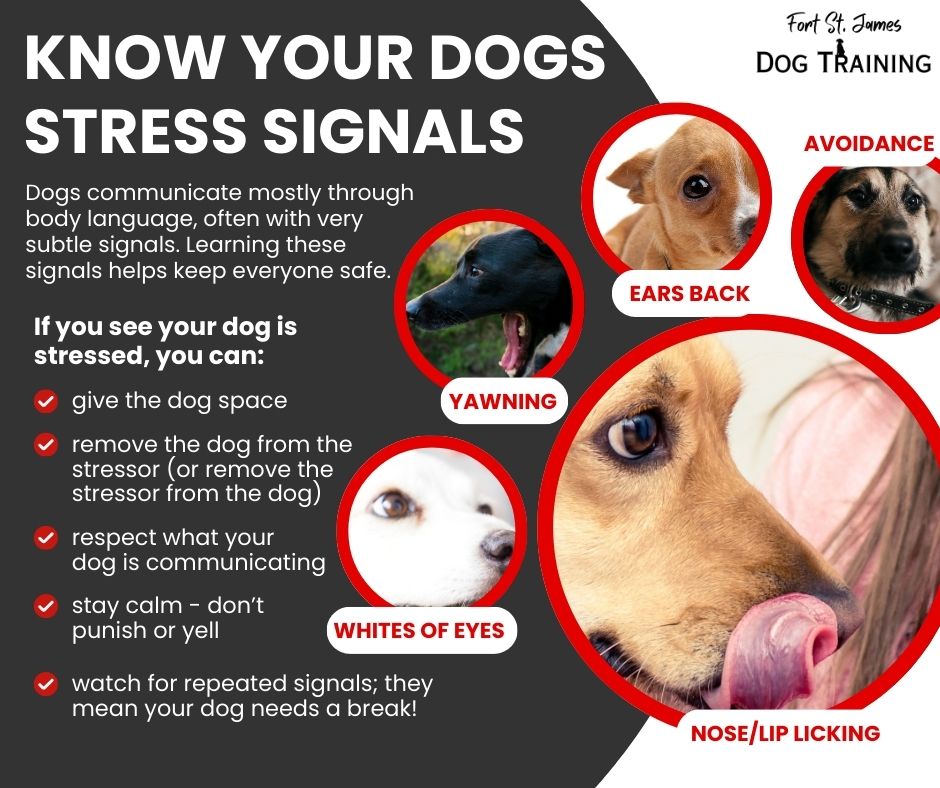
Whether interacting with a strange dog or a family pet, it’s important to understand dog body language so that you can pick up on the subtle cues your dog is giving you before they become not-so-subtle. Dogs speak volumes with very little so you need to learn these cues and be very keen to watch for them. If your child is old enough, teach them about these cues as well.
If a dog is feeling nervous or unsure then it’s important to back off. There are some important canine body language cues you should know how to recognize and respond to.
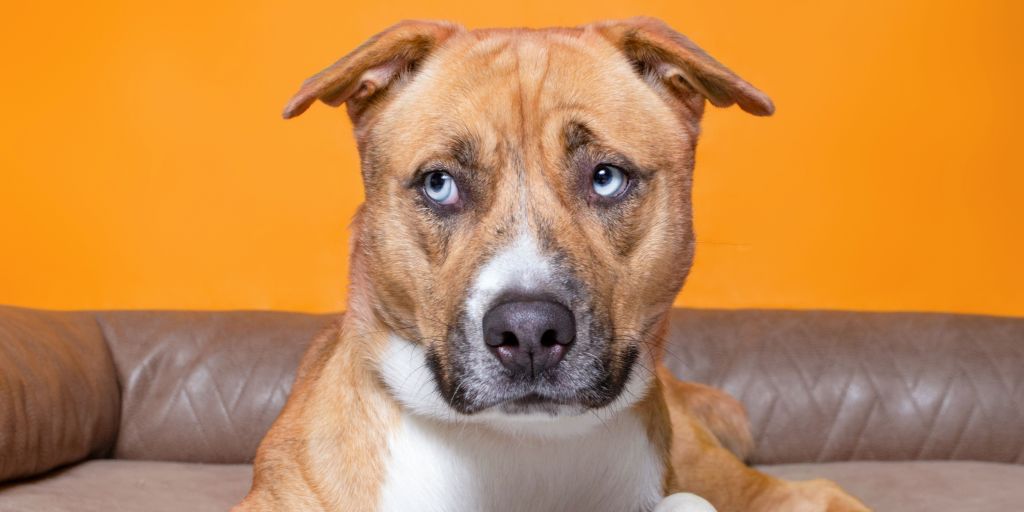
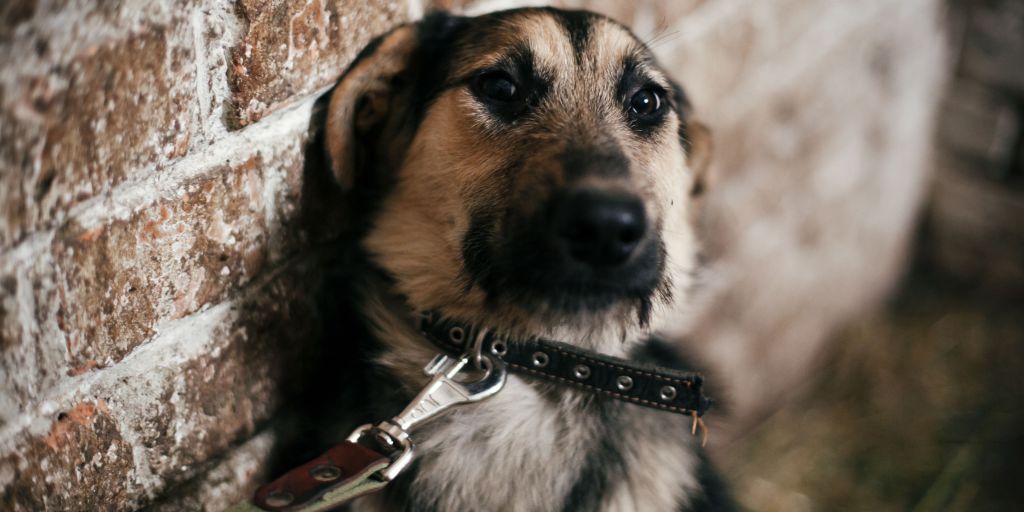
WHALE EYE
It is known as “whale eye” when you can see the whites of a dogs eye. They will be turning their eyes and the white in the corner of the eye will be visible. This is a nervous dog.
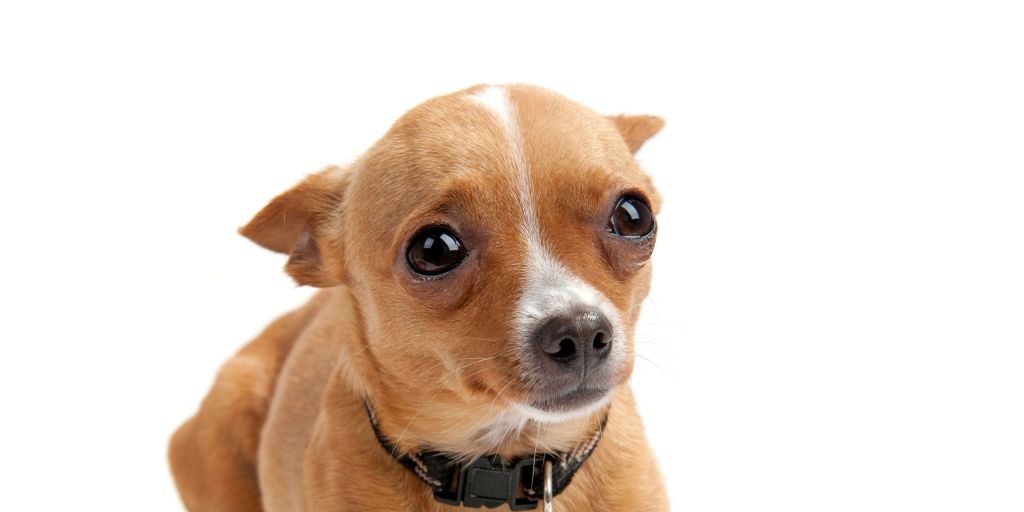
EARS BACK
If a dog has it’s ears pinned back it usually means they are not happy about something, or may be feeling nervous or uncomfortable. When a dog is relaxed or happy their ears tend to sit up or forward (depending on the way the type of ears).
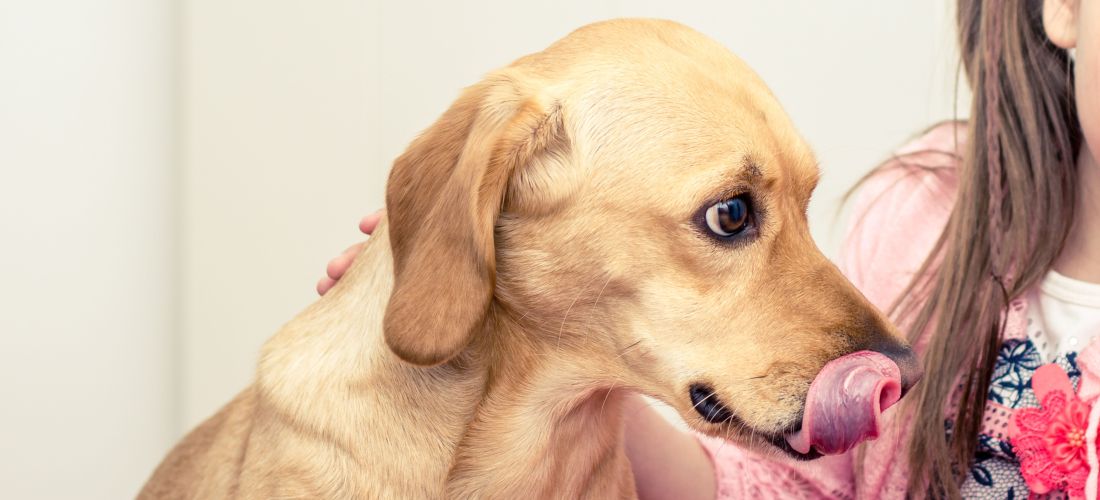
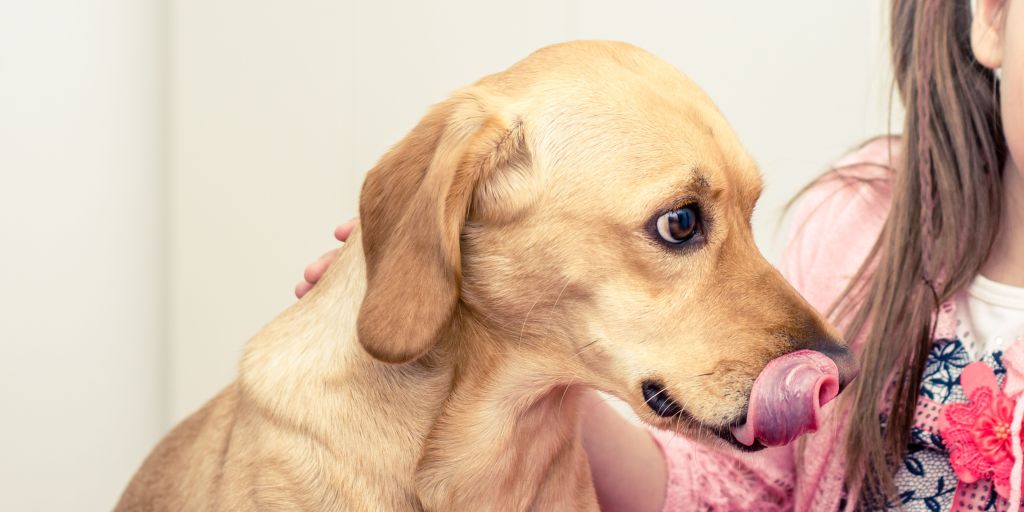
LIP LICKING
Nervous dogs will often lick their lips repeatedly. Lip licking is a major indicator that a dog could potentially bite.
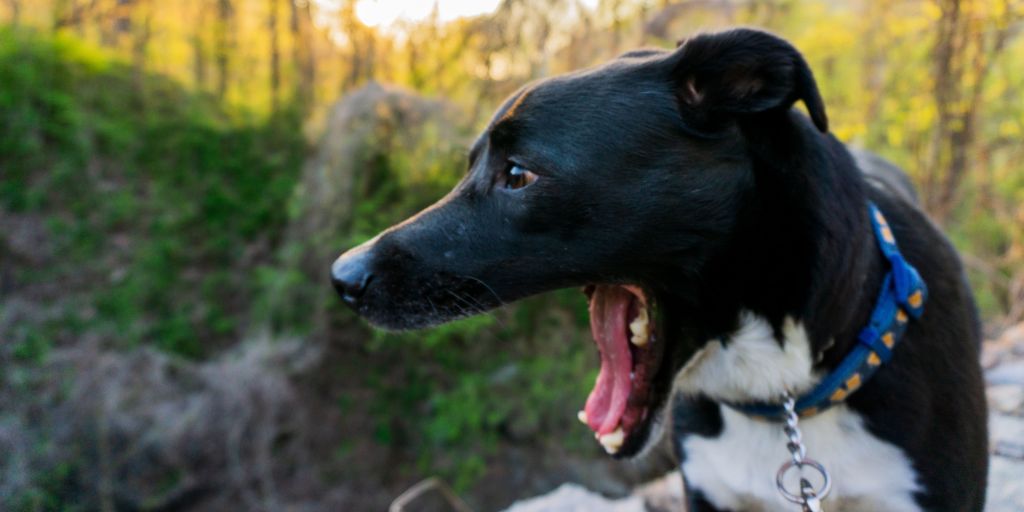
YAWNING
Dogs don’t always just yawn when they’re tired. When accompanied with other nervous behavior signs (often paired with lip licking) it is an indication that a dog is unsure and nervous.
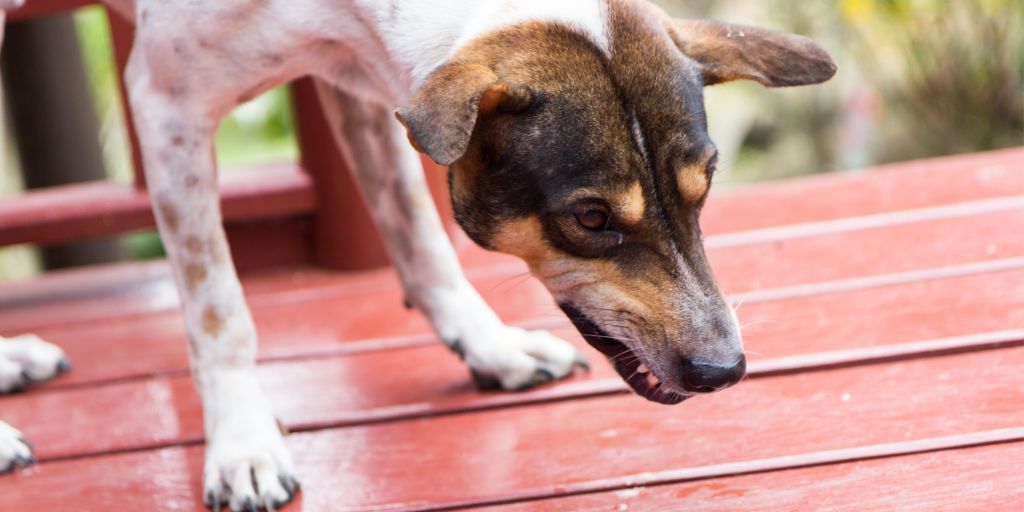
AVOIDANCE
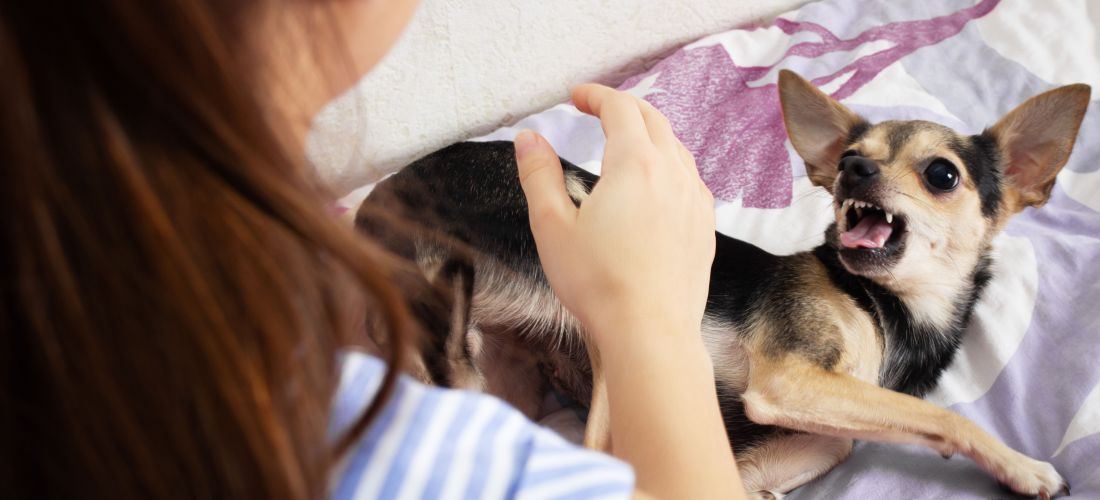
When a dog shows avoidance behavior they are trying to physically remove themselves from the situation that is making them uncomfortable. If they’re on a leash or in an enclosed space they will not be able to avoid very far. Flight or Fight is the instinct in all mammals to either stay and fight or run away from a threat. If the option to run away is removed (whether in an enclosed space or on a leash) the animal will most likely resort to fighting. This is when bites happen. As soon as you see a dog avoiding something by moving their head away, shrinking back, moving their body back, getting low, trying to escape, then you need to remove that pressure that is scaring them. Whether that’s you, a child, or something else. If the pressure is not removed and there is no option to flee the dog will likely resort to a bite.
GROWLING
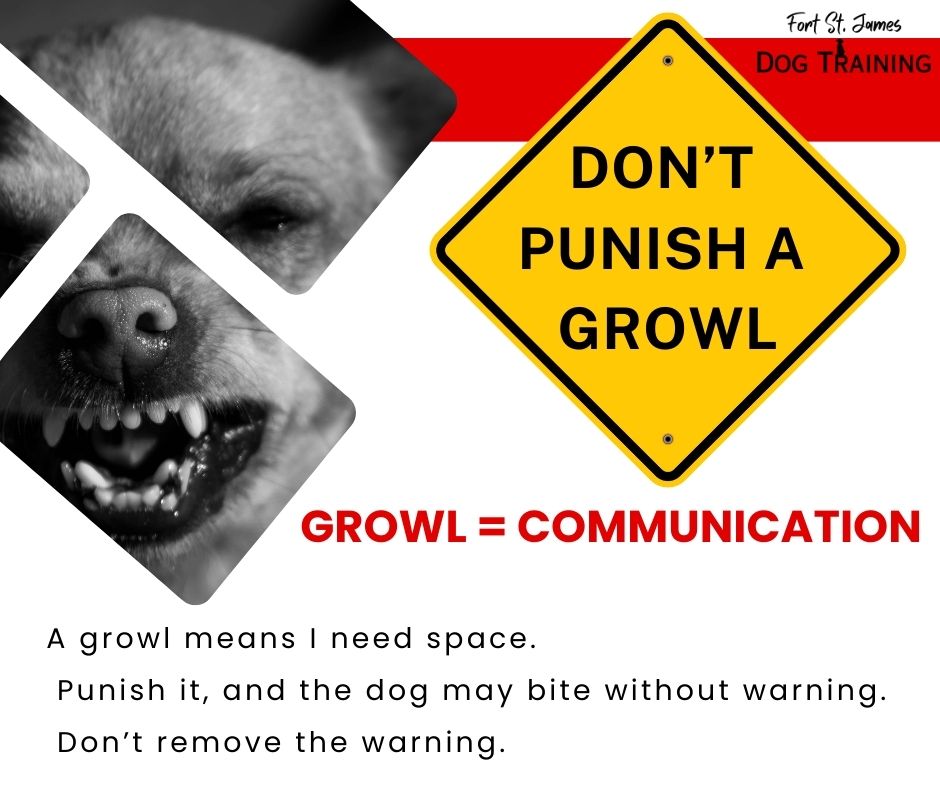
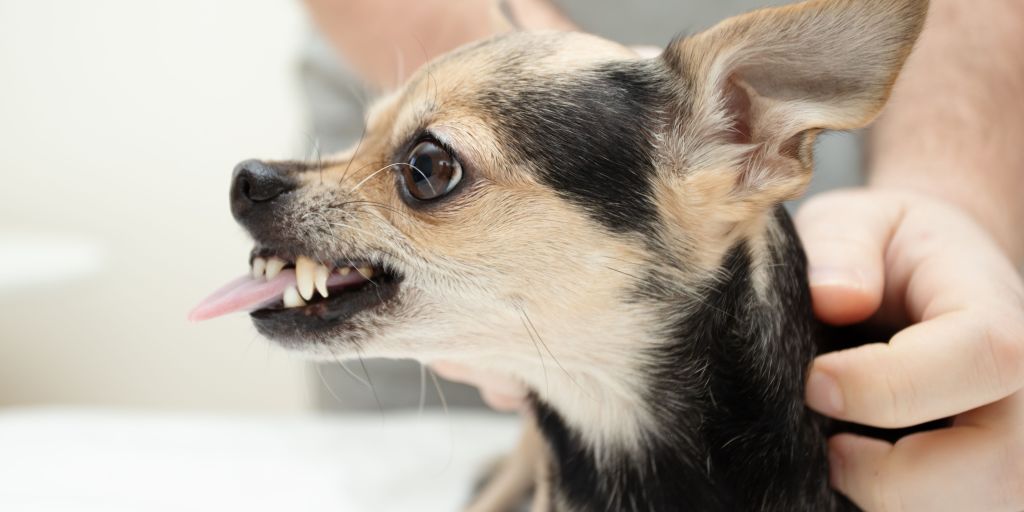
Just like the rest of these behaviors listed above, growling should be viewed as a communication tool for your dog. It’s a way for the dog to communicate that something is happening that they don’t like. It’s a warning that a bite may soon follow. It’s really important to never punish a growl. If you punish a growl you may end up removing the growl completely and then you’re left with a dog who bites without a warning.
How to Handle These Behaviors
Teach your children about these cues from dogs that mean they’ve had enough attention. Teach your child that as soon as they see these cues it’s time to stop interacting with the dog and give them space.
If it is your dog exhibiting these behaviors when interacting with children (or really, anyone) then consider it a big red flag that your dog needs some work. Consult a dog behaviorist or dog trainer who understands dog behavior. Your dog may need some work in exposure training (in a controlled setting). Don’t leave them alone with children and supervise all interactions. Watch for the above signs that your dog is uncomfortable and give them more space if they need it.
I’ve decided to make my three-part article about dogs and children available for free. This subject is near and dear to my heart as well as just being extremely important information. Most dog bites to children happen to the face and can be traumatizing, disfiguring or even fatal. If both dogs and children are taught from a young age how to safely and respectfully interact they can build a beautiful friendship together.
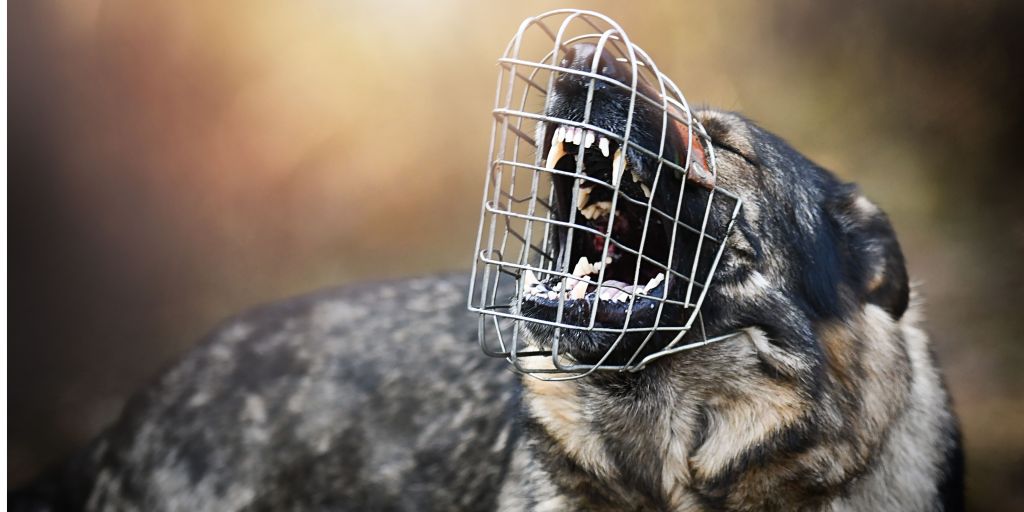
The goal of rehabilitating a dog who shows aggression towards children is to have a dog under control while around children. The goal shouldn’t be a dog who will be best friends with a child as this is a dangerous and unrealistic expectation. This is accomplished by exposing the dog to the child in a comfortable setting and at a distance where the dog is showing no signs of fear. The utmost importance is the child’s safety. Never attempt this type of training without consulting a dog trainer or animal behaviorist. Never attempt this type of training without the permission of the child’s caregivers. The dog must be on leash and if necessary muzzled at all times.
These methods work for rehabilitating a dog around any person or animal. For the sake of this section, I will be focusing on children.
Obedience command must be well-trained
You will have no luck getting your dog under control if you don’t first train them basic obedience commands. Every dog should, at the very least, know to sit, down, stay, heel and recall (come). Also known as ‘the five basic commands” (Guide 5: Dog Training: 5 Basic Commands). You will first need to train these commands without distractions and then gradually build distractions until you can comfortably handle your dog in public. Once your dog is well-trained then you can begin exposure therapy.
Exposure therapy/desensitization
The goal is to associate the child with something positive using classical conditioning techniques. For more information about Classical Conditioning, read Guide 2: Intro to Learning Theory. The dog’s experience that they associate with the child must be a positive, relaxed experience. More stress and pushing the dog past their comfort level will result in more trauma, fear and aggression.
To influence the dog to associate something positive with a child you’ll be using the dog’s favorite treats whenever the child is around. You may have to start from quiet a distance to begin. Always start where the dog feels comfortable. Treat and reward, work on basic commands and focus commands (Guide 5: Dog Training: Watch Me).
Keeping the child safe is the primary concern
Of course the safety of the child is the most important thing. Small children should be held by a guardian or sit in their lap. Older children should understand and have the self-control to not approach, touch or talk to the dog. The dog should be on leash at all times and if necessary, muzzled. How do you know if your dog should be muzzled? If they’ve bitten or tried to bite anyone before then they should be muzzled during desensitization. Before you muzzle your dog make sure you first condition them to wear it (Guide 3: Training Tools: Muzzle).
Once an incident occurs you can never assume the dog will be safe around any child
Referring back to the above point; the child’s safety is the primary concern. You simply can NOT trust your dog around any child ever again. You can train your dog to be calm, to behave himself and tolerate the presence of children but you will never be able to fully trust your dog to never bite a child if put in an uncomfortable situation. You will always need to rely on your leash, training, and barriers when necessary to keep the children in your life safe from a traumatizing experience and your dog safe from a dangerous dog record or worse; euthanasia.
Don’t Punish a Growl
Something quite often misunderstood and mismanaged in any “dog aggression” type scenario is the growl. A growl is an important communication tool for a dog. It’s a way for them to communicate that they’re uncomfortable with something. If you punish the growl you will remove the growl which means no warning system in place and a bite will likely occur with zero warning from your dog. Never punish the growl. Instead; respect the growl for what it is; your dog’s communication. Interpret it to mean you need to give your dog more space and time for desensitization.
I’ve decided to make my three-part article about dogs and children available for free. This subject is near and dear to my heart as well as just being extremely important information. Most dog bites to children happen to the face and can be traumatizing, disfiguring or even fatal. If both dogs and children are taught from a young age how to safely and respectfully interact they can build a beautiful friendship together.
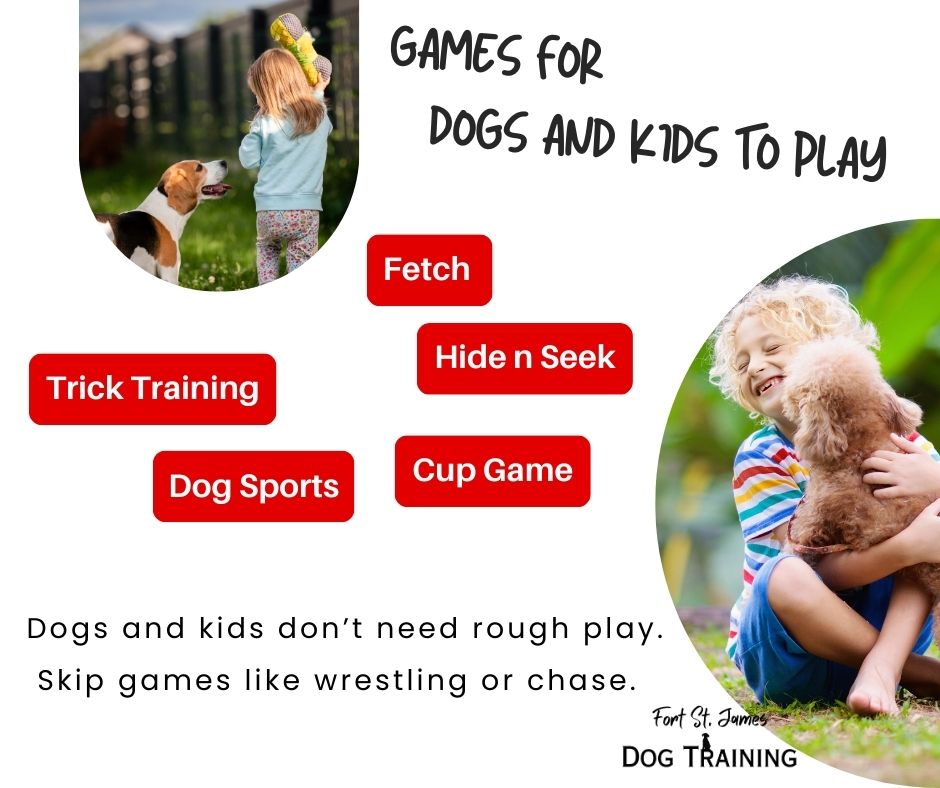
You want to make sure that the games your child and dog play together are respectful and not too rough for either participant. Puppies and very small children will struggle the most with this so I advise waiting until everyone is old enough and have enough self control to safely interact with each other during times of heightened emotions (during play).
ALL GAMES PLAYED BETWEEN YOUNG CHILDREN AND DOGS SHOULD BE SUPERVISED.
Of course, anyone can play these games with the family dog!
Hide and Seek
Hide and seek is a really fun game to play because it teaches your dog to find your child, which is an impressive trick and you never know if it may one day be an important skill for your dog to have.
Give your child some treats and tell them to go hide while you hold the dog. Not too hard of a hiding spot, somewhere low enough that the dog can find them and see them once close enough. Not in a cupboard, but maybe behind a door (open enough it’s easy for the dog).
Once your child is hiding and ready, tell your dog “go find __(child’s name)___”. Go with your dog while they search for the child. If your dog seems to lose interest or is unsure of what to do, have your child call out the dog’s name once. This should renew their interest in the game. If you need to help your dog find your child, that’s okay, they’re just learning what the rules of the game are. Once found, have your child give the dog the treats and lots of love and praise, once they find them. If your dog seems to really be struggling to understand the game, have your child leave a trail of treats or kibble.
As they get better at the game you will have to be involved less. Eventually it’s a game they will be able to play on their own.
You can add in your dog hiding, but it’s a lot harder to teach. You will need to be involved to help your dog go find a hiding spot and then tell them to stay until your child finds them. It’s a lot of fun and adds a great challenge to the Stay command.
Chase
Chase isn’t a game I recommend for small children or most dogs who will get over excited. Dogs with a calm disposition (and likewise for children) will be able to enjoy this game. If you have a mouthy dog, have them hold a toy during the chase game. This game is not recommended for exuberant/ excitable dogs.
Tug o’ War
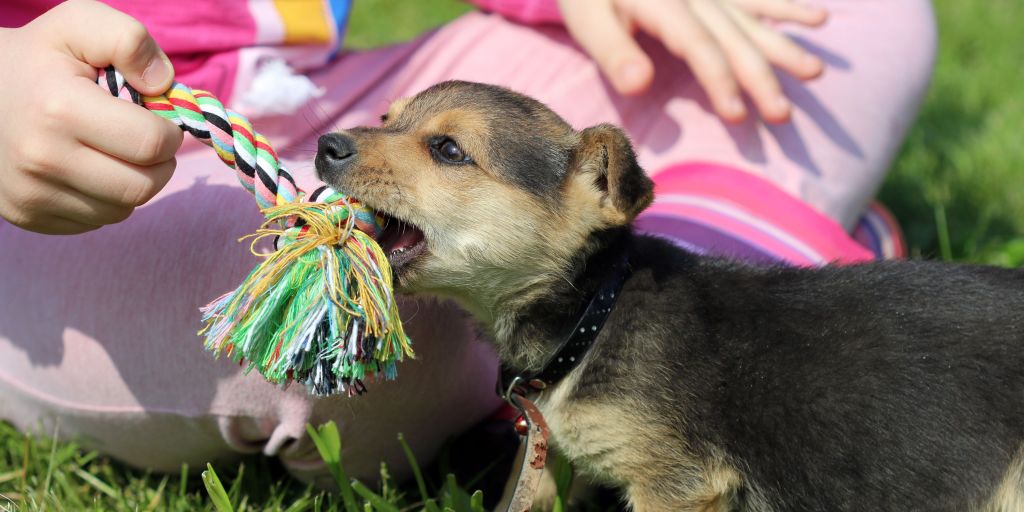
Tug o’ War is another game not recommended for dogs or children who are easily excitable. It’s a game for older children. The goal is to make sure your child is winning most of the games. You can teach your dog to drop it/let go of the toy on command to help your child gain the upper hand. If your dog heavily outweighs your child, even if they are calm and interact peacefully you will want to be right there to regulate the game. Your dog should have a strong “drop it” and “leave it” command, and must listen to the child to play this game.
Fetch
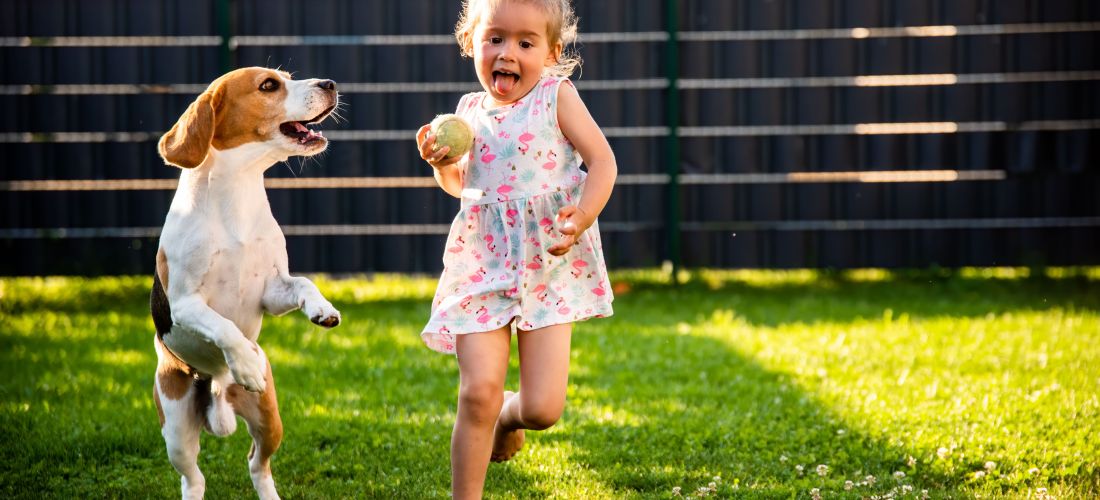
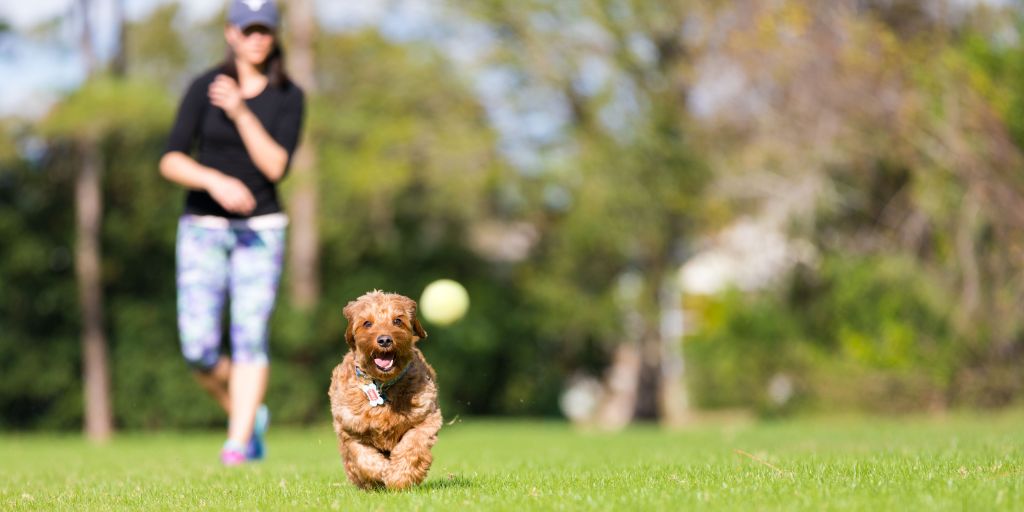
Fetch is a fun traditional dog game that anyone can play. It’s a great way to teach kids to throw and dogs to be patient with children. When a child is very young keep the game simple. You are the one to give the dog commands such as sit, down, stay, drop it and leave it. While your dog is in a stay, give the child the ball and tell them to throw it. They won’t be able to throw it far, but it will still be fun for your dog. Here’s the tricky part: have your dog stay until a cue word is given to release them.
Stay. Throw the ball. Give the cue word such as “get it”. The reason why we make the dog wait is to give the child a chance to get out of the way and the dog a moment to collect themselves and look before they immediately run after the ball.
With older children, of course they can be the ones to give the dog commands and they can throw the ball further. They also know to stay out of the path of the dog better than a toddler does. You can get a chuck-it or similar ball throwing arm to help a child throw the ball further for the dog. It’s still important to continue to expect the dog to wait for a cue before chasing the ball. Make sure the child knows not to tease the dog by taking a long time to release them. It should only be a moment before they are released after the ball. There should never be teasing.
Cup Game
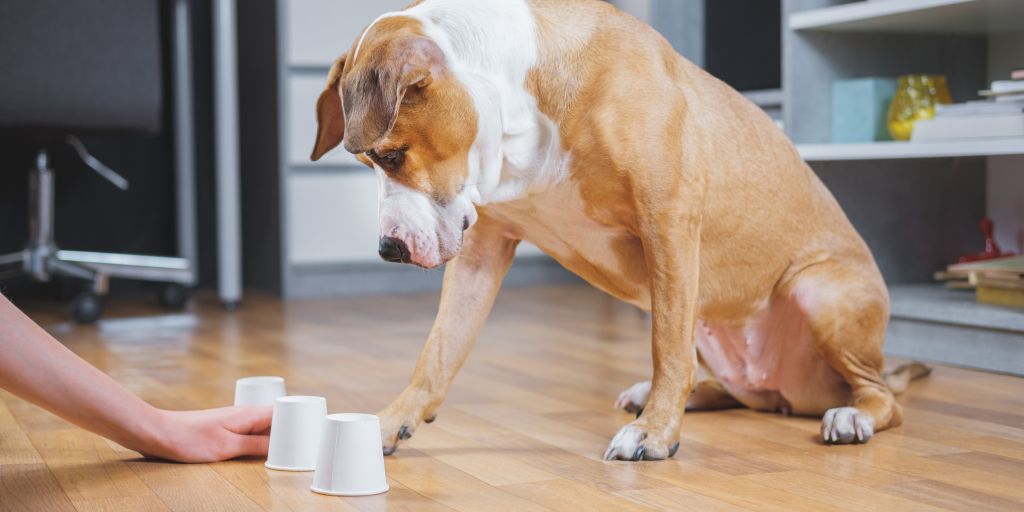
An older child can play the traditional cup game with their dog! Instead of using a ball or walnut use a piece of food or a treat. Have your dog sit and stay in front of a small table with 3 cups on it. Place the food under one cup and mix the cups up. Ask your dog to find the treat. They should be able to find the treat with their nose very easily. If they don’t, use a more smelly reward. Something high-value like a small piece of cheese or dried meat.
If the dog doesn’t understand what to do right away, take a step backward and try without the cups first. Put a piece of food on the table and tell the dog to find it. When they get it praise (no need for an extra treat, just verbal and physical praise will do). It shouldn’t take them long to grasp the concept and you can try again with the cups. You can also try giving your dog a peak under the cup to better smell and see the treat. Most dogs will figure out the game quite quickly once they realize there’s treats under the cup.
Dog Sports
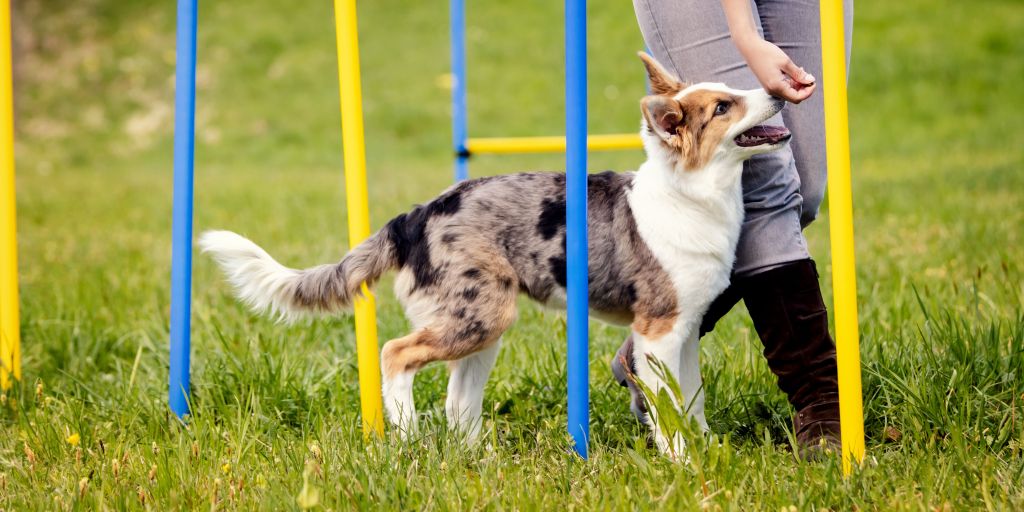
Dog spots such as Dog Agility, Flyball or Dock Diving can be a lot of fun for both handler and dog. Most dog spots require some sort of monetary investment as well as an investment in time and may require some traveling, if you plan to compete. Dog sports are a great option for older kids who aren’t interested in school sports or other activities but love to spend time with their dog.
Check locally for any clubs for Dog Agility or other dog sports. If you can find a club to join you won’t need to make or buy your own equipment and your child can learn about the sport through the club. If there are no nearby clubs, you can still self-learn most dog sports at home.
Competitive obedience doesn’t require a lot of investment in equipment. Most breed clubs or conformation clubs will be a good place to start if you’re looking for obedience competitions.
I’ve decided to make my three-part article about dogs and children available for free. This subject is near and dear to my heart as well as just being extremely important information. Most dog bites to children happen to the face and can be traumatizing, disfiguring or even fatal. If both dogs and children are taught from a young age how to safely and respectfully interact they can build a beautiful friendship together.
I grew up constantly around dogs. We always had at least one family dog (if not two) and since I was 5 years old I knew dogs were something special and that I had a special connection with them. You could even say I was a little obsessed (to the point my family had to tell me to talk about dogs a little less).
Having dogs can be extremely beneficial for children. Studies have shown that kids who grow up around dogs build a better immune system and have less problems with animal allergies. Kids who grow up with dogs also learn about responsibility, love and caring for another being. They also learn about the unfortunate cycle of life and death. They learn about love, loss and friendship. They have someone who is always there for them, always loves them and always has a sympathetic shoulder when they need it. Dogs can also help a child be more physically active through walks, play, training and dog sports. The benefits are so big I feel every kid should grow up with a dog in their life. That all being said; it is also extremely important that parents/caregivers learn how to help kids and dogs interact safely.
SO many dog bites towards children could be prevented. Dog bites towards small children can also be extremely devastating. From the moment a baby is born or a puppy brought home it is the responsibility of the caregivers to teach both dog and child how to interact safely.
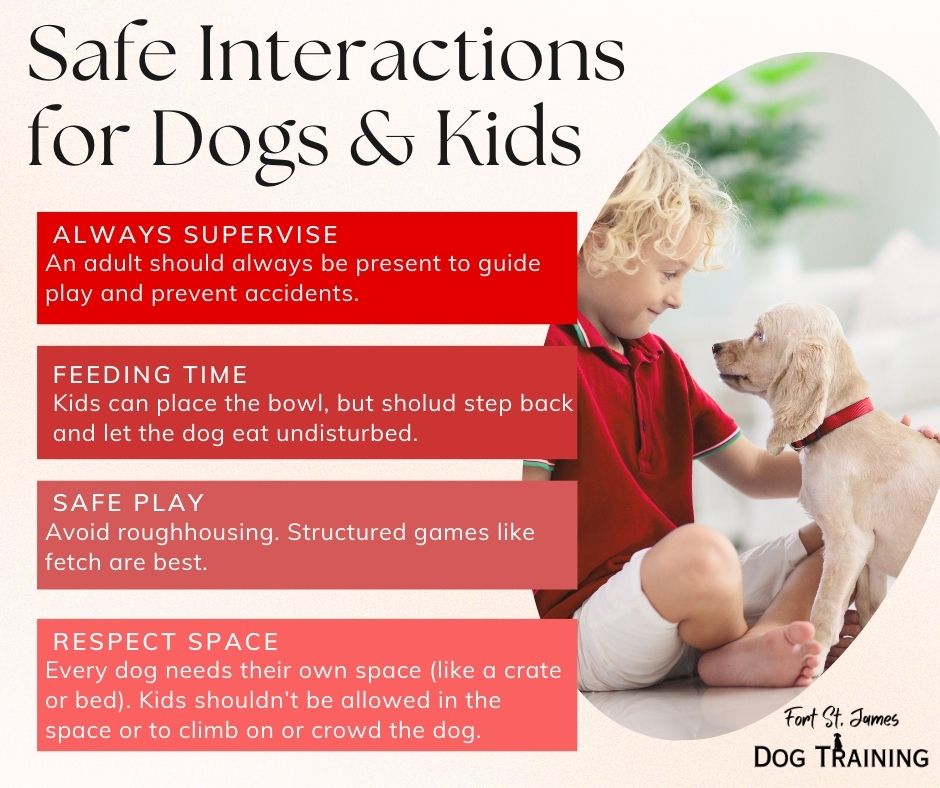
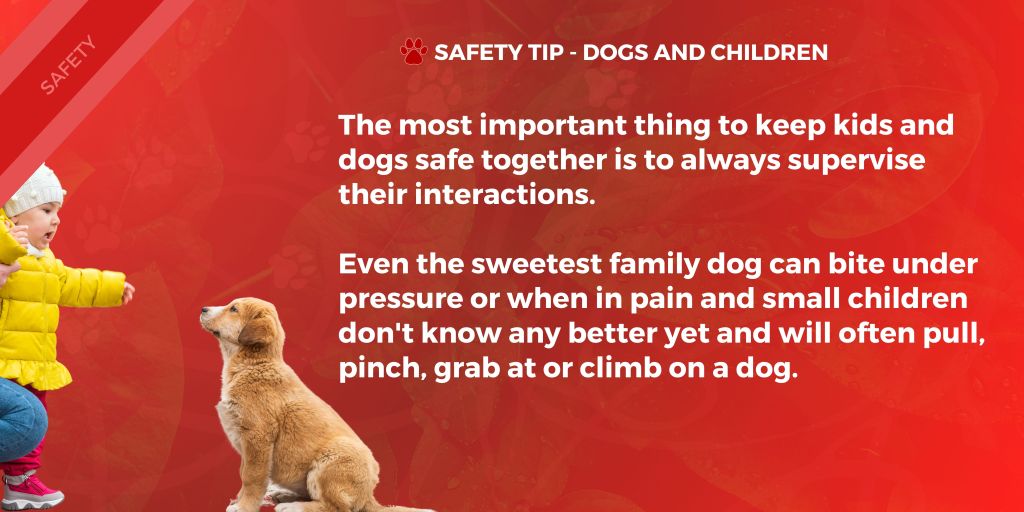
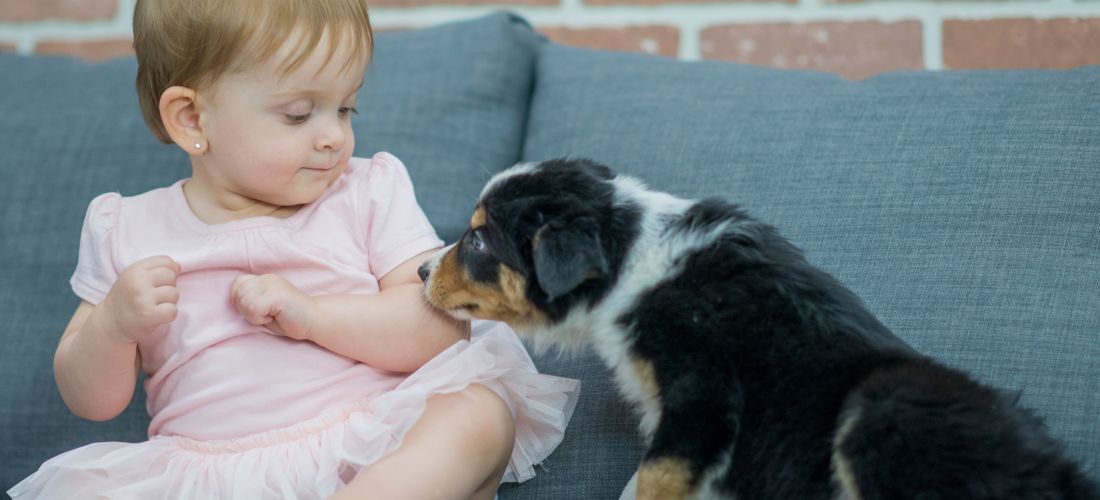
It starts with supervision. Even the most friendly of family dogs can bite if pushed past their limits. Babies and small children should ALWAYS be supervised with dogs. They do not have the brain development yet to learn how to safely interact with dogs. Babies and toddlers tend to pinch, grab and pull as a way to explore their world and they don’t understand that it can hurt someone else. They also like to explore their worlds through putting things in their mouths and physically crawling, climbing and tumbling. Dogs can have a lot of patience but even the sweetest of dogs will react to pain. Never ever leave a baby, toddler or small child alone with any dog.
Likewise, puppies and dogs need to learn they can’t jump on, paw at or constantly lick at a baby. Large dogs can easily knock over toddling toddlers. They need to learn to give space to small ones and keep their paws to themselves. A large, rambunctious puppy can easily hurt a baby or toddler with the intentions of play.
You can introduce dogs and children at any age, whether the child is an infant, toddler or older child and likewise; whether the dog is a full grown adult or puppy. How you introduce children and dogs may vary a bit, expectations can be different based on their age, but no matter what you want the introduction to be soft, slow and calm.
How to Introduce Babies and Dogs
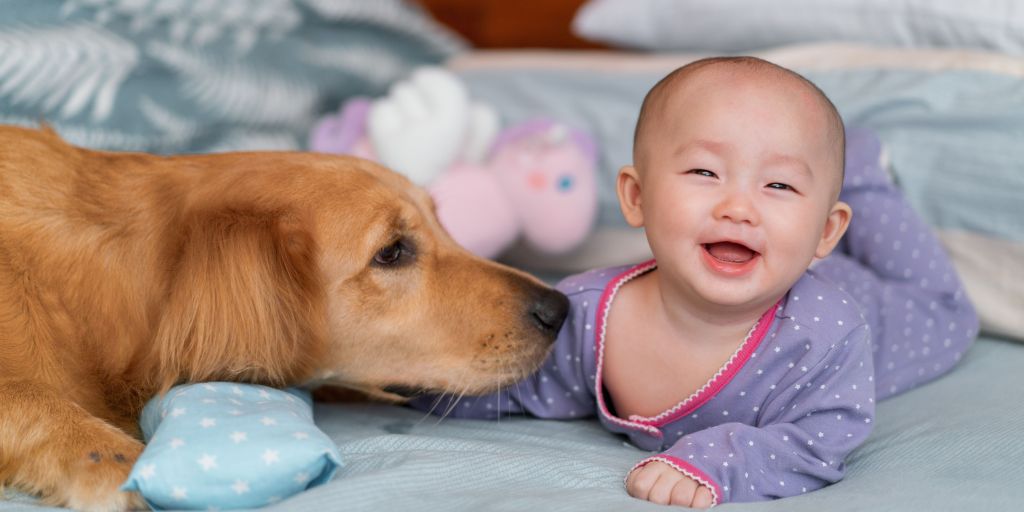
When you first introduce a dog to your baby make sure it is in a calm environment. Wait until all the visitors are gone and the house is quiet. Have the dog sit and you hold the baby so that the dog can sniff from a seated position. Dogs may get excited at the smell of a newborn baby so a leash may be needed if you have an easily excited dog who likes to jump about and express their excitement with their whole bodies. Tell your dog to sit if they start to get excited. If your dog is overly excited, unresponsive or you feel too nervous to let them get too close, then don’t. Dogs can learn a lot about social interactions from not directly touching or being close enough to touch anyone. In fact, a positive experience where nobody gets upset and nobody gets hurt is extremely beneficial to teaching a dog to be calm around new people or animals. Likewise, it teaches the same lessons to the baby too.
Babies and kids learn a lot from what we set as an example. Keep this in mind when you’re interacting with your dog in front of your baby, keep this in mind. Since babies have very poor motor skills, it’s best to avoid petting areas of the dog that the baby may accidently grab or poke that are sensitive (such as the head/face). Start with petting the dog’s shoulders, chest or back. Show your baby how you gently pet your dog. You can even repeat to the baby “gentle pets” and explain it’s a nice dog you’re giving gentle pets to. Talk in a soft, sing-song voice that your baby enjoys.
If your baby grabs the dog’s fur, hold their hand so that they can’t pull on the dog’s fur and release their little grip. Small babies are too young to understand, nor do they even have the ability to control whether they grab at the dogs fur or not. Just release them and continue on with the calm interaction. If your baby seems to grab and pull too much for your dog’s comfort then stop and try again another day. Watch your dog and gauge their reaction. If they seem nervous then stop all interactions between baby and dog for a bit. Instead, focus on peaceful cohabitation from afar.
How to Introduce Toddlers and Dogs
Toddlers can be very unpredictable and this can be hard for dogs. They squeal, run, poke, grab, and climb on everything. This is all totally normal and important skill-building and world-exploration for your toddler, but just like the other safety rules in your house your toddler needs to learn the rules about interacting with the dog. Don’t let your toddler do things like grab, pull, poke or climb on the dog. Teach them, instead, that we pet and play with the dog nicely. Show your toddler by example how to pet and tell them “gentle pets”. Put a lot of emphasis on being gentle with the dog. This can be a hard concept for some toddlers to get, and may take many many repetitions. If your toddler is particularly too rough and your dog isn’t comfortable, then it’s time to end the interaction and try again another time when your toddler can be calmer.
Toddlers can play simple games like throwing a ball for a dog. Getting the ball back from the dog should be the responsibility of an adult or older child. Toddlers should NOT be allowed to take anything from the dog, whether it’s a ball thrown or another toy or chew/bone of the dog. If your dog has any sort of possession issues and you notice signs of their resource guarding (growling, hovering over, and generally protecting their item from anyone) then it is very important you pick up ALL items the dog my guard and remove them access when the toddler is on the floor. This is a very important rule to prevent bites.Your dog can have access to these items when the toddler is not around or when the dog is in a locked crate or room. Do NOT give a dog access to items it may guard when any children are around. Work on this behavior separately and until a child is old enough to understand not to grab an item from a dog.
How to Introduce a Child to a Dog
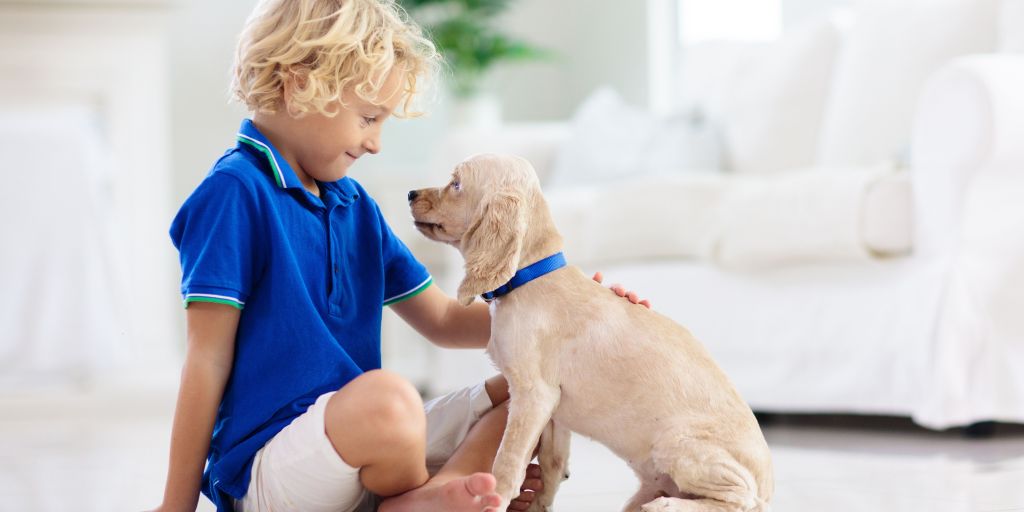
Children who are 5 or older can be introduced to dogs with a bit more instruction. Let them know to remain calm. Don’t run from a dog (especially excited dogs or puppies), don’t make sudden movements; pet the dog from the chest, neck or back. Do not reach over the dog’s head. Give the dog a treat or throw a ball for them. Older children can pick up the ball from the dog, or give commands such as drop it/release. If a dog enjoys it, a child can rub their belly or brush their fur.
If the dog is extra rambunctious, then just like when introducing a baby or toddler, you can put the dog on leash and ask for a sit or down. Have the child give the command and reward with a treat. Let the dog sniff the child. If they seem overwhelmed or unsure, let them have space from the child and/or take a break.
Teach your child to always ask before petting a stranger’s dog. Have them practice asking “can I pet your dog” and explain that if someone tells them no then it’s important to respect that.
Older Children/Teenagers and Dogs
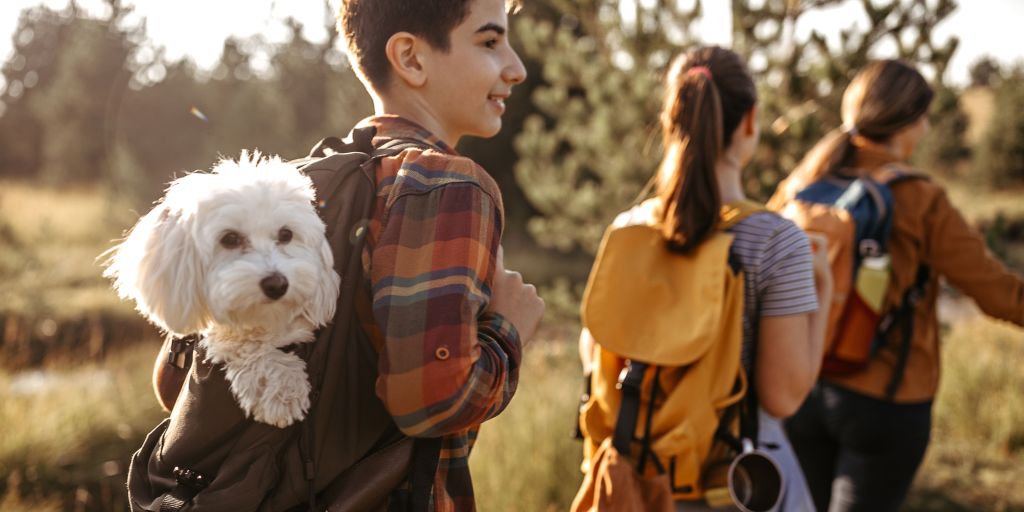
Dogs are a great companionship for older children and can encourage physical activity and responsibility. Older children can take on the job of feeding, brushing, playing with, walking and even training the family dog (with adult guidance). Dog sports such as Dog Agility or Flyball are great ways for kids and teens to get active and compete in sports with their dogs. Overall responsibility of purchasing food and providing veterinary care should always fall on the shoulders of the adults in the family.
Give the Dog Their Own Space
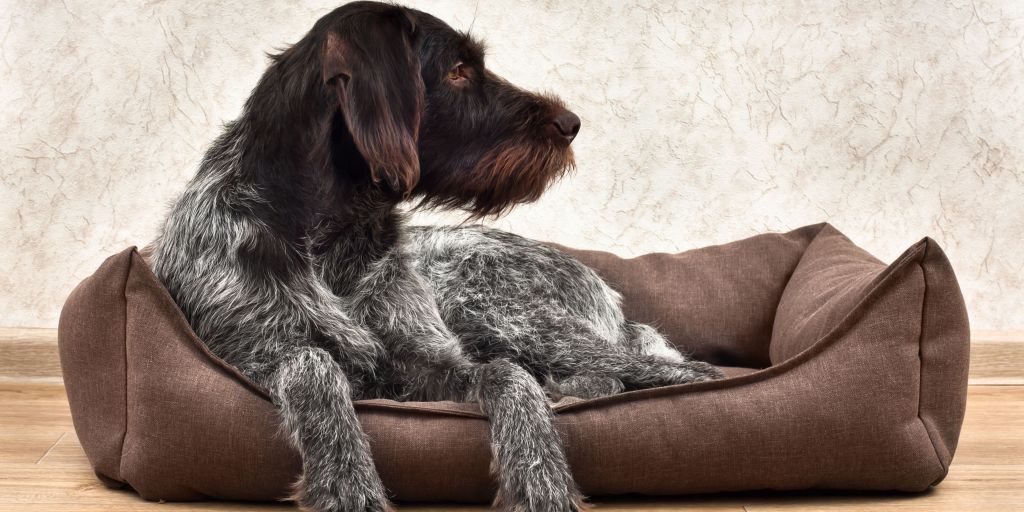
One of the most important things you can do is make sure your dog has a safe space to retreat to when they’re feeling overwhelmed. Kids can be overwhelming for anyone, including dogs. Keep a kennel or bed in a quiet part of a room that your dog can always have access to. Don’t ever allow the children to climb on or in the dog’s bed or kennel. This space is completely off-limits to children and is a safe retreat for your dog. You can encourage your dog to go to this space whenever the kids get chaotic or you notice your dog getting overwhelmed.


 Shara Walsh