
Dogs are smart beings that have several needs, and one that is often overlooked is their need for mental stimulation. The more you train your dog the more they will use their brain. A dog who is often challenged and taught new behaviors will actually learn to use those behaviors and problem solve on their own (at least, to the degree a dog is capable to). If not given enough mental stimulation (and physical exercise) a dog will often become bored and restless. This is when destructive behaviors start to occur. This is especially true for dogs who are naturally smart (some breeds that are naturally more intelligent would be border collies, Australian cattle dogs, standard poodles… basically any dog that was originally bred to do a job that requires some independent thinking and problem solving) if you don’t give a smart dog something to do they will find something to do for themselves. This will often be behaviors such as excessive barking, digging, fence jumping, or destructive chewing. There are several ways to fulfill your dogs needs for mental stimulation.
TRICK TRAINING
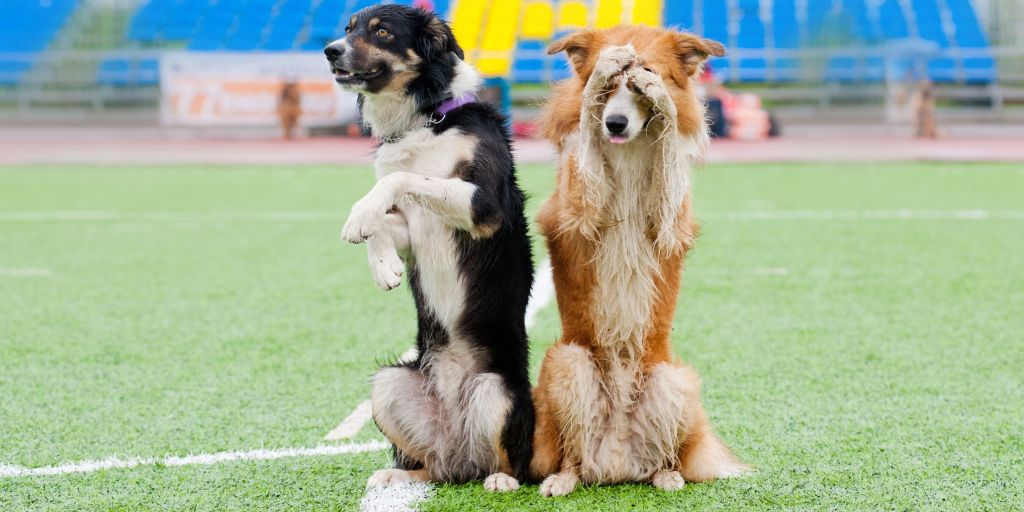
Training is a big one. Basic obedience, of course, but if you feel like your dog needs a challenge try training tricks. Tricks are a fun way to engage your dog, bond with your dog, and they’re super fun to show off to others.
Start with some simply tricks that are easy for most dogs to pick up. Shake a Paw is a pretty common trick that most dogs catch onto quickly. However, some dogs paw a lot to begin with, and so you may want to first consider whether your dog is like this. Boxers commonly like to use their paws a lot. When you train a dog like this to shake a paw it suddenly becomes their whole personality. They are the dog who shakes and shakes and shakes even when it’s not asked for. If you think this could happen to your dog, then I discourage training shake a paw.
There are lots of basic tricks to teach your dog such as roll over, sit pretty, spin, etc. and you can also build behaviors onto each other to create more complex tricks. Targeting (touching) your hand with their nose can then turn into closing a door or rolling a ball. There are literally hundreds of tricks you can teach your dog.
For more trick training ideas and tips check out Do More With Your Dog, where you can even get your dog titled for Trick Dog!
TRICK OF THE MONTH
February – Target
March – Center
CHEWS
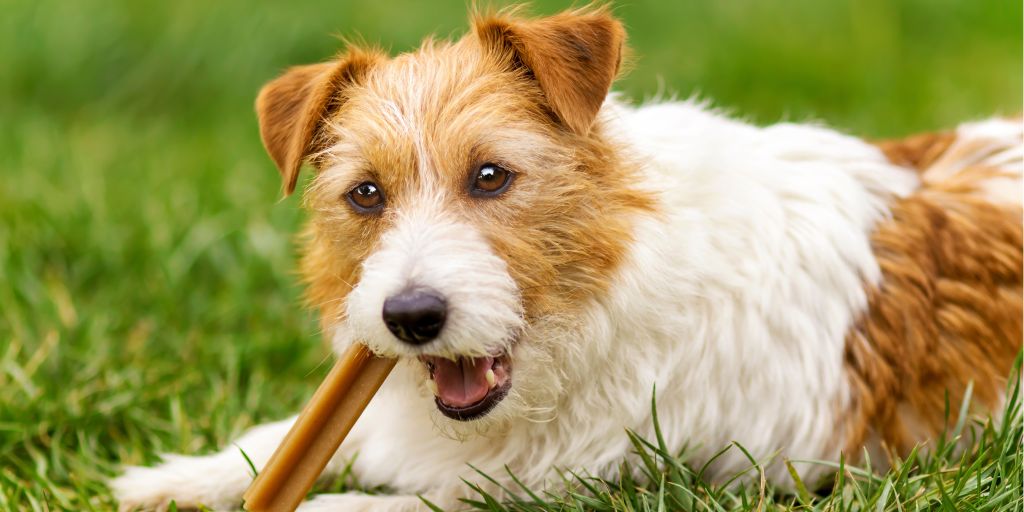
A good, deep chew is highly beneficial for a dog. It works their muscles, brain and promotes good oral hygiene (which helps fight bad breath). Chewing is also very instinctual; dogs will often find something to chew on if they’re not provided with it. Chewing releases endorphins which heightens the sense of pleasure and well-being for the dog.
To pick a good chew for your dog you will need to consider their size, breed, and personality. If your dog is a big, strong dog that loves to chew you’re going to need a big, strong chew. Something too hard can cause injury and break teeth. Something too soft can get stuck on teeth or tear to tiny pieces too easily. Something too big can be difficult to get a grip onto, which can also cause injury and may just build frustration in your dog. Something too small can get lodged in their throat or swallowed.
DON’T use hard, round balls or tennis balls. They are quite dangerous. Look for toys that are attached to a rope/handle or are hollow in the middle.
Raw meaty bones (RMB’s) an excellent source of protein and a good chew. Note; you should never give your dog cooked bones. Cooking makes the bones brittle and more likely to snap and splinter in sharp points that cane puncture and hurt your dog. RMB’s need to be selected based on size for the size of your dog. There is lots of information out there about raw feeding and using raw bones for recreational chewing. A great place to start is the Perfectly Rawsome website.
If you head to a pet store for a good chew product, it’s important to keep in mind that not all products sold as chews for dogs are actually safe for the dog. Rawhide is a great chew for a dog; as long as it’s been processed and prepared properly. Which unfortunately, cheap, bleached rawhide chews are often complete garbage and downright dangerous for your dog. A great alternative is to look for “pizzles” that are prepared naturally.
My personal favorite is a black Kong stuffed with peanut butter and treats. This will keep a dog busy and a Kong is a great toy for a heavy chewer. They vary in quality based on colour. Black Kongs are the strongest and least likely to be destroyed. Last I checked, they are also covered in Kong’s guarantee and if your dog does destroy a black Kong then the company will replace it.
PUZZLE TOYS
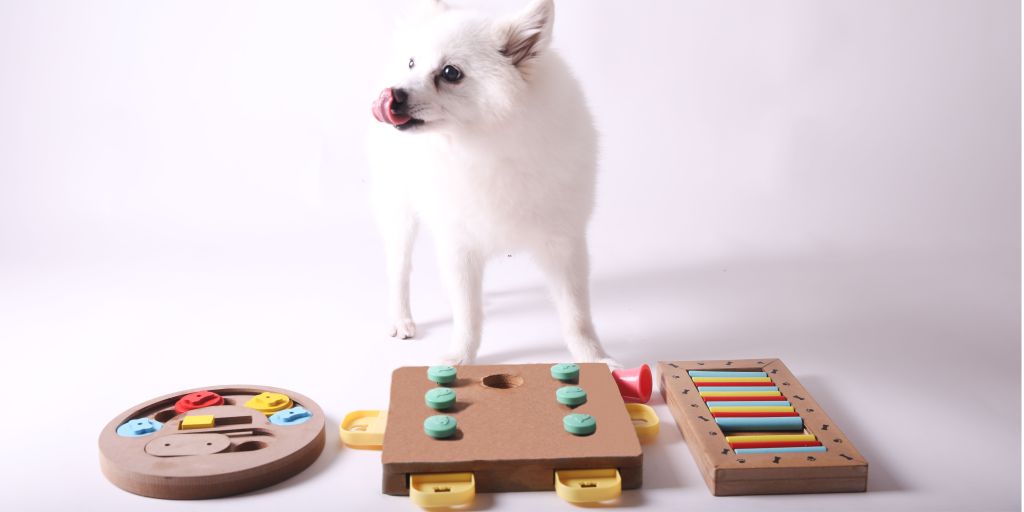
There are so many different kinds of really cool dog puzzle toys now. You can buy endless different kinds and you can also construct your own with objects found around your home. For example, you can lay out an old towel and sprinkle dog food or treats on it and then roll the towel up. Or place food in a muffin tin and cover each with a tennis ball. There are lots of ideas, The American Kennel Club has some good DIY ideas.
Here’s the catch on puzzle toys, and this is how I see them often fail for people; you have to train your dog how to use them. Some dogs may figure it out on their own, but I’d say most need to be taught what to do (or at least shown that there is food involved). For example, for the type of puzzle toys that has little sliding windows will need to be started with food in the compartments but with the doors open. The dog needs to first learn there is a reward in the compartments to have a desire to try to solve the puzzle. Next you would partly close the doors, and finally close them completely. You may add a level of difficulty with food in some compartments, but not others.
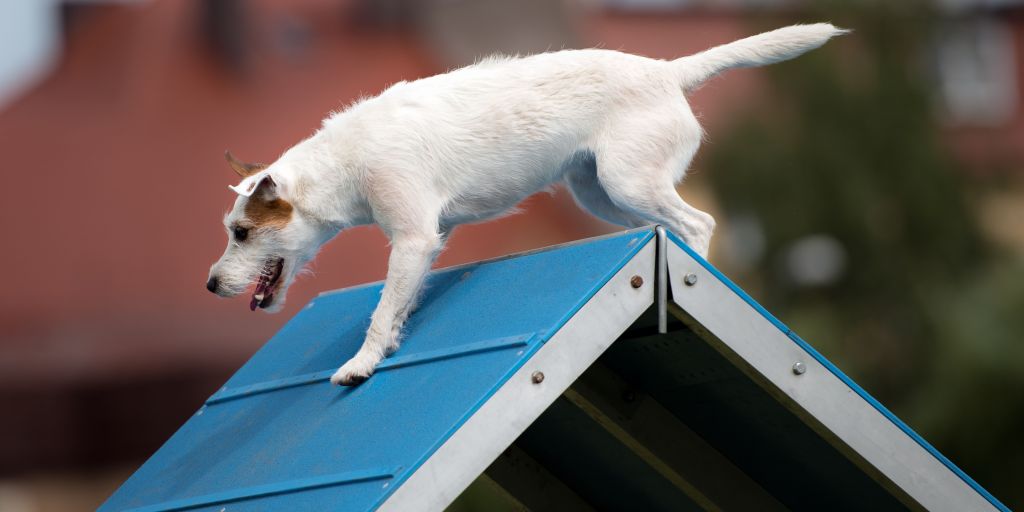
OBSTACLE COURSE
A great way to stimulate your dog both mentally and physically is obstacle course training. If you’re lucky enough to have a local dog agility club, then I highly recommend checking them out. If you have the ability and room then you can create some backyard agility equipment. Your obstacles don’t need to be dog agility regulation, unless you plan to compete in agility trials with your dog.
You don’t even need equipment, you can use your surroundings, so long as you take the time to train your dog properly. You need to be their spotter and you need to be aware of your dogs body language and what they’re telling you. You are there to guide them and teach them the behavior broken down in easy to understand steps. Using your surroundings as an obstacle course is called “parkour”, and when dogs do it it’s called “barkour”; which I think is adorable. You can use a wall, a tree, a playground, whatever you have access to with your dog. If you’re interested in this I recommend checking out the Instagram accounts @parkour.ninja and @parkour.dogs.
 Shara Walsh