In week three of my Basic Obedience Workshop we talk about focus and reliability. Something I often talk about but don’t always see used by my students is teaching your dog to look at you when you say their name.
Linking a behavior to your dogs name is like a little life hack for training your dog. If you have your dogs focus before you give them the command they are much more likely to actually follow the command.
HOW TO TRAIN IT
To pair your dogs name with the behavior to look at you is simple repetition, repetition.
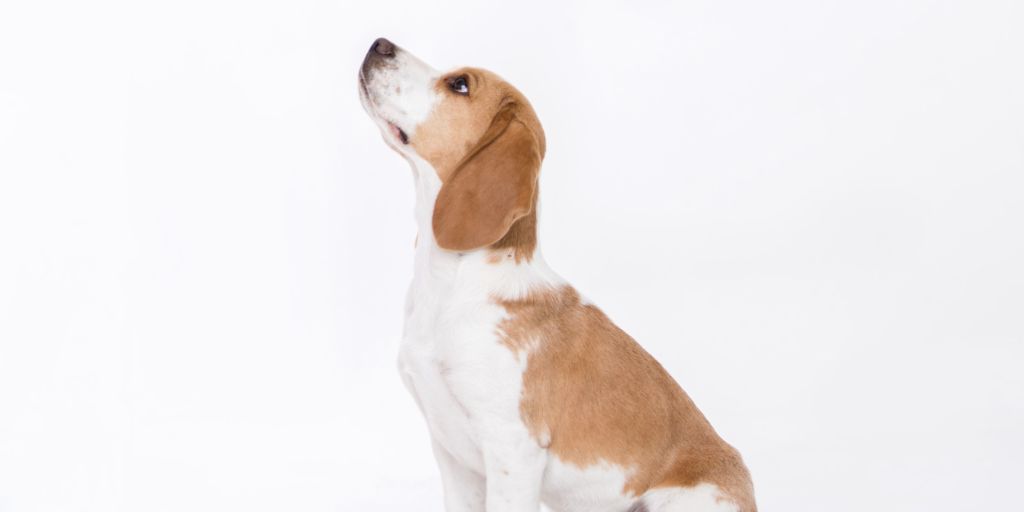
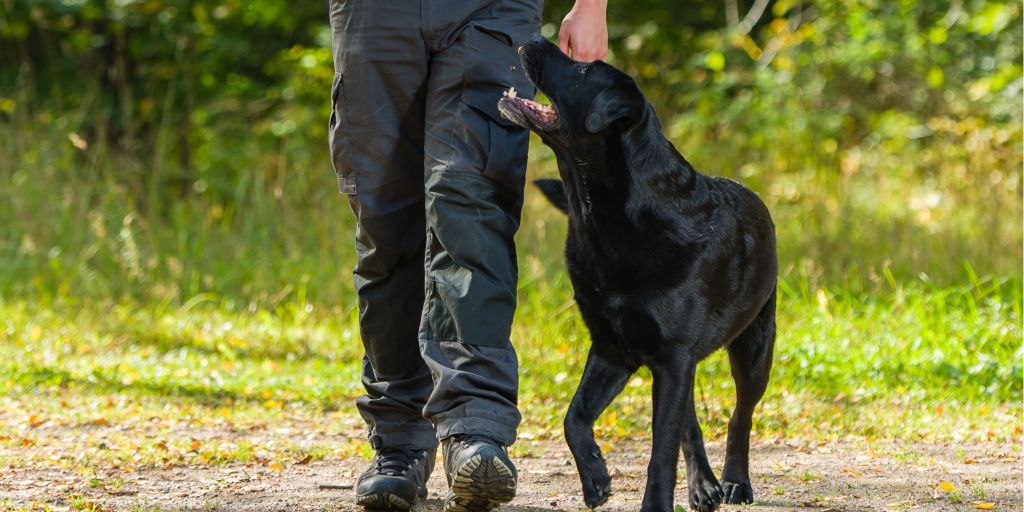
Say your dogs name; if they don’t look at you right away that’s okay. You can use their favorite treat to lure from their nose up to your eyes.
Give a reward when they look to your face.
Give a *Jackpot Reward* when they make eye contact.
Give an extra *Special Jackpot Reward* if they make eye contact or even look to your face without a lure.
HOW TO SHAPE IT
Shaping = praising your dog when they naturally perform the behavior you desire. You can then fine-tune it by withholding the treat for “more” from the behavior (dogs usually start guessing or adding in some flair to try to figure out what you want that will get the reward), and then rewarding them when they show a behavior that is or is closer to the behavior you desire.
You can naturally shape the behavior to look at you when you’re walking or playing with your dog and they naturally just look at you. Instantly praise “YES”. You can even start pairing it with their name “Yes, Fido!”. Even if you’re not trying to pair the behavior with their name (although I highly recommenced it) just rewarding for “checking in” with you will build good habits for off-leash work later on.
JACKPOT!
If you’re not sure what a “Jackpot Reward” is; it is when you give several small rewards in a row that your dog will count as a really big reward. Jackpot rewards are usually reserved for when your dog does something really well. Maybe something you’ve even been trying to get them to do for a while, or something they’ve been struggling to understand.
To a dog, several small treats in a row is a way bigger reward than the same amount of treats given in one pile. So make sure you’re giving those jackpot rewards one after another and not all at once.
You can also reserve very special rewards as jackpot rewards; this way you’re using less treats but they still hold higher value. Something very smelly and tasty that your dog loves.
REAL WORLD IMPLEMENTATION
The most common problem I see is dogs who don’t come when they’re called. Teach your dog to look to you out of habit every time you say their name and you can shout their name first before giving the recall command. That way your dog is much more likely to actually follow through and come when called because you got their attention first. They’re listening and it is the opportunity to call them once. “FIDO!” – dog looks to you – “COME!”. If your dog doesn’t listen, then it’s time to focus on recall drills and exercises.
Don’t over-use it: train and drill focus with their name and lots of jackpot rewards before you ever use it in a real-life scenario. You want it to become a second-nature habit before you ever actually need to use it.
This was my first year holding successful group classes and you guys exceeded my expectations. Last year I tried to do a group class and only had one person sign up. This year I thought, “what the heck, throw it out there one more time…” and the response I got was overwhelming. Not only was I able to put on a group class but I was able to put on FIVE of them!
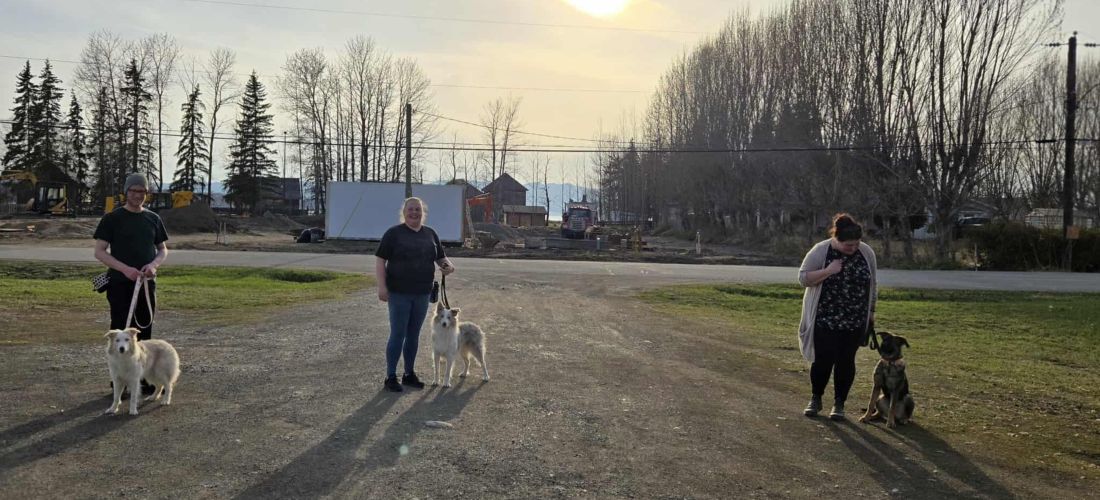
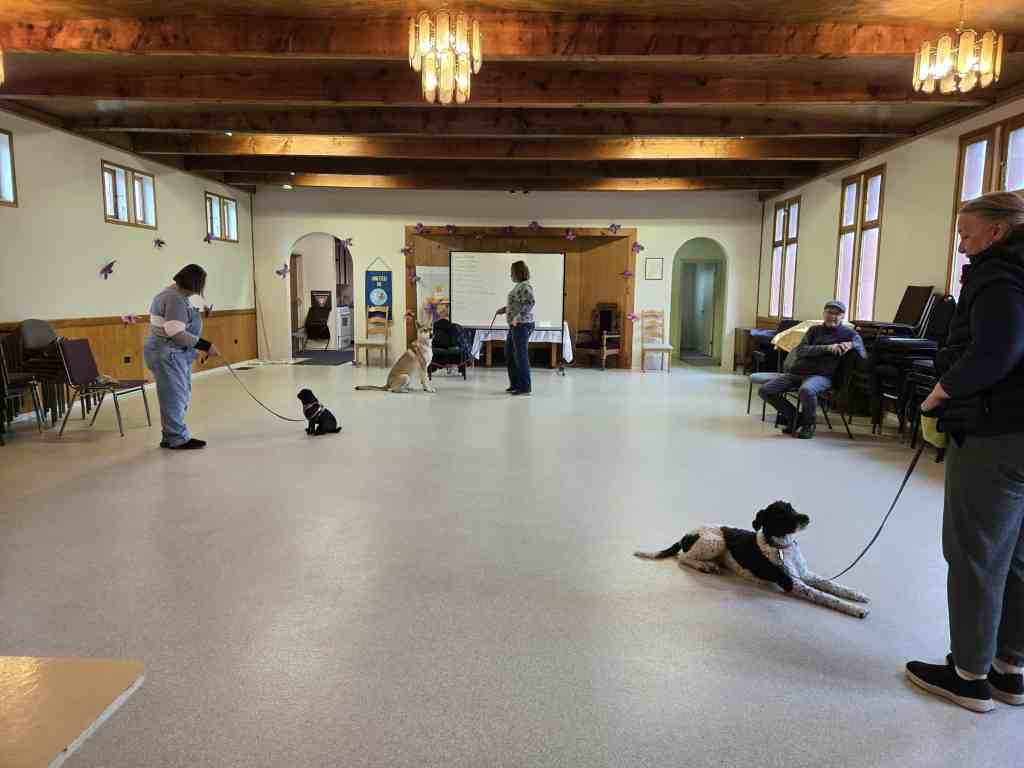
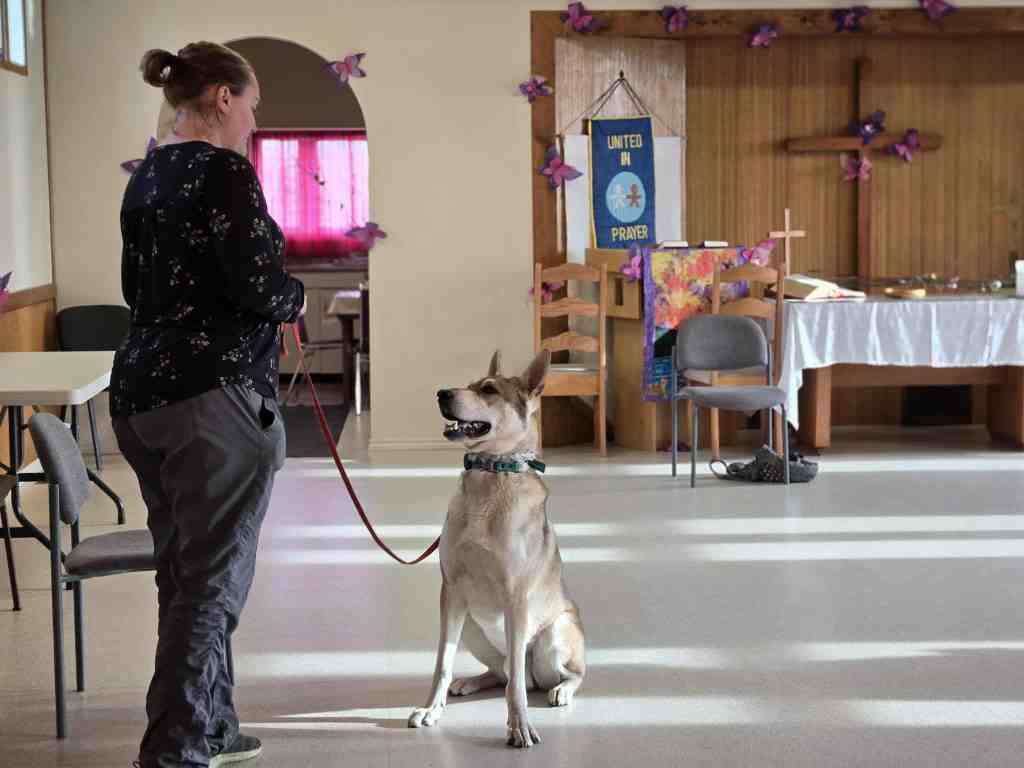
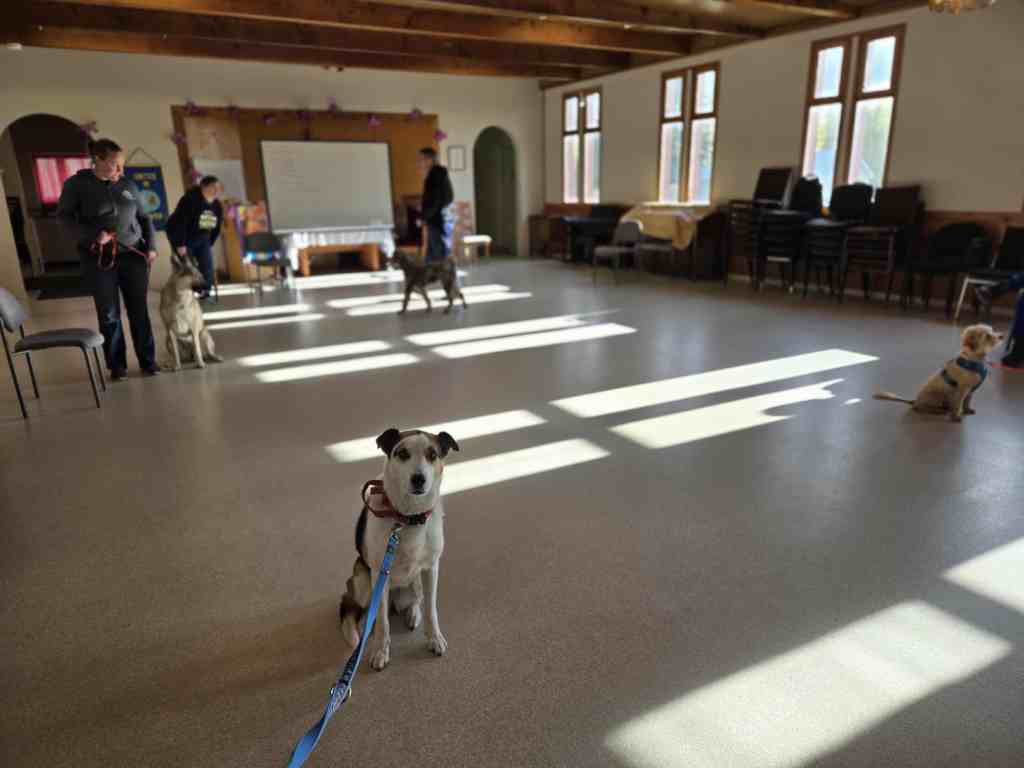
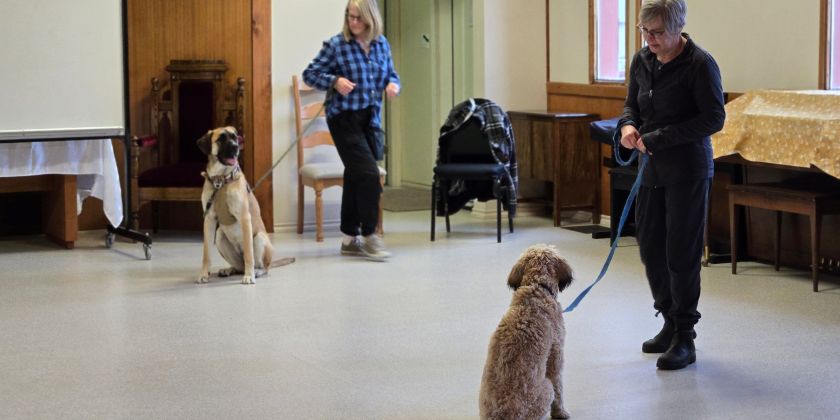
Each class had 4 dogs with their handlers and was held at the United Church. I’m so grateful to the United Church for giving me the chance to hold my classes there. They’ve been accommodating and forgiving (especially of the spring-time dog hair shed about the room). I worked hard to clean the room after each class to help lessen my lease and to show respect towards the Church. All of my students were also very respectful of the space. It turned out to be a great place to run a small class. However, I certainly wouldn’t want more than 4 dogs (and my Zelda) in there. To hold a bigger class comfortably, I would need a bigger space.
Throughout these 5 classes I’ve fine-tuned my methods and curriculum to the point I feel quite confident that the Basic Obedience Workshop is exactly what the average dog owner wants. It’s really more than just a basic obedience class; it’s an “everything you need to know to comfortably live with your dog” class. It covers all of the foundations you need to build strong, reliable obedience.
WEEK ONE: FOUNDATIONS
The class kicks off in week one with Foundations. It starts with a main focus on two of the 5 basic obedience commands: sit and down. Most dogs already know at least one of these by the time they come to my class, but not always.
Other topics covered in this first class are:
leashes and collars terminology and tips off vs down a note on consistency
It’s a lot covered in the first lesson, but all the other classes are built off this first one. As the weeks go on there are less subjects covered in each class because with each subsequent class we are reviewing everything from the previous class, every week. Week One Foundations is definitely a class you don’t want to miss.
WEEK TWO: IMPULSE CONTROL
Impulse control in dogs refers to their ability to resist the urge to act on a desire or instinct and instead choose a more appropriate or desired behavior. For example, stay instead of chase a squirrel. It’s essentially teaching a dog to pause, think and make a more deliberate choice rather than reacting automatically. It’s a skill that is crucial for safety, preventing accidents and enhancing overall training. All dogs could use impulse control training to teach them to think before they act. Heck, most people could use it too. Week two gets right to the nitty gritty of impulse control with a heavy focus on the basic obedience command stay.
Also taught in this class are:
stay circle jackpot rewards distractions and challenges
Newly added to this class is also impulse control games! Games you can play with your dog at home that will help them hone their impulse control skills.
WEEK THREE: FOCUS AND RELIABILITY
Week three takes the skills we’ve learned in the first half of the workshop and builds off of them to step it up with one of the most important basic obedience commands that all owners want their dog to learn: come (recall). In this class we teach our dogs to focus on us and what the key is to more reliable obedience.
Also covered in week three’s class:
watch command automatic sit
WEEK FOUR: REAL WORLD OBEDIENCE
The fourth and final week of this workshop teaches you how to apply all of the skills you learned into the real world and your every-day life. The basic obedience command we focus on last is heel, with an optional “loose-leash walking” for those who don’t really care if their dog walks right beside them, but want them to learn not to pull on the leash. Heel is a great command for learning to navigate the world with your dog as your partner at your side.
Also covered in the last class:
phasing out treats the key to reliable obedience
JOIN THE WAIT LIST
If you missed out on the fun this spring and would like to be a part of my next obedience class, you can join the wait list and I will contact you once I have a date set for the next class.
I wanted to end this post with a heartfelt THANK YOU to everyone who helped make these 5 group classes a success. My family for putting up with my insane work schedule during that time, and of course, to my clients and their wonderful dogs. Thank you to every person who filled these classes. You all taught me as much as I taught you. I truly enjoyed every moment; every challenge, every celebration, every moment of comradery as we were all in it together. You all made this experience extremely special to me. Last, but certainly not least, I want to thank my beautiful demo dog Zelda. I couldn’t have done this without her by my side every class.
When you preference test your dog, you learn what type of rewards they prefer. By knowing what your dog prefers you can help better motivate and reward them. They’re going to associate you with their favorite things and feel more compelled to listen because you give up the good stuff. It also helps you bond with your dog, by getting to know them better.
You can find out your dogs preferences by presenting two or more of similar items and see which they prefer, which they seem more excited about and which they tend to move towards and grab faster and/or more often.
You may find they vacillate between two items; they don’t always seem to prefer one over the other. If this happens, you know that both items have pretty equal value to your dog.
You’re going to find variations in what your dog likes based on what type of items it is and again within that sub-group of items. For example, you could present your dog with a toy or a treat, if they like treats better you can then test different kinds of treats against each other and see what kind your dog likes most.
You will be able to see which your dog prefers of… – food – toys – locations – people – tactile stimulation
Repeat the same test at least 3 times to determine their preference. Whichever they go to most and seem most excited about will be their preference.
Pay attention to details. You may want to learn more about the subtle body language that dogs use first, before commencing preference tests. That way, you can be sure to look out for those signs your dog is giving you.
Some of these signs may be… – snatching – eyes popping (getting larger, showing the whites of the eyes) – which one they go for first, and which they go for most often – if it’s a toy, which toy they play with longer – pulling harder, if they are on leash
When testing your dogs food preferences, you’re going to want to keep a few things in mind and understand that not all types of food can be compared equally.
Dogs understand the difference between large and small. You can’t compare a large piece of food to a small piece of food. You need to make sure that the pieces of food you are comparing are the same size.
There are a lot of different types of toys on the market for dogs, and your dog may prefer a type of toy over another. Pay attention to which toys they grab most often, which they hold in their mouth for longer, which they try to initiate play with you more, and whether they prefer a toy they can cash, catch, hold or chew.
There may be variations in… – size – texture – purpose
A dog may prefer a plush toy over a rubber chew. Or maybe your dog loves to play tug o’ war and prefer a good rope toy. Maybe they love to chase balls but prefer a felted tennis ball over a rubber ball.
All of these variations leave for a lot of possibilities that could be your dogs favorite! Test many different toys against each other and see how your dog responds to determine which is their favorites.
Where does your dog like to go to relax, to sleep, or to hang out with the family? To know these preferences you will need to pay attention and take notice of your dogs favorite resting place.
The variations around your dogs favorite locations may be… – warm seeking – cool seeking – quiet location – central pathway – inside – outside
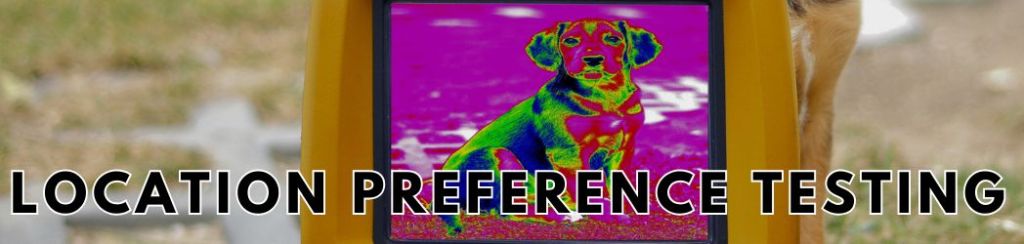
Some northern breeds of dogs and large dogs with thick coats of fur actually prefer to be outside in the winter. If you look at a thermal image of one of these dogs you’ll actually see how much their coats keep heat in. In comparison, you can see how much a heat a short-haired dog would loose. I’ve known of thick coated northern dogs who have full access to an indoor heated home but they choose to sleep in the snow.
It’s no secret that dogs often prefer one person over another. It is commonly the person that feeds, walks, plays, and trains the dog the most. You can understand your dogs people preferences by observing how they interact with each person in their family. Who do they seem most excited about when they return home? When your family is hanging out for a movie night, who does your dog choose to snuggle up with (if anyone)?
Understanding how to ask for consent from your dog can also help you determine who your dog enjoys spending time with, playing with or being pet by the most. You may even find that your dog prefers different people for each of these activities.
To ask your dog for consent when interacting, simply offer yourself to the dog. You can talk to them, clap your hands, offer your hands to smell and for pets, and see how your dog responds. If your dog seems excited, pushes into you, sits at your feet and leans into you, or otherwise shows any signs that they enjoy being pet by you and want to be close to you then it’s pretty safe to say that your dog is saying YES to this interaction. However, if your dog comes in for pets and then turns and leaves, looks away, stays just outside of your reach or maybe even lays down a little ways away from you these are all indications that your dog is saying no thanks, they’re not interested in that interaction. Test out consent with your dog and each person in your family to see who they enjoy interacting with the most.
Remember that dogs moods can change and they may not always prefer the same people all the time. Do the consent test several times and to determine which people your dog prefers most often.
If the results aren’t what you would like, you can make changes in how you interact with your dog to shape a more desirable outcome. Spend more time doing the things your dog likes and prefers and your dog will suddenly think you’re the greatest person in the family! You always have the best treats, the best toys and take the time to understand and respect their preferences.
Tactile preferences is the type of touch your dog prefers. Again, it is helpful if you have a basic understanding of canine communication when doing a tactile preference test. Understanding the subtle cues your dog gives you will help you know which type of touch your dog prefers.
Do one type of touch with one hand and another type of touch with another hand. Observe your dogs body position and which type of pressure your dog leans into.
You can try different variables of touch, such as… – heavy pressure vs light pressure – stroking vs. scratching – close hugs and petting vs at arms length
Most dogs don’t enjoy hugs and kisses. Those dogs which do seem to enjoy this type of interaction have usually been conditioned to enjoy it. Some dogs may enjoy hugs and kisses from their owner but feel extremely uncomfortable if a stranger or lesser-known person tries to interact with them in this way.
Dogs often don’t like to be pet on the top of their head because there is a blind spot there. They may be conditioned to accept and even enjoy it from their favorite people, but when it comes to strangers they should never pet a dog on top of the head.
Imagine if your partner always bought your flowers but what you actually liked was chocolates. Imagine you had no efficient way to communicate this with them so they just kept buying you flowers. Yeah, you may appreciate the gesture, but what would really get you happy, excited and appreciative is if they knew what your favorite thing was.
Now that you understand your dogs preferences, you can use this information to better motivate and encourage them which will give you better success in your training as well as a deeper bond with your dog.
I promised this long list of upcoming articles and then completely fell off the face of the Earth. I thought if I had a schedule of articles to stick to it would help me post consistently, but it did not help at all. Spring hit and I’ve struggled to even open my laptop ever since. After some self-reflection, I’ve decided that the only blog posts I’m going to commit to posting is the monthly updates. I may throw in other posts here and there, depending on my time and mood. However, I think for the summer it would be best to cut back on my post commitments.
BASIC OBEDIENCE WORKSHOP
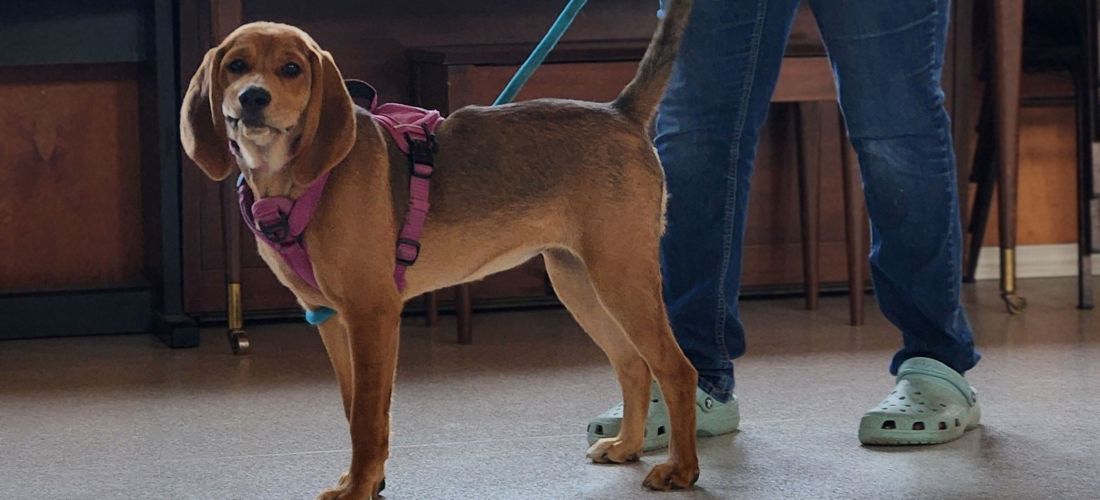
May was a bit of a slow month for me, when it comes to training. I had one private lesson and launched my group class which, unfortunately, only had one person sign up. I’m struggling to get commitment from Fort St. James dog owners and I’m wondering if it’s the same Spring time struggles I’m facing with committing to anything consistently myself, right now. Whatever the reasons, I’m still going through with the class. I designed the price so that if this happened I wouldn’t be losing money and it still felt somewhat worth going. My one client in this group class has the most amazing soft, floppy hound pup so that definitely makes it worth-while.
The United Church has been awesome to rent, though. I’ve rented the space in the past for the K9 First Aid Course and it’s very affordable (especially if you provide clean up afterwards, which I totally don’t mind doing) and they allow dogs. When I started phoning around looking for a space to do a group class in, the United Church wasn’t my first pick, simply because it’s not the biggest space and wouldn’t allow for very many people and their dogs. However, I ran into issues with many places not wanting dogs in them and/or issues with insurance. The United Church is very accommodating and laid back to deal with; they’ve been fantastic.
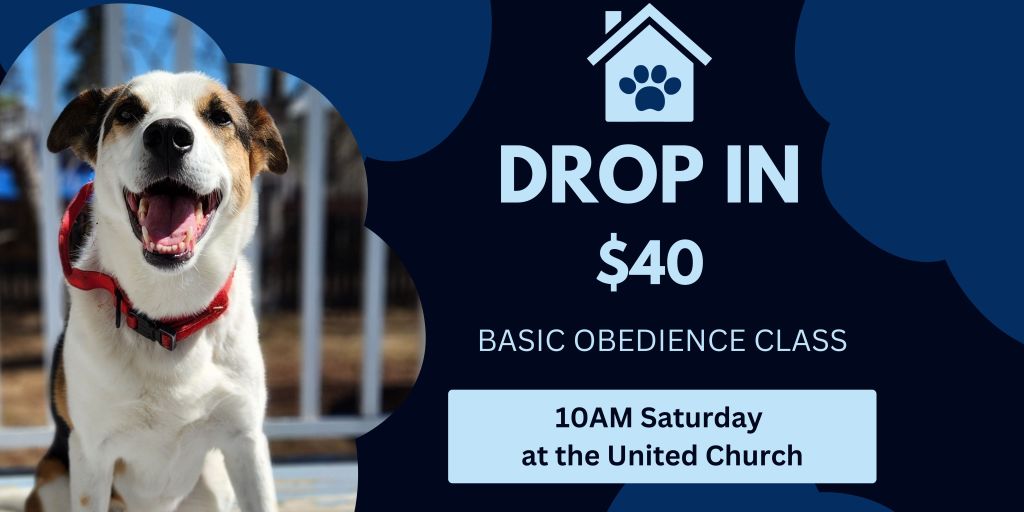
Since I was unable to fill the class up, I do have a few spaces available and am opening it up to Drop-Ins.
Drop-ins can attend any of the following classes, and do not need to commit to the whole course. It is $40 to drop in, and I take cash or debit.
Saturday, June 1st
10am-11am
Stay
Stay Circle
Jackpot Rewards
Distractions and Challenges
Saturday, June 8th
10am – 11am
Watch Command
Automatic Sit
Come (recall)
Saturday, June 8th
10am – 11am
Heel
Phasing Out Treats
FAVORITE NAME FOR APRIL & MAY: ZERO
I actually didn’t really have a favorite name from my clients dogs (sorry!). I only had a few clients and all of their dogs had pretty normal names that could even pass for people names. I like quirky or weird names on animals… We have a Zelda, Jarroko and Alice (named from Alice in Wonderland by my daughter) in our household. So, while I thought those dogs all totally suited their names and they are great on them! There aren’t any that stand out as a favorite…
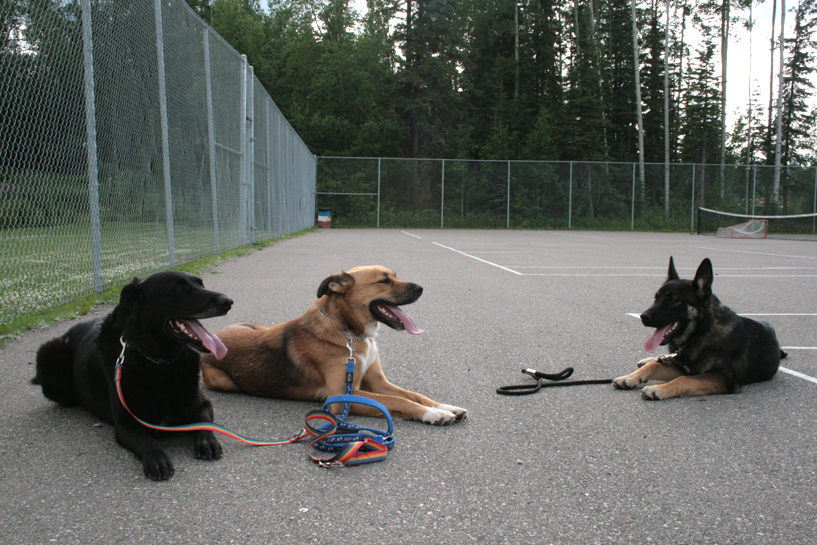
Except Zero, whom is a dog I met but did not work with. I love the name Zero on a dog because I have always adored The Nightmare Before Christmas and the ghostly dog Zero. My sister used to have a dog named Zero that I adored, a well. I did not get a picture of the Zero I recently met though, I wish I had as he was a beautiful dog. Here’s a photo of my sister’s Zero dog with my two (who have since passed a long time ago). Left to right: Coal, Linkin Bark and Zero.
FORT ST. JAMES ANIMAL CARE TEAM SOCIETY
The FSJ ACT is becoming FSJ ACTS! We are getting our society status. We still won’t be able to write receipts for donations as we won’t be a non-profit, but as a society we are eligible for more funding that we desperately need.
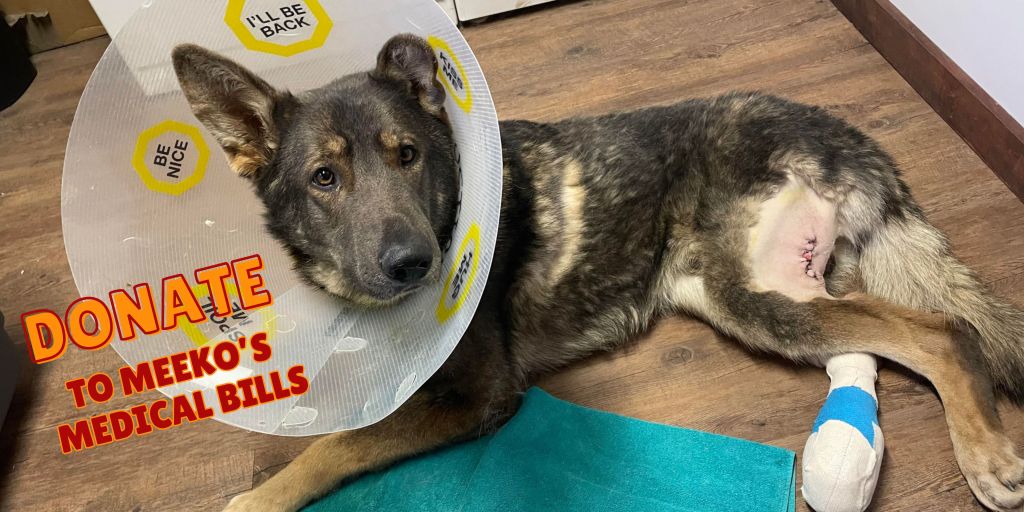
FSJ ACTS took on a one-time difficult case with a dog named Meeko who needed some medical care and we decided to take on the challenge to help. He is a very special dog and worth the care and effort. A great big THANK YOU to our team members Shannon, Katie and April for taking care of Meeko. Shannon has fostered him and cared for him and Katie has helped with his daily bandage changes and medical care. April helped bring Meeko to the vet every week, which is a couple hours from our community. We really need help with his overwhelming vet bills. Please read more of his story HERE and if you can contribute anything (even $5) to help with his medical costs we would greatly appreciate it.
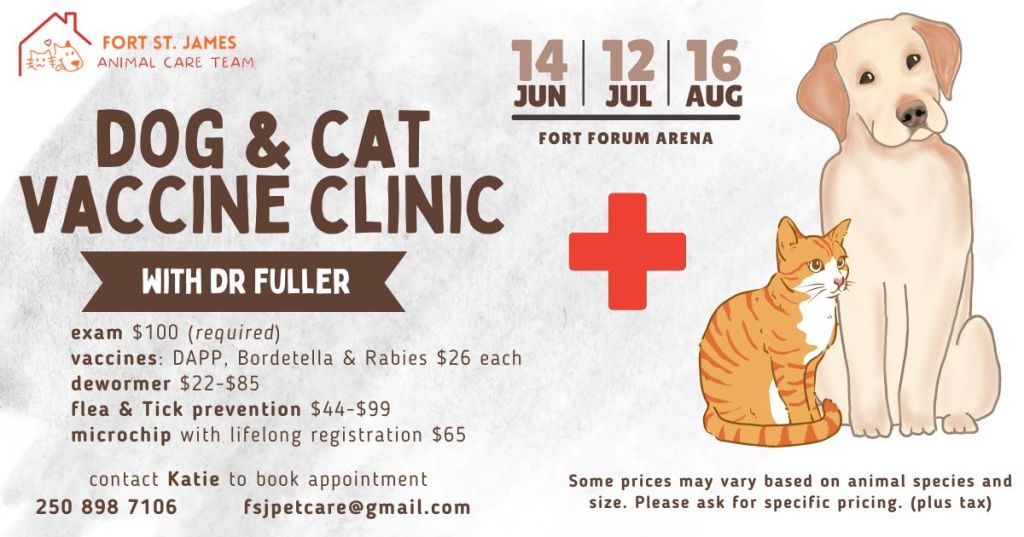
We’ve also been working hard at fundraising, spay and neuter trips, vaccine clinics and general animal emergency help. To be honest, I could very easily write a whole separate blog about the Animal Care Team and what we’ve been up to. The animals are keeping us busy!
Every single one of our Care Team members is so valuable and every single person who helps volunteer and connect us to the resources we need are the blood pumping through our team’s collective veins. The individuals on our team bring so much skills, knowledge, heart and determination and the community helps support us in reaching our goals. It’s been amazing to be a part of and watch what people are capable of when we put a little effort and cooperation in.
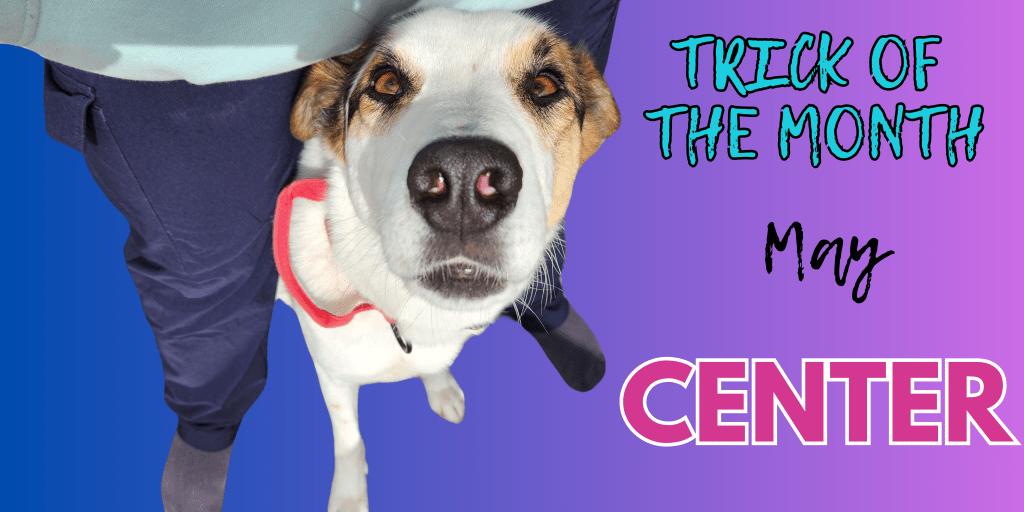
TRICK OF THE MONTH: CENTER
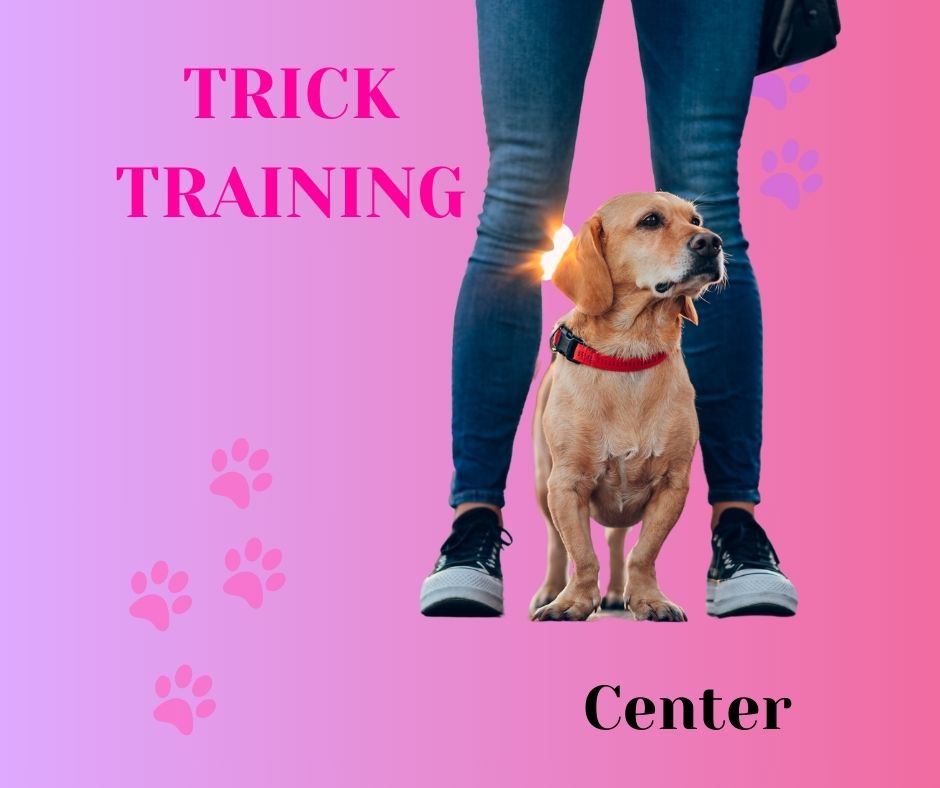
Definition: the dog approaches from behind you, goes between your legs and stands shoulder to knee between your legs
Use: a great way to keep your dog very close to you. It can be helpful in crowded or small spaces (ie; an elevator)
How to teach “Center”
Teaching your dog requires a lure (I use a bit of a tasty treat) and you need to start from the end result and work backwards. First you will stand right in front of your dog (facing away) and lure/call them between your legs.
Once your dog is understanding that you want them to stand between your legs and stay there, you can start to add in distance and different angles to approach from so that you can call your dog to the trick from anywhere.
Instead of standing (with your back to the dog) directly in front of them, start a little ways away from them and start to creep to the side a bit. Keep adding more distance and different angles until you can call your dog to the center position from anywhere (with them in front of you too). It just takes adding that distance (and angles) very slowly and gradually over time.
You will also need to gradually increase the amount of time your dog spends staying in this position. Once rewarded, dogs often consider their job over. Remind them that you would like them to stay in this position until released. If they break too early (whether you rewarded them or not) get them back into position and try again. Give your dog the release command and then toss a jackpot reward a little ways away from you, so that your dog knows it’s time to leave the position. When you reward your dog for staying in position you can slip little tidbits down to them so that they don’t need to move to get their reward. After several repetitions of this, your dog will learn the difference and learn to stay in position until a release command is given.
I’ve done a brief video to demonstrate how to train this trick. I hope it helps! It was my first time doing a video like this and it came with it’s own unexpected challenges. Hopefully next month I can come up with something a little better. Please let me know if you have issues playing it due to Instagram, and if so, next time I’ll load it to YouTube to embed it better.
Use: once you have a moment of your dogs attention on you then you can give the next command with a better success rate
I have been moving more and more towards using a dogs name for this command instead of “watch me”. Using the dog’s name to get their attention is a natural response for most people and it just makes sense to train it to your dog this way.
Once you have your dogs attention on you it’s much easier to redirect them to something else and give them the next command. You will have a higher success rate with your commands when your dog is paying attention.
How To Train “Watch Me”
Training your dog to look at you is actually really easy. Like all training, it requires consistent practice. Start in a low-distraction environment like a quiet room in your house. Decide which command you’re going to use first and stick with it. Make sure it’s a command everyone in the household will use. In this example we’ll be using the dogs name.
Give your command, “Fido” and then hold a treat next to your face at eye level. When your dog looks to your face cue the action as correct using a clicker or a cue word like “YES” and reward your dog with the treat. Repeat, repeat, repeat. Keep practicing until you feel your dog is looking to your face without the lure of the treat.
Add Distractions
It’s important to always gradually add distractions when training any new command. Once your dog is understanding without a lure in a quiet room move on to a less quiet room. Start throwing in distractions of other people, animals, and different places. You can test your dog out by throwing a small box across the floor, have someone else blow a whistle, push a chair past the dog, throw a toy etc. There are endless ways to test your dog out. Create the distraction and then give the command. If your dog struggles to perform the correct behavior then you need a bit more work in the quiet room or with a less distracting challenge. Slowly build those distractions inside your home and then try outside your home. Try in your yard and then move on to a local park, beach, down town etc. If your dog struggles with the new level of challenge then you need to take a step back and work a bit more at a lower challenge for a while before moving on.
All dogs need training, regardless of what type of home they’re in or what their purpose might be. Not all dogs require the same level of training, but any dog living with or working with humans needs training to help communicate to them what the expectations are.
Dog training is “not for the weak”. It takes time, patience and endless repetitions. My husband gets annoyed with me training the dog around him because it is annoying to listen to if you’re not involved in it. It is repetition, repetition, repetition. People tend to look at me like I’m crazy when I tell them that to have a reliable recall you need to go get your dog EVERY time they’re not listening. Rain or shine. Shoes or no shoes. GO GET THEM. Consistent training requires dedication. If you don’t go get them every time they’re going to think “this time I don’t have to listen right away” or even “I don’t have to come back, they’re not coming to get me”. You let them get away with it before, so why not this time? No, you go get them every time and every time they’re going to think they’d better listen or you’re going to come get them anyway.
BE CONSISTENT
Another great example of how dog training is not for the weak is when you teach your dog a place command during your meal times. It’s very important to be consistent and reinforce the behavior whenever your dog moves from her place. This means that you will have to get up multiple times during your meals until your dog learns to stay in her place. You may end up with some cold meals for a few days, but in the long-run you will have hot meals you can enjoy without your dog begging or surfing for crumbs under the table.
Consistency is the key to dog training. Once you decide what behavior you don’t want (or do want) from you dog then you need to follow through every time to show them what they need to be doing. Every time you let it slide because you’re tired, don’t care, or have had enough then you’re making it harder for yourself next time you do have the energy and desire to follow through. It also makes it confusing for your dog when you’re not consistent. Follow through every time and it will get easier. You won’t need to correct the behavior as often and eventually you’ll find you don’t need to correct it at all. It takes a lot of self discipline to have a well-trained dog.
BE MORE SUBORN THAN YOUR DOG
Just like people, not all dogs are the same. You may have one dog that is so easy to train and another that is more difficult. One of these dogs is not better than the other, they each may require different approaches to training. As the trainer, you need to figure out what it is that will work for you and your dog. This is why I do a consultation before a training session with my clients. I need more information before our session so that I have time to figure out what will most likely work for that dog. Even with that information and planning I still sometimes find myself thinking on the fly trying to figure a dog out. My plan doesn’t always work. They are unique individuals who can’t speak our language to us. Training often takes a little bit of detective work.
Once you find what works, you then have to be incredibly consistent to communicate to your dog exactly what your boundaries and expectations are. Every single time your dog is surfing for crumbs under the table when you’re eating dinner you will put him back to his bed. Every single time she is barking at the fence and won’t come to you then you will go get her and bring her back to the spot you called her from. Every time they jump on a house guest you will correct the behavior with a sit. If your dog thinks you won’t always enforce the rules they will think they’re free to push those boundaries to figure out just how lax you will be. They start making up their own boundaries and expectations. You have to follow through every time to let your dog know you mean it. You will not play any silly games about it.
The only time you shouldn’t follow through on correcting your dogs unwanted behavior is when it is unsafe to do so. For example, when he runs into a busy highway it’s not wise to blindly chase after him. Maybe you have children with you and you can’t leave them or take them with you safely to pursue the dog. Things happen, sticky situations occur. The best way to avoid those is to be preventative. Leash your dog with a well functioning collar and leash. Work on their obedience often and add in distractions as they get better at it. Proof their training when they’re ready for it and add more and more levels of challenge.
BE DEDICATED TO TRAINING YOUR DOG
If you want a well-trained dog you have to dedicate your time and effort into training your dog. You need to prioritize your dogs training. When you schedule a training event with your dog then you need to make sure it is marked on your calendar. You don’t wait to see what you’re doing because this is what you’re doing. You are training your dog.
Having a well-trained dog takes dedication. It takes time, patience, persistence, consistency and time to creating a strong bond with your dog. Every dog should have training. Think about these two truths together: training a dog takes all of this work and dedication and every dog needs to be trained. This means that if you want to own a dog you need to be ready to dedicate the time and energy it takes to train them. If you’re not ready for that you shouldn’t have a dog. This may be a controversial opinion for some, but if you can’t provide the care an animal deserves then you don’t deserve to have the animal. I understand that things happen. People lose their jobs, their homes or illness/injury may happen that prevents them from providing proper care (which includes training). I totally get that life is not black and white and I make room for “shit happens”… but if you are thinking of getting a dog right now and you know you can’t dedicate this level of training then you should reconsider if a dog is the right pet for you. In the very least, make sure you heavily consider the type of dog you get. Some breeds of dog require way more time and energy than others. Some dogs are more difficult to train, some need constant physical and mental stimulation. Do your homework before getting a dog and make sure that the type of dog you choose is suitable to you and your lifestyle.
BOARD AND TRAIN
Some trainers offer “board and train” which is where the dog is boarded with the trainer for an amount of time and the trainer works with the dog every day in a home environment. This may be a great arrangement for some dogs with certain problem behaviors, but when it comes to the average dog I strongly believe the best person to put the work in is the dogs owner.
Training is a way to communicate to your dog what you want from them. It’s also a good way to teach your dog to communicate with you so that their needs are met. Teaching a dog to ring a bell or bark to be let outside is way to train them to communicate with you. Some people go as far as to train their dogs to push buttons to actually talk to their humans (seriously, check it out; it is cool to watch). You don’t have to go that far with training your dog, but you should at least train the 5 basic commands: sit, down, stay, heel and recall (come). With those basic commands you can help your dog navigate your world in a way that is safe and acceptable.
The good news is that you won’t have to dedicate this level of training into your dog for their entire life. Once they understand the rules you set and once they learn that you will always follow through, they will test those boundaries less and less and respond desirable, more often. You will have a well responding dog eventually. You will still need to follow through should they forget the rules or decide one day to test you, but it won’t be as often as when you first started training. You won’t be running bare foot through the snow for the rest of your dogs life (and hey, throw some shoes by the back door if you’re really worried about that one). Training is a commitment for your dogs entire life, but the most important is the foundation you will set early in your training.
You should want to train your dog yourself. Training your dog builds a deep bond with your dog. Dogs are “mans best friend” because of their devotion to us. You will never find a human who loves as unconditionally and as forgiving as a dog. You owe it to them to teach them how to live in our world in a way that is respectful and kind. You owe it to them to socialize, raise, and train them in a way that they will understand.
ARM YOURSELF WITH KNOWLEDGE
You also owe it to your dog to take the time to learn their language too. You are different species living in cohabitation. If you expect your dog to learn the rules of the house then you’d better also learn your dog’s basic language. It is an art in subtlety; the way dogs communicate; and it will take time to learn and time to submit it to practice.
Hiring a dog trainer to help you is a great place to start. You can also start looking online, as there is a wealth of information there (although I do have a word of caution: you have to learn to tell what is right from wrong). You can start with my blog post about teaching kids warning signs from dogs.
I always try to be open to different training methods because I never know when that knowledge will come in handy. Dogs are individuals with individual personalities, breed traits, and thoughts. Dogs are emotional beings which will often shape their perception of the world. Understanding all of this, it’s no surprise that there are so many different training methods. As long as the method is not harmful, it should be considered as part of the “training tool inventory”.
Hiring a dog trainer can help you navigate this big world and find what will work best for your dog. Once your trainer has helped you get started it’s up to you to maintain that training and apply it to your every day life.
Dogs are smart beings that have several needs, and one that is often overlooked is their need for mental stimulation. The more you train your dog the more they will use their brain. A dog who is often challenged and taught new behaviors will actually learn to use those behaviors and problem solve on their own (at least, to the degree a dog is capable to). If not given enough mental stimulation (and physical exercise) a dog will often become bored and restless. This is when destructive behaviors start to occur. This is especially true for dogs who are naturally smart (some breeds that are naturally more intelligent would be border collies, Australian cattle dogs, standard poodles… basically any dog that was originally bred to do a job that requires some independent thinking and problem solving) if you don’t give a smart dog something to do they will find something to do for themselves. This will often be behaviors such as excessive barking, digging, fence jumping, or destructive chewing. There are several ways to fulfill your dogs needs for mental stimulation.
TRICK TRAINING
Training is a big one. Basic obedience, of course, but if you feel like your dog needs a challenge try training tricks. Tricks are a fun way to engage your dog, bond with your dog, and they’re super fun to show off to others.
Start with some simply tricks that are easy for most dogs to pick up. Shake a Paw is a pretty common trick that most dogs catch onto quickly. However, some dogs paw a lot to begin with, and so you may want to first consider whether your dog is like this. Boxers commonly like to use their paws a lot. When you train a dog like this to shake a paw it suddenly becomes their whole personality. They are the dog who shakes and shakes and shakes even when it’s not asked for. If you think this could happen to your dog, then I discourage training shake a paw.
There are lots of basic tricks to teach your dog such as roll over, sit pretty, spin, etc. and you can also build behaviors onto each other to create more complex tricks. Targeting (touching) your hand with their nose can then turn into closing a door or rolling a ball. There are literally hundreds of tricks you can teach your dog.
For more trick training ideas and tips check out Do More With Your Dog, where you can even get your dog titled for Trick Dog!
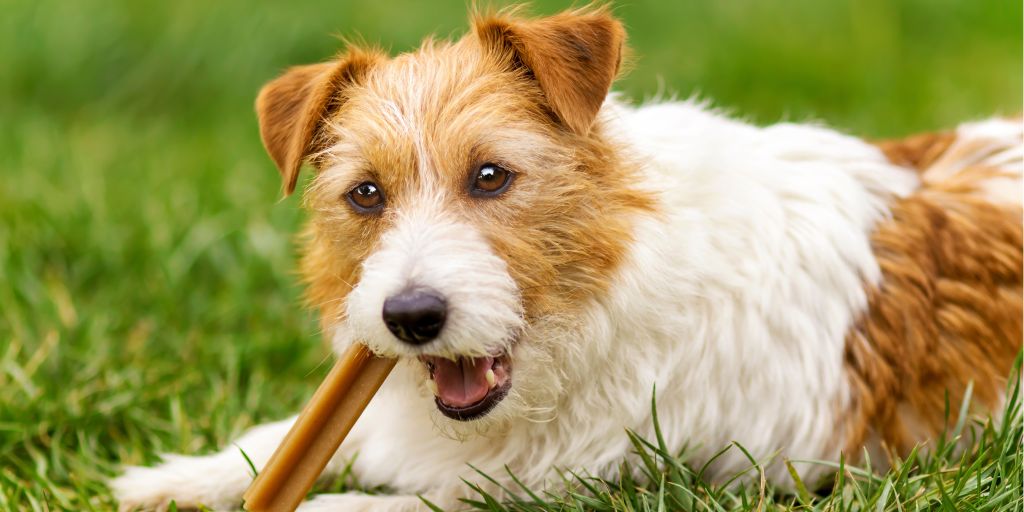
A good, deep chew is highly beneficial for a dog. It works their muscles, brain and promotes good oral hygiene (which helps fight bad breath). Chewing is also very instinctual; dogs will often find something to chew on if they’re not provided with it. Chewing releases endorphins which heightens the sense of pleasure and well-being for the dog.
To pick a good chew for your dog you will need to consider their size, breed, and personality. If your dog is a big, strong dog that loves to chew you’re going to need a big, strong chew. Something too hard can cause injury and break teeth. Something too soft can get stuck on teeth or tear to tiny pieces too easily. Something too big can be difficult to get a grip onto, which can also cause injury and may just build frustration in your dog. Something too small can get lodged in their throat or swallowed.
DON’T use hard, round balls or tennis balls. They are quite dangerous. Look for toys that are attached to a rope/handle or are hollow in the middle.
Raw meaty bones (RMB’s) an excellent source of protein and a good chew. Note; you should never give your dog cooked bones. Cooking makes the bones brittle and more likely to snap and splinter in sharp points that cane puncture and hurt your dog. RMB’s need to be selected based on size for the size of your dog. There is lots of information out there about raw feeding and using raw bones for recreational chewing. A great place to start is the Perfectly Rawsome website.
If you head to a pet store for a good chew product, it’s important to keep in mind that not all products sold as chews for dogs are actually safe for the dog. Rawhide is a great chew for a dog; as long as it’s been processed and prepared properly. Which unfortunately, cheap, bleached rawhide chews are often complete garbage and downright dangerous for your dog. A great alternative is to look for “pizzles” that are prepared naturally.
My personal favorite is a black Kong stuffed with peanut butter and treats. This will keep a dog busy and a Kong is a great toy for a heavy chewer. They vary in quality based on colour. Black Kongs are the strongest and least likely to be destroyed. Last I checked, they are also covered in Kong’s guarantee and if your dog does destroy a black Kong then the company will replace it.
PUZZLE TOYS
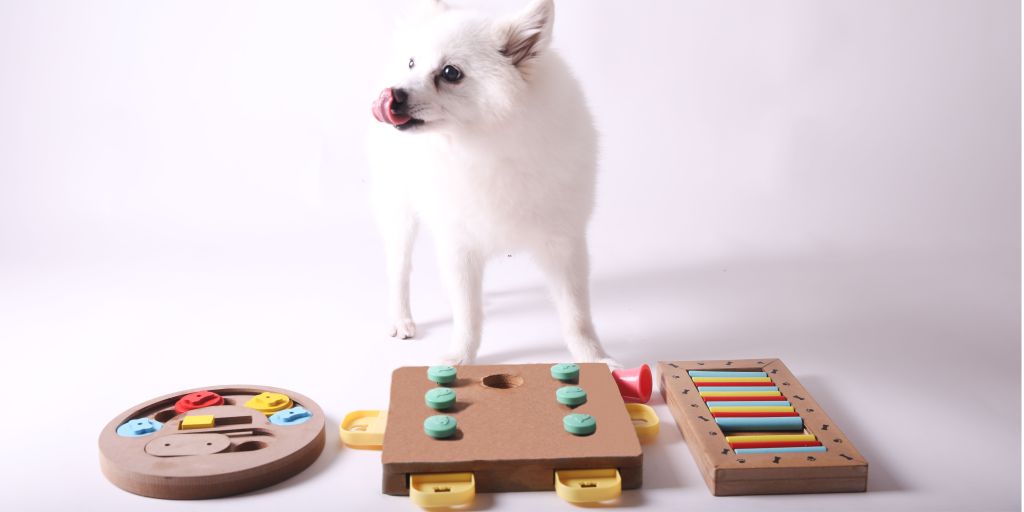
There are so many different kinds of really cool dog puzzle toys now. You can buy endless different kinds and you can also construct your own with objects found around your home. For example, you can lay out an old towel and sprinkle dog food or treats on it and then roll the towel up. Or place food in a muffin tin and cover each with a tennis ball. There are lots of ideas, The American Kennel Club has some good DIY ideas.
Here’s the catch on puzzle toys, and this is how I see them often fail for people; you have to train your dog how to use them. Some dogs may figure it out on their own, but I’d say most need to be taught what to do (or at least shown that there is food involved). For example, for the type of puzzle toys that has little sliding windows will need to be started with food in the compartments but with the doors open. The dog needs to first learn there is a reward in the compartments to have a desire to try to solve the puzzle. Next you would partly close the doors, and finally close them completely. You may add a level of difficulty with food in some compartments, but not others.
OBSTACLE COURSE
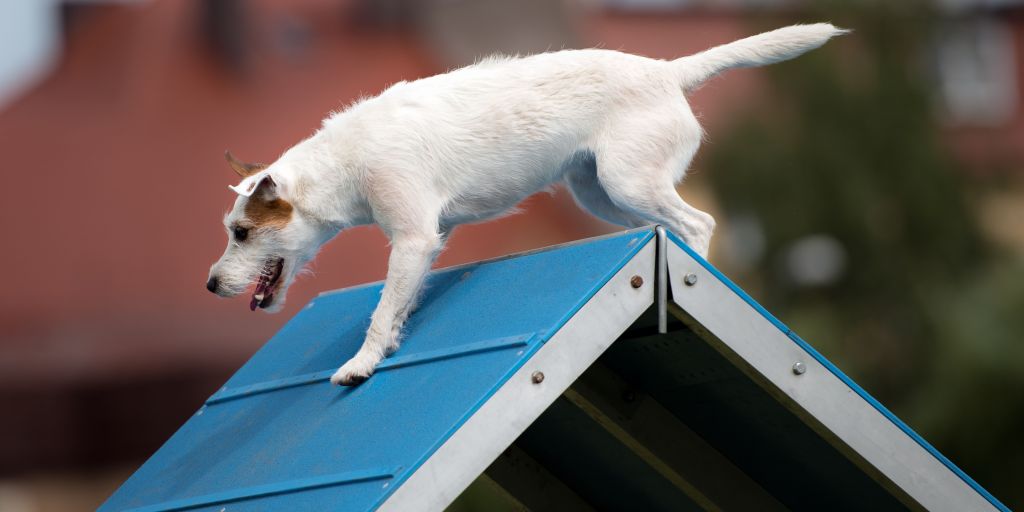
A great way to stimulate your dog both mentally and physically is obstacle course training. If you’re lucky enough to have a local dog agility club, then I highly recommend checking them out. If you have the ability and room then you can create some backyard agility equipment. Your obstacles don’t need to be dog agility regulation, unless you plan to compete in agility trials with your dog.
You don’t even need equipment, you can use your surroundings, so long as you take the time to train your dog properly. You need to be their spotter and you need to be aware of your dogs body language and what they’re telling you. You are there to guide them and teach them the behavior broken down in easy to understand steps. Using your surroundings as an obstacle course is called “parkour”, and when dogs do it it’s called “barkour”; which I think is adorable. You can use a wall, a tree, a playground, whatever you have access to with your dog. If you’re interested in this I recommend checking out the Instagram accounts @parkour.ninja and @parkour.dogs.
A note on “corrections”: A “correction” is a way to teach a dog that what they’ve done is wrong and not the behavior your requested. A correction may mean different things to different people, based on your training methods. It may involve a training collar (e-collar, prong collar, check chain, etc) or it may involve a firm “NO” followed by showing the dog the correct behavior and giving them an opportunity to try again.
I often tell my clients to make sure they are practicing their training around the house in “real life” scenarios. When you’re eating breakfast, have your dog down/stay in their bed. When your brewing your coffee or tea take a couple of minutes to practice a few commands in the kitchen. When you are leaving the house have your dog sit and wait before going through the front door. When you head out to water your flowers or take your garbage out bring your dog with you and work with their boundary training and recall (make sure you work at their level of training; use a long line if you need to).
If you get creative, there are lots of ways to incorporate training into your day-to-day life with your dog. It doesn’t have to be an hour dedicated to training every day or even every week. 5-minute training sessions once or twice a day will have a huge impact on your dog.
How else is the dog supposed to learn how to act under these conditions? In order to perform how I want her to under regular every-day conditions I need her to learn it in those conditions.
Here are a few examples of every day life training situations. This is not a step-by-step how-to post, but rather a detailed explanation of the type of training I’m talking about. If you’re looking for step-by-step instructions please feel free to send me a message and set up a consultation for a training session.
Condition Them to Touch
All dogs should be conditioned to touch so that they are not overwhelmed by it for basic care such as grooming and vet care. You can do this when you’re sitting at home watching TV. Put your dog in front of you and condition them to hands touching all over their body. Focus on touching their ears, mouth, paws, legs and tail. You can make a positive association by making a relaxing time of it and rewarding with treats.
If your dog will need to be on a grooming table, prop them up on a table at home and make positive associations for your dog in this scary situation. Some dogs feel really uneasy their first time up on a table. Make them feel more comfortable by getting them used to it through multiple exposures and associating something positive (like treats) with being on the table. For more about grooming your dog, check out my post Grooming and Care.
While conditioning your dog to touch, keep in mind the kind of touch that may be required for their basic grooming and vet care. This may involve picking the feet right up, holding it firmly and maybe even splaying the toes apart to be able to trim each nail. This will be uncomfortable and weird for your dog, so approach each type of touch separately. You will need a lot of patience and to condition your dog slowly in baby steps over the course of time. If you’re worried about giving your dog too many treats, you can hand-feed them using their kibble as a reward for accepting your touch. As long as you remember to use a meal rather than adding extra food, and as long as your dog actually likes their food, they will still make a positive association.
Boundary Train
Boundary training is by far one of the most important real life training. Teach your dog what spaces they’re allowed to be in and under what circumstances. Use cue words to let your dog know whether they can exit the property and establish a boundary that is easy for your dog to understand (such as the edge of the lawn). Take your dog out on a long line any time you are outside. You can practice it when you’re out gardening, enjoying the sunshine, shoveling snow etc. Let the long line drag behind your dog but keep an eye on them. As soon as they cross the boundary you’d like to establish correct your dog and put them back within the boundary. Work on this every time they’re outside with you and work on it often. Eventually your dog will learn where the boundary is and not to cross it.
You can also use this as an opportunity to work on your dogs recall. When your dog is away from you and distracted with just being a dog then use this as a chance to call them. Call your dog to you sporadically at random times when they’re in different places within the boundary. If they don’t come when called, you can use the long line to correct and/or guide your dog back to you.
Door Dashing
Teach your dog not to dash out of an open door. This should be a rule applied to when you’re leaving the house and in the case of a door left open. Teach your dog these techniques for the doors to your house and any gates that could be potentially left open and your dog escape. For example, one day when I was sick in bed, my husband was mowing the lawn and he left the gate open. My dog Zelda was inside, but the door was open with the screen closed and the cats like to open the screen door to let themselves out. If the screen is open enough for her to get her muzzle through then Zelda will push the screen door open too. Within 15 minutes she escaped and was long gone. We were able to track her down through posting on the community Facebook page and tracking sightings of her. After that I decided to teach her she was not allowed out of the gate unless one of us gave her the go ahead.
Likewise, your dog should learn not to dash out of any open doors. We have a split-level entry which makes getting in and out of our house crowded and annoying to begin with. Add an excited, uncontrolled dog into the mix and it’s a recipe for someone falling down the stairs. For this reason, I’ve taught Zelda not to dash down the stairs or out the front door.
Every time you open the door, have your dog sit and wait (on leash). If the dog dashes out the door correct them and put them back in the same spot or further back from the door. Every time you leave with your dog make them wait until you give a cue (‘lets go’, etc). The dog should not be allowed to leave the house through that door without the cue word.
Go To Place
Teach your dog to have a place that is just his to go lay down on. Teach a command to send your dog to his bed to keep him out from under foot, while you’re eating or when you have company over. “Go to bed” is a good cue to use. Teaching your dog to go to place will be a lot easier if they already know how to lay down and stay on command.
Going to place is a very handy “real world” command for your dog to know. Tell your dog to go to place when you’re eating meals, when you have guests over or whenever you just don’t want your dog under foot.
It’s very important that your dogs place (whether it’s a bed, blanket, crate or rug) is used by only the dog. Don’t allow children to play on it or other pets to lay on it. This is your dog’s safe space to relax.
If you’d like more information or help training any of the above “real world commands” please don’t hesitate to contact me to schedule a consultation and training session.
I was going to post something different this week; I wanted to post a blog I have written about what to expect from Fort St. James Dog Training. It covers everything from first contact to the consultation, session and follow up. However, since I missed posting the last two weeks that bumped us into the middle of the month faster than I expected and it’s time for another monthly update! The post I had planned for today will instead be bumped to next week.
So far, the month of March has been pretty quiet. My family have just been battling one cold after another. I think I spoke too soon when I said we got away with less sickness this winter than last and the germs are trying to show me to put my foot where my mouth is. It’s like we suddenly got hit with all of it in one month. Which is why I missed posting the last two weeks.
In February I had set the goal of doubling the amount of dogs I trained vs the month before, and I not only met that goal but surpassed it. I knew that setting a similar goal for March would be unrealistic as I just don’t have enough available hours for training to work with 20 dogs in one month. I’m fine with that, sometimes we need our goals to be realistic so that we don’t become overwhelmed in reaching them. I’ve trained a handful of dogs so far this month and each one is always so special to me. Even if I only trained one dog in the month I’d still consider it a success because I was able to help someone with their dog. After all, that is what I’m here for.
Favorite February Name: Tyrion
One of the many little delights I’ve found in dog training is learning what people name their dogs. My favorite dog name from February was a sweet little dog named Tyrion. As a Game of Thrones fan, this name is an absolute hoot (especially on a small dog).
Tyrion’s owners were also very enthusiastic about training; they are working hard to reach their training goals and I loved seeing them attend Pack in the Park and really put in the work. Way to go guys!
A close second was a corgi named Kevin.
Business License
Fort St. James Dog Training was supposed to start as an official licensed business March 1st. I was sick leading up to March so I didn’t get a chance to get to the District Office before March 1st but went in on the day of. It was my experience (from eons ago) that you could get a business license the same day. I even downloaded their form from the District website and filled it out beforehand to save time. When I brought it to the office I was met with a lot of confusion. I was told they couldn’t do it that day. When I expressed my surprise, I was told ” yeah, we have to do it the right way now.” I was a bit shocked at that answer. “You weren’t doing it the right way?” I asked and the answer I got back was “no” and then a mumble about high turnover. So I think maybe the people at the office just didn’t know how to do it? I was told they’d be in contact with me after looking it over. It’s been almost 2 weeks since I dropped it off, how long does it take to look over one sheet of paper? I phoned this morning and was told they e-mailed me, but I never got it. I don’t understand why they didn’t phone. I feel like people have lost the art of the phone call these days (does complaining about that make me old?). They needed my registration number and I don’t understand why that wasn’t an option to fill out on the application. At any rate, I am annoyed and I have to say, after that experience I’m really not left with a lot of confidence in our District workers.
animal welfare updates
Our little group has been working really hard to re-establish the Fort St. James Humane Society. We’ve dotted most of our i‘s and crossed most of our t‘s but there’s still a few little things to work out so we’re keeping our rescue missions on the down low until they are finished so that we don’t become overwhelmed. There are a LOT of animals needing help in our community and a lot of owners who need help with their animals. It’s going to take time to really start making an impactful difference.
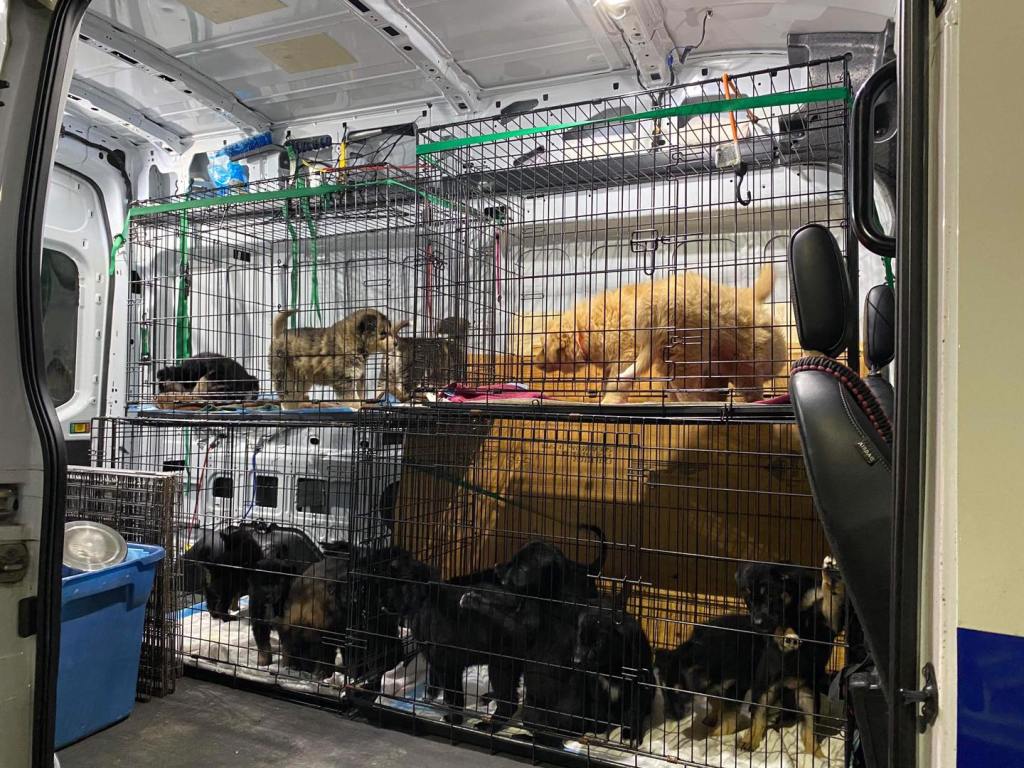
Last week we executed our first big rescue mission since re-assembling an Animal Care Team. It was a drop in the bucket of a larger issue, but we changed the world of 17 puppies and that’s amazing. People from difference communities all came together to make this mission a success. In honor of an Animal Care Team member who passed away recently, we named this first rescue Mission Chantel. Chantel loved animals and really wanted to see our efforts in animal rescue be successful.
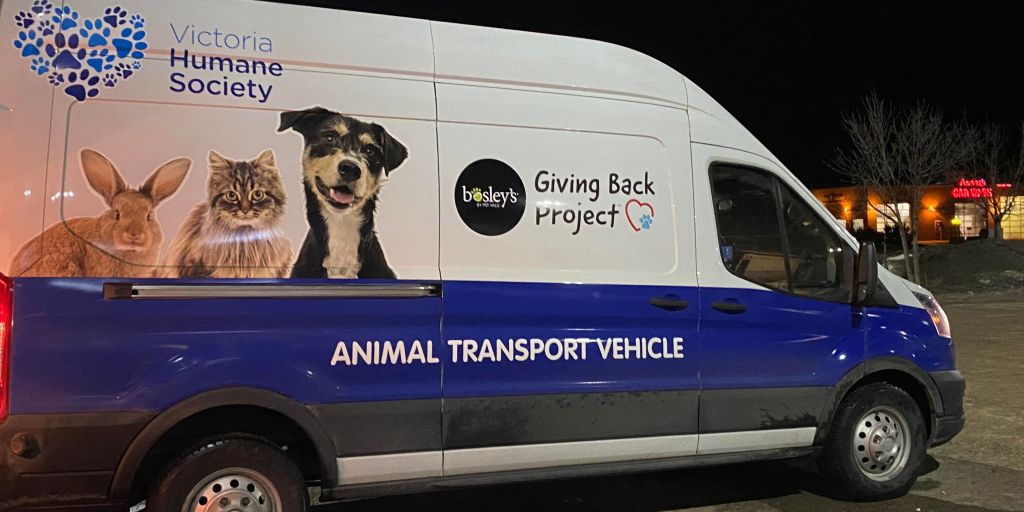
One Saturday, March 9th, 16 puppies (one ended up being adopted by one of our members) were loaded up and transported to Quesnel, where the Victoria Humane Society transport driver met our driver with their beautiful van and the 16 puppies were transferred from one vehicle to the other. VHS drove them back to Victoria where they were all quickly bathed, vetted and placed in foster homes.
As I said, a lot of people were involved in this rescue mission and it went quite smoothly and I would say was a total success! A huge thank you to the people who worked hard to orchestrate the whole thing and cared for these sweet little babies while they waited for transfer. This mission would not have been successful without everyone who played a part.
You can learn more about Mission Chantel on Facebook here and here.
If you would like to be a part of the solution get in touch with the Fort St. James Humane Support Group and see what you can help with! One thing we never seem to have enough of is foster homes. Since we don’t have a physical building to house animals, we need people to open their hearts and homes to house any animals we take in. If we don’t have a place for them to go, we can’t help them.
Novice Trick dog
One of my goals with Zelda is to get her a Novice Trick Dog (NTD) title. I love training tricks to dogs. I love the way they need to be broken down into different behaviors that you then shape together.
Trick dog titles can be obtained through Do More With Your Dog. For a NTD you need 15 tricks to be evaluated by an evaluator either online via video or in-person. Some basic obedience counts and advanced and expert tricks count as two towards the NTD. For more information, check out their website.
Zelda’s trick list currently consists of:
(1) sit
novice
(2) down
novice
(3) shake hands
intermediate
(4) sit pretty/beg
intermediate
(5) spin circles
novice
(6) roll over
intermediate
(7) leg weave
intermediate
(8) center
novice
(9) stay
novice
(10) touch hand (nose touch)
novice
(11) focus (watch me)
novice
(12) drop on recall
advanced
Trick of the Month: Center
Definition: Come from behind and stand between the handler’s legs (shoulder to knee)
Command Variations: “center”, “peekaboo”
Behavior: Break down into two parts: dog stands between your legs and dog moves from in front to behind you
Use: To position a dog where you want them
This trick doesn’t have a lot of practical use, but is a fun extra to train your dog. It can act as a party trick or can come in handy when participating in dog sports, such as dog agility, where you want to get your dog set up in a specific spot to start.
How To Train “Center”
Stand in front of your dog but facing away. Bend down and hold a treat in one hand and motion with your hands for your dog to come through your legs. As soon as the dog is in position reward them. Keep practicing until you feel like your dog understands to stand between your legs. Start connecting your command with the behavior.
Next you will need to teach them to go to that position from anywhere and facing you from any direction to start. Since you started teaching this trick with your dog behind you, gradually start to turn your body so that they’re approaching from the side. Practice many times until your dog is doing it smoothly. Try again after turning your body a bit more and continue to train this way until you have turned enough to be facing your dog when the command is given. The dog must go around and then get into position from behind you.
Add Distractions
It’s important to always gradually add distractions when training any new command. Once your dog is understanding without a lure in a quiet room move on to a less quiet room. Start throwing in distractions of other people, animals, and different places. You can test your dog by throwing a small box across the floor, have someone else blow a whistle, roll a ball past the dog, throw a treat etc. There are endless ways to test your dog out. Create the distraction and give the command, “center” and if your dog struggles to look at you despite the distraction then you need a bit more work in the quiet room or with a less challenging distraction. Slowly build those distractions inside your home and then try outside your home. Try in your yard and then move on to a local park, beach, down town etc. If your dog struggles with the new level of challenge then you need to take a step back and work a bit more at a lower challenge.




 Shara Walsh