April Update

Dog Blog, Dog Rescue, FSJ ACT, FSJ Dog Training, Monthly Update, Pawparazzi Pet Services, Trick Training, Zelda

The rest of March and this first half of April have been a bit slow for me, when it comes to dog training. I haven’t been advertising a lot or taking on very many clients. With spring break for my eldest and break up for my husband I just focused on spending time with my family.

But I’ve also been brewing up some ideas for workshops this summer. I am working on a big workshop that will be 4 weeks long with an optional open day for practice as well. This workshop is titled “Building Your Dog’s Confidence” and I’ll be sharing more details about it once I feel confident it will be happening. Currently I’m working out how I can do it from my back yard. This workshop will also involve dog agility equipment, which I only have a few select pieces left from my agility days in my teens/early twenties. Building and obtaining more equipment is my first goal and once I do that I’ll have a better idea of how much space I need and when the workshop will happen. I don’t want to do it in the dead of summer during peak fire season either, so I am trying to get it done as quickly as I can, but there’s been a few set backs.

The second workshop I’ve been working on will be a smaller one that will just be a one day thing (probably 1-2 hours long). This one will be in a public space, but I have yet to secure one (though have a few options). It will be a larger group than the confidence building workshop. I haven’t landed on a title yet and I haven’t outlined it as well as I have the other workshop, but I have an idea of what I want it to include. It will be all about leash work. Sizing a leash, good leashes vs bad leashes, about leash laws an why leashes are important, how to achieve loose-leash walking, the difference between loose-leash walking and heel (and how to teach heel). Basically, it’s a 101 on leashes. So these are some things I’ve been working on a bit, and will hopefully be happening this summer (fingers crossed we don’t have an insane fire season that limits me to needing to train indoors).

I find it awkward that my monthly updates cover half of this month and half of last month… so I’m going to come up with some sort of schedule for how I post on the Dog Blog and these monthly updates will fall on the last Wednesday of the month instead of the second. It just makes more sense. This means a longer wait for the next monthly update, but the next one will cover half of April and all of May.

FAVORITE MARCH NAME: WALTER

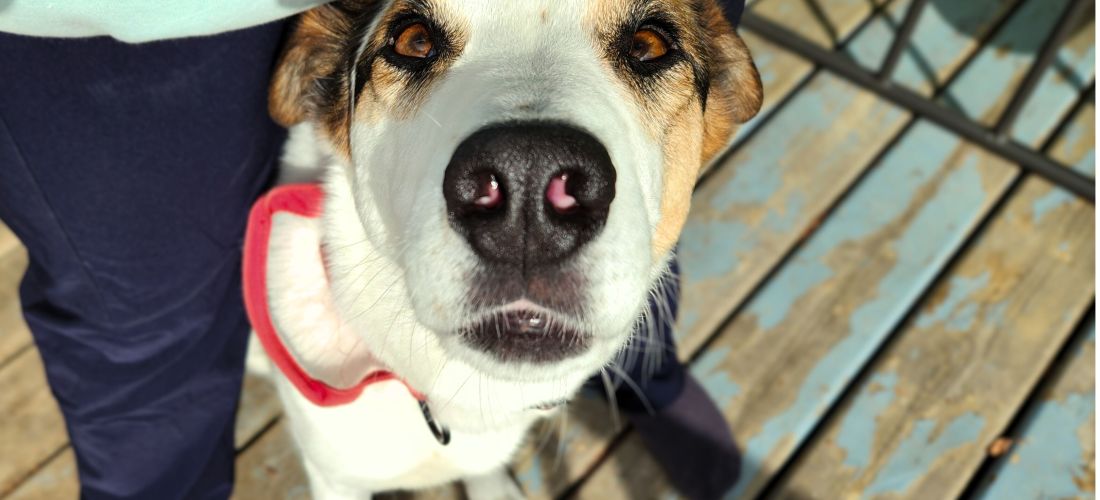
I love that all the dogs from this litter were named starting with “w” and they all got these totally normal people names. I first met Winston when I was dog walking and last month I had the honor of meeting Walter, Winston’s brother. Such a sweet, calm dog who’s personality is nearly opposite to his brother. I really enjoyed working with him and his owner has clearly put so much time into him already.

Runner up was an adorable little frenchie named Meki.

FORT ST JAMES ANIMAL CARE TEAM

We’ve settled on a temporary name, although I have a feeling this is going to end up sticking. It just works really well. At first, I was a bit bummed because I have a sentimental attachment to the Fort St. James Humane Society, but now that we have landed on a name we’re using I have done some thinking and I realize that a new name is probably for the best. We aren’t the same society that was established back in 2008. It’s a new group of people (a few are the same, but mostly new people) and we are moving forward. We are going to take what we’ve learned from the last society and move forward with it.

We currently really need volunteers and donations. Pretty much all types of donations are being accepted. We have a bunch of raffles and concessions coming up for fundraisers and we could use donations of baked goods and warm food. We also need more people to help with these types of fundraisers and events.

If you’d like to volunteer please send a message on Facebook or come to the next meeting. Our next scheduled meeting is Sunday, April 14th at 1PM at The View Hotel (come straight through into the dining area and to the right).

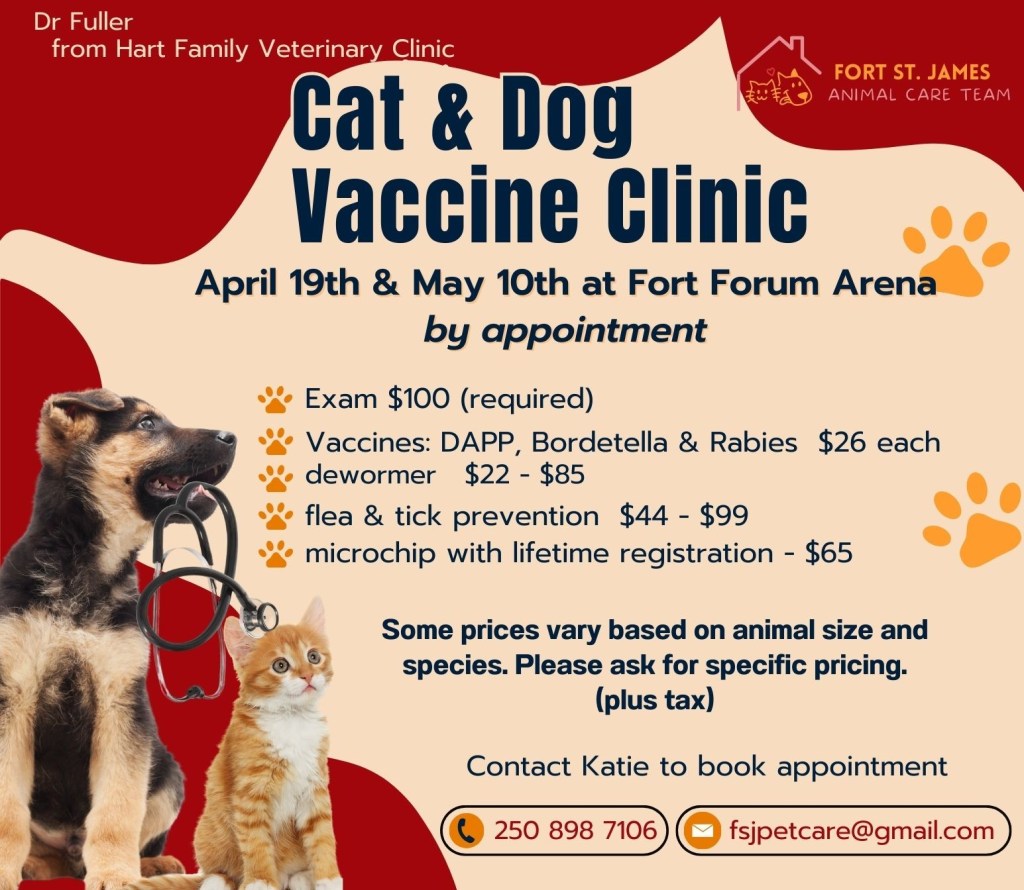
There are two upcoming vaccine clinics for residents of Fort St. James, Nak’azdli and surrounding communities. $100 exam fee, and each vaccine is $26. There will be dewormer available as well, the price varying quite a bit based on animal size and species. These clinics are booking up fast so don’t hesitate to contact Katie if you want to get your pet in!

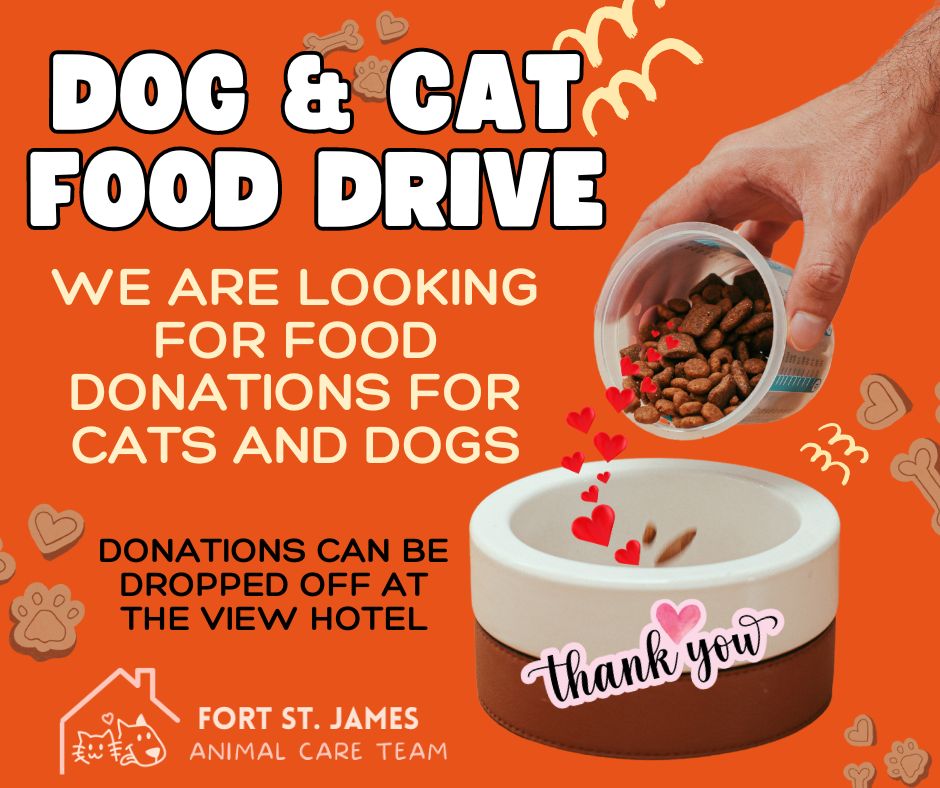
Our little animal rescue group is also looking for any type of dog and cat food donations. ANY kind of food is accepted regardless of brand, size, canned, kibble, raw etc you name it we will take it. I will always preach about good nutrition to dog owners and how important it is to select quality food for your pets, but when it comes to starving animals fed is better than dead. Quality isn’t a concern when it comes to just feeding starving animals.

Food donations can be dropped off at The View Hotel. If you require it picked up please contact the Fort St. James Animal Care Team to make arrangements.

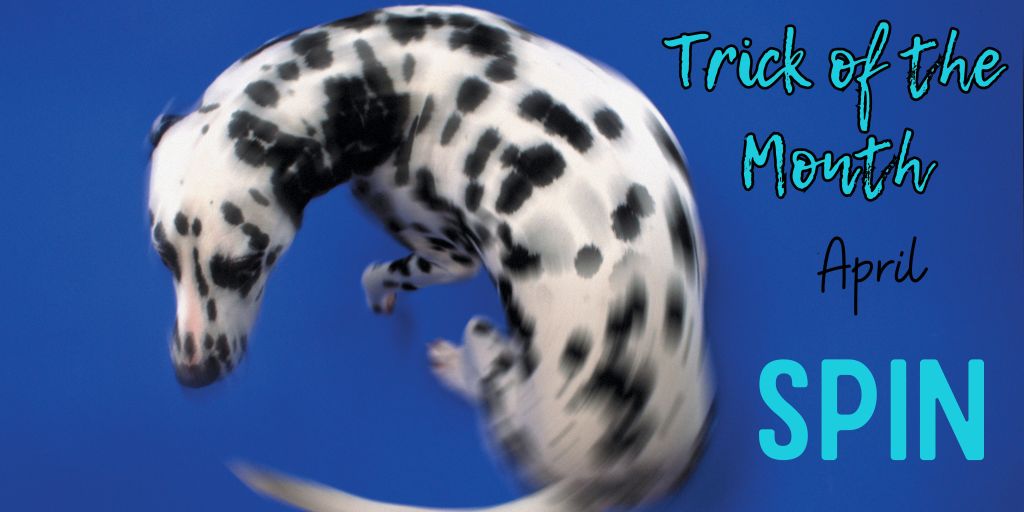
TRICK OF THE MONTH: SPIN

Definition: from a standing position, the dog spins their body in a tight circle (from head to tail)

Command Variations: “spin”, “twist”, “circles”

Use: fun trick

Caution: spin is not advised for dogs with spinal problems, hip problems, or any sort of mobility issues that may cause pain or exacerbate their condition

How to Train “Spin”

Begin with your dog in front of you, in a standing position. Hold a yummy treat in your closed hand and lure it in front of the dogs nose. When you have your dogs attention move your hand in an arc toward the dog’s back end, and follow through around in a full circle. The dog should follow the treat with their nose and spin in a circle as they follow. If this doesn’t happen, your hand may be too close or too far away, or you may not be giving enough room for your dog to comfortably spin around. When your dog completes a full circle praise and reward with the treat.

Once your dog seems to be catching on, start using verbal and hand commands and try it without luring. If your dog struggles, go back a step and continue to lure while giving the command and then try again without the lure.

VARIATIONS: You can teach your dog to spin clockwise, counter-clockwise or both! Simply teach your dog to spin one way and then teach it the same but in the opposite direction.

Add Distractions

It’s important to always gradually add distractions when training any new command. Once your dog is understanding without a lure in a quiet room move on to a less quiet room. Start throwing in distractions of other people, animals, and different places. You can test your dog by throwing a small box across the floor, have someone else blow a whistle, roll a ball past the dog, throw a treat etc. There are endless ways to test your dog out. Create the distraction and give the command, “center” and if your dog struggles to look at you despite the distraction then you need a bit more work in the quiet room or with a less challenging distraction. Slowly build those distractions inside your home and then try outside your home. Try in your yard and then move on to a local park, beach, down town etc. If your dog struggles with the new level of challenge then you need to take a step back and work a bit more at a lower challenge.

ZELDA WITH BOOKS: A BOOK REVIEW

This is a new section to my monthly update, but not a new practice for myself. I have always been an avid book reader, but unfortunately since having kids and the responsible adult life it’s been harder to find time to read. I’m also a super slow reader, I just always have been. Because of this, I’m not sure exactly how I’ll do this section. I have feeling it may not stick as a monthly feature because I may not have enough new content for it every month (I tend to read books for months on-end). I’m also not sure if it’s appropriate to write my reviews for anything I’m reading here or if I should stick to dog-related books? I certainly do have a lot of those that would provide content for some time, but I’d much rather tie this post into my Instagram account which is where these reviews will be most likely coming from. I’ve been partaking in “bookstagram” since 2020 and it’s been a fun little side hobby. I enjoy photography and the added challenge of photography with books and my dog have been a fun way to bond with her and teach her new tricks and behaviors. I think, to start, I am going to write about the last book I finished and reviewed, and you guys can give me some feedback on whether you want to see more like that or if you want me to only review dog-related books. Another option is to focus mostly on dog-related books and throw in other genres here and there. I mostly read horror, and I feel that’s a bit niche. Let me know your thoughts on this!

Humane Sacrifice by Felix I.D. Dimaro

5/5 stars

What a super fun read! Melvin Cockburn was failed by everyone in his life, except his dear little cat Lucy. But Lucy has a terminal tumor, and Melvin can’t stand the thought of losing his only friend, so when he’s offered a chance to save her, he takes it; no matter the costs.

This book is a wild ride. Horrifying in the ways you expect from Dimaro but surpsingly also filled with a lot of heart. I just felt bad for Melvin, despite the horrific things he does.

This was a 5 star read for me. It may even be my new favorite Dimaro book. It was delightfully twisted, surprised me at several points along the way, and of course, I’m a sucker for books featuring animals. It was also super fun going back to Saturn City, seeing the Pitchman again, and the little nods to other Dimaro stories I’ve read.

You’ll like this book if you like gory, violent, shocking horror, if you’ve liked previous Dimaro books, and if you like stories involving animals.

If you are a bookworm but struggle to commit to any sort of reading schedule then perhaps the Fort St. James Public Library book club is for you! The following is from their post:

The 4R club is a “silent book club” for reluctant, returning and reclusive readers!

The first 30 minutes are an open discussion about books – you can share (or not) about a book you have read in the past or are reading now. The following hour is a time to pick a cozy spot and read in silence. The last 30 minutes are an opportunity to socialize.

Feel free to attend some or all of the session. This is an opportunity to set aside time to read without distractions.

The 4R Club meets the last Thursday of each month from 6:00-8:00pm.

What Can You Expect from FSJ Dog Training?

Dog Blog, FSJ Dog Training, update

I get a lot of confusion on how my dog training is set up. I don’t have group classes (at this time), you don’t get a certificate of completion when your dog is done training with me, there is no structured repeated sessions unless you want them. What I do is customize your training session so that you get the most success out of it. I do not stick to one type of training method, I use many methods and many training tools to help support the owners training goals, their dog’s individual personality as well as the personal morals of the owner. If you don’t want to use a training collar we will find another way. If you don’t like using treats we will work on phasing them out and relying on other forms of praise. I’m here to help you and support you during your training journey with your dog.

My name is Shara and I run Fort St. James Dog Training. I got my certification for Advanced Obedience & Kennel Management and Master Dog Trainer in 2007, and my certificate for Behavior Evaluator in 2008. I stopped training for a long time and focused on starting my family and my artwork until 2023 when I jumped back into dog training. I was certified for Canine CPR and Emergency First Aid in the summer of 2023.

There are several steps to getting a training session set up with me, and I will walk you through the process below.

Step One: First Contact

It is up to you, the owner, to contact me. There are many ways people do this, but my preferred method of contact is via email (slsartistryinfo@gmail.com) or Facebook Messenger on my Fort St. James Dog Training page.

When you first contact me, there really isn’t a lot of need to go into too much detail about your dog and any problem behaviors you’re experiencing. We will cover all of that very soon. All I need to know is that you’re interested, you’d like to get some training on your dog, and whether you live in Fort St. James or one of the surrounding towns and communities.

I will give you the same speech I give everyone who contacts me, I want to be upfront and transparent about my style of training, the cost, and what my training sessions feature. For the sake of this post, I will get into more detail on these features below.

Step Two: Consultation

Before your session can be booked you will first need to do a consultation. The consultation helps me understand what your goals are for your dog, your morals around different training methods, and information about your dog so that I know what kind of training methods they may respond to best and where any problem behaviors may be stemming from. All of the information I gather during the consultation helps me to put together a training session for you that is custom-designed to meet your needs.

There are two ways to complete the consultation.

The Online Consultation is $20 CAD and most convenient for you and myself because you can fill it out whenever and I will take the time to go over it when it’s best for me (I usually go over it within 24 hours of you submitting your online consultation).

The Over-the-Phone Consultation is $40 CAD and because we get to talk over the phone there is more back-and-forth, allowing follow up and extra questions that I may come up with as we go over the consultation questions. You also get a chance to ask me any questions you may have and I am able to get a little more in-depth information to best create your training session. The over-the-phone consultation sometimes takes longer to take place due to scheduling conflicts.

The same questionnaire is used for both consultations, but the over-the-phone consultation allows for back-and-forth conversation.

Step Three: Book The Training Session

The training session can be booked at any time, but if you do not pay for and complete the consultation by 2 days before your scheduled session, then it will be canceled.

Your training session can be booked through my Online Booking Calendar or by Facebook Messenger, e-mail or over the phone with me.

My current available times are Tuesdays and Thursday 11AM or 1PM. If these times don’t work for you I can make arrangements to book on the weekend or a different day, but it may take me time to arrange childcare (whereas I already have it lined up for Tues and Thurs).

Step Four: Your Training Session

The type of training session you receive will be decided by me after reviewing your consultation. Most owners have an idea of what type of session they will need before I tell them, though. Each training session is 1-hour long. This is a very long time to train a dog for (you usually want to spend 5-10 minutes on it at a time) but we spend a lot of time discussing a lot of things and we will spend 1/4 to 1/2 the session actually working hands-on with your dog.

A Note on Articles

I write a lot of articles to go with many common topics. I will give you either a paper copy or PDF digital copy of these articles based on your consultation and your training session. It will be on topics that relate to what we discuss and what you and your dog are learning.

Most of these articles are still heavily in the editing phase, so I ask all my clients to ignore basic typos and grammar errors, but to let me know if the wording doesn’t make sense or something isn’t explained very clearly.

Step Five: Follow Up

I am here to help you with your dog. I want to know if you run into any problems or the advice I give you doesn’t work. I also want to know if it does! I have no way of knowing if you’re successful in reaching your training goals with my aid unless you keep in touch and tell me. I always love hearing updates from my clients.

If something isn’t helpful or your struggling with it then I want to know so that I can further help you. Once you are signed up for dog training with me I am committed to helping you for the rest of your dogs life! You can contact me any time with any problem or success. If I feel like you have a lot of problems or particular things to work on, or that it might be more helpful for me to be able to demonstrate with your dog in-person then I might suggest another training session.

If you need additional sessions, the type of session will be decided on after a brief conversation with you during booking. A consultation is not required for additional sessions that are within 6 months of each other. If it’s been 6 months or longer you will need to purchase a consultation again.

Dogs and Children

Dog Blog, Dogs and Children, GUIDE 1: SAFETY & REGULATIONS

I’ve decided to make my three-part article about dogs and children available for free. This subject is near and dear to my heart as well as just being extremely important information. Most dog bites to children happen to the face and can be traumatizing, disfiguring or even fatal. If both dogs and children are taught from a young age how to safely and respectfully interact they can build a beautiful friendship together.

[ PART ONE ] [ PART TWO ] [ PART THREE ] [ PART FOUR ]

I grew up constantly around dogs. We always had at least one family dog (if not two) and since I was 5 years old I knew dogs were something special and that I had a special connection with them. You could even say I was a little obsessed (to the point my family had to tell me to talk about dogs a little less). 

Having dogs can be extremely beneficial for children. Studies have shown that kids who grow up around dogs build a better immune system and have less problems with animal allergies. Kids who grow up with dogs also learn about responsibility, love and caring for another being. They also learn about the unfortunate cycle of life and death. They learn about love, loss and friendship. They have someone who is always there for them, always loves them and always has a sympathetic shoulder when they need it. Dogs can also help a child be more physically active through walks, play, training and dog sports. The benefits are so big I feel every kid should grow up with a dog in their life. That all being said; it is also extremely important that parents/caregivers learn how to help kids and dogs interact safely

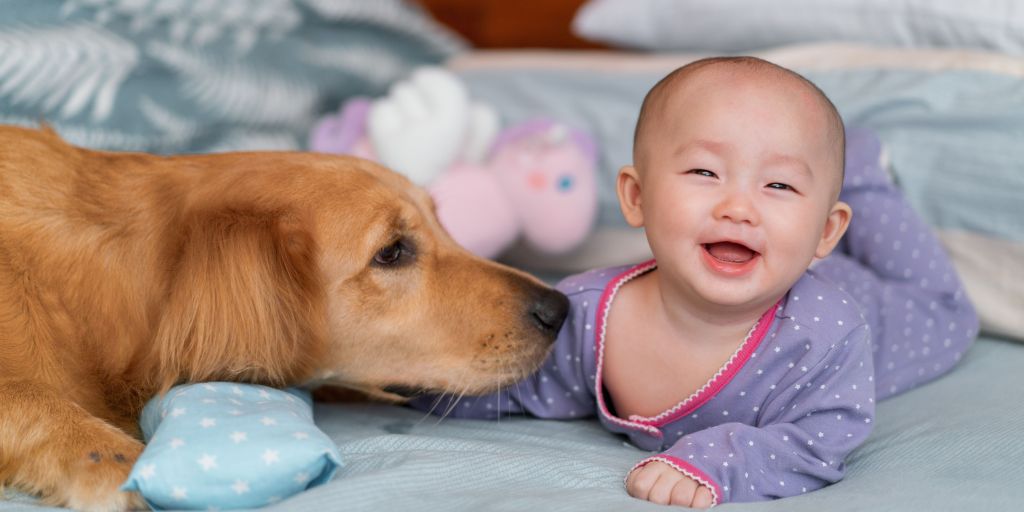
SO many dog bites towards children could be prevented. Dog bites towards small children can also be extremely devastating. From the moment a baby is born or a puppy brought home it is the responsibility of the caregivers to teach both dog and child how to interact safely.

It starts with supervision. Even the most friendly of family dogs can bite if pushed past their limits. Babies and small children should ALWAYS be supervised with dogs. They do not have the brain development yet to learn how to safely interact with dogs. Babies and toddlers tend to pinch, grab and pull as a way to explore their world and they don’t understand that it can hurt someone else. They also like to explore their worlds through putting things in their mouths and physically crawling, climbing and tumbling. Dogs can have a lot of patience but even the sweetest of dogs will react to pain. Never ever leave a baby, toddler or small child alone with any dog.

Likewise, puppies and dogs need to learn they can’t jump on, paw at or constantly lick at a baby. Large dogs can easily knock over toddling toddlers. They need to learn to give space to small ones and keep their paws to themselves. A large, rambunctious puppy can easily hurt a baby or toddler with the intentions of play.

You can introduce dogs and children at any age, whether the child is an infant, toddler or older child and likewise; whether the dog is a full grown adult or puppy. How you introduce children and dogs may vary a bit, expectations can be different based on their age, but no matter what you want the introduction to be soft, slow and calm.

How to Introduce Babies and Dogs

When you first introduce a dog to your baby make sure it is in a calm environment. Wait until all the visitors are gone and the house is quiet. Have the dog sit and you hold the baby so that the dog can sniff from a seated position. Dogs may get excited at the smell of a newborn baby so a leash may be needed if you have an easily excited dog who likes to jump about and express their excitement with their whole bodies. Tell your dog to sit if they start to get excited. If your dog is overly excited, unresponsive or you feel too nervous to let them get too close, then don’t. Dogs can learn a lot about social interactions from not directly touching or being close enough to touch anyone. In fact, a positive experience where nobody gets upset and nobody gets hurt is extremely beneficial to teaching a dog to be calm around new people or animals. Likewise, it teaches the same lessons to the baby too. 

Babies and kids learn a lot from what we set as an example. Keep this in mind when you’re interacting with your dog in front of your baby, keep this in mind. Since babies have very poor motor skills, it’s best to avoid petting areas of the dog that the baby may accidently grab or poke that are sensitive (such as the head/face). Start with petting the dog’s shoulders, chest or back. Show your baby how you gently pet your dog. You can even repeat to the baby “gentle pets” and explain it’s a nice dog you’re giving gentle pets to. Talk in a soft, sing-song voice that your baby enjoys.

If your baby grabs the dog’s fur, hold their hand so that they can’t pull on the dog’s fur and release their little grip. Small babies are too young to understand, nor do they even have the ability to control whether they grab at the dogs fur or not. Just release them and continue on with the calm interaction. If your baby seems to grab and pull too much for your dog’s comfort then stop and try again another day. Watch your dog and gauge their reaction. If they seem nervous then stop all interactions between baby and dog for a bit. Instead, focus on peaceful cohabitation from afar.

How to Introduce Toddlers and Dogs

Toddlers can be very unpredictable and this can be hard for dogs. They squeal, run, poke, grab, and climb on everything. This is all totally normal and important skill-building and world-exploration for your toddler, but just like the other safety rules in your house your toddler needs to learn the rules about interacting with the dog. Don’t let your toddler do things like grab, pull, poke or climb on the dog. Teach them, instead, that we pet and play with the dog nicely. Show your toddler by example how to pet and tell them “gentle pets”. Put a lot of emphasis on being gentle with the dog. This can be a hard concept for some toddlers to get, and may take many many repetitions. If your toddler is particularly too rough and your dog isn’t comfortable, then it’s time to end the interaction and try again another time when your toddler can be calmer.

Toddlers can play simple games like throwing a ball for a dog. Getting the ball back from the dog should be the responsibility of an adult or older child. Toddlers should NOT be allowed to take anything from the dog, whether it’s a ball thrown or another toy or chew/bone of the dog. If your dog has any sort of possession issues and you notice signs of their resource guarding (growling, hovering over, and generally protecting their item from anyone) then it is very important you pick up ALL items the dog my guard and remove them access when the toddler is on the floor. This is a very important rule to prevent bites.Your dog can have access to these items when the toddler is not around or when the dog is in a locked crate or room. Do NOT give a dog access to items it may guard when any children are around. Work on this behavior separately and until a child is old enough to understand not to grab an item from a dog.

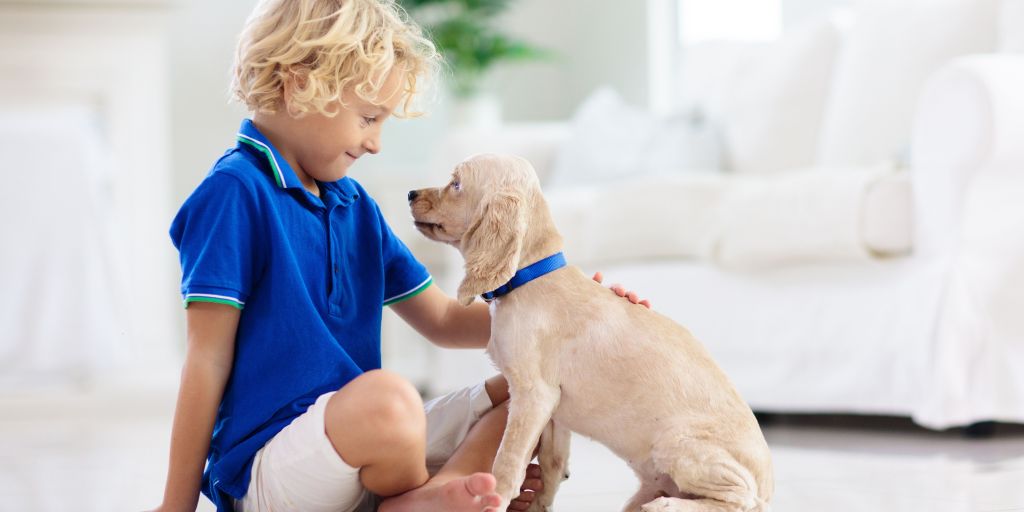
How to Introduce a Child to a Dog

Children who are 5 or older can be introduced to dogs with a bit more instruction. Let them know to remain calm. Don’t run from a dog (especially excited dogs or puppies), don’t make sudden movements; pet the dog from the chest, neck or back. Do not reach over the dog’s head. Give the dog a treat or throw a ball for them. Older children can pick up the ball from the dog, or give commands such as drop it/release. If a dog enjoys it, a child can rub their belly or brush their fur. 

If the dog is extra rambunctious, then just like when introducing a baby or toddler, you can put the dog on leash and ask for a sit or down. Have the child give the command and reward with a treat. Let the dog sniff the child. If they seem overwhelmed or unsure, let them have space from the child and/or take a break.

Teach your child to always ask before petting a stranger’s dog. Have them practice asking “can I pet your dog” and explain that if someone tells them no then it’s important to respect that.

Older Children/Teenagers and Dogs

Dogs are a great companionship for older children and can encourage physical activity and responsibility. Older children can take on the job of feeding, brushing, playing with, walking and even training the family dog (with adult guidance). Dog sports such as Dog Agility or Flyball are great ways for kids and teens to get active and compete in sports with their dogs. Overall responsibility of purchasing food and providing veterinary care should always fall on the shoulders of the adults in the family.

Give the Dog Their Own Space

One of the most important things you can do is make sure your dog has a safe space to retreat to when they’re feeling overwhelmed. Kids can be overwhelming for anyone, including dogs. Keep a kennel or bed in a quiet part of a room that your dog can always have access to. Don’t ever allow the children to climb on or in the dog’s bed or kennel. This space is completely off-limits to children and is a safe retreat for your dog. You can encourage your dog to go to this space whenever the kids get chaotic or you notice your dog getting overwhelmed.

Zelda Went to the Vets

Dog Blog, Vet Care, Zelda

I’m a bit delayed in writing this post, I wanted to write about it the day after it happened, but life kind of got in the way. As always, I am going to keep names in this anonymous (other than mine and my dogs, since you all already know that), and I won’t be naming the vet clinic. I’ve vetted my pets with them for probably close to 20 years now and I still stand by them as a very good vet clinic.

Zelda has had an ear problem for months. I tried to take care of it myself, trying to save us on money and the hassle of booking with the vet, but I was unable to treat her. I’ve had dogs for many years and have had several pop up with different kinds of ear problems over the years. They’ve almost always needed vet care because you can never really tell what you’re looking at until you look at it under a microscope (or rather, a trained professional does). But it didn’t seem THAT bad and I thought I could take care of it myself. I tried several times and I struggled to just look in her ear, never mind actually clean it out. She is part husky and I believe this contributes to her dramatic response. That, and, well… I learned during the K9 first aid training that I really dropped the ball on conditioning Zelda to touch. I hug on her and play with her, I’ve always groomed her myself, but I didn’t do everything I should have to make for a dog who will allow people to poke around at them when they’re not feeling well. I got Zelda when my first daughter was 2 and 4 years later my second daughter is almost 2. I’ve had my hands full. I don’t think that’s the best excuse, but it’s the truth. To properly condition a dog you need to spend time daily followed by weekly just sitting down and poking at your dog. Well, don’t poke your dog, but get your dog used to touch. This should be done from the time they’re a puppy, if possible. Touch their toes, praise and reward (use treats, especially to start). Touch their ears, praise and reward. Touch their mouths, praise and reward. Touch their tails, praise and reward. Get them used to physical handling of all kinds. I failed to do this with Zelda and as a result she is a handful in these situations.

I muzzled her and had my husband hold her while I tried and it was still a struggle. Finally, I caved and e-mailed my vet clinic to book an appointment (side note: I absolutely love that my vet will book via email). It was a 3 week wait, and in that time I tried one more time unsuccessfully to look at/clean her ear.

Since I injured my foot back in June, I haven’t been able to really drive myself. I just recently started driving again, and can only manage short trips. Since all vet clinics are located outside of our town, I had to drive a ways to get Zelda to the vet. This meant getting a ride. My husband worked all morning but got home just in time for me to leave. I asked my dad to drive us, since my husband would have to be home for our toddler and pick up our eldest from school. My dad told me he was just happy to have the chance to help me out. What are dads for, huh? He drove me and my very hairy dog (who left white hair all over the back of his car) to the vet clinic.

When I got to the vets I learned that I wasn’t allowed in with Zelda. They would come out and get her and then bring her back out when she was done. They’ve been doing it this way since COVID (2020), they said. They told me it was just easier to do it this way. I didn’t see how? Wouldn’t they need to talk to me? Usually they ask questions while they examine my animal. I had also warned them that she would be very dramatic and may need muzzling. My vet, let’s call her Dr Green, has known me a very long time and she has seen many of my crazy dogs in her clinic. I’ve had a lot of aggressive dogs over the years and when I got Zelda I had made the decision to get a puppy and raise it exactly how I wanted. I was tired of “second hand dogs” that had problems. Disclaimer: I have absolutely nothing against rescues or rescuing older dogs. I am very pro rescue and Zelda is also a rescue dog. I am just a bleeding heart who always takes home the worst case I can, because “who else will?”. I focused a lot in off leash training and socialization with Zelda. She’s always been in good shape and I haven’t brought her to the vet since she was a puppy, and back then Dr Green didn’t even see her it was a different vet in her practice who administered shots. Just wait, it’s important that you understand that the last time Dr Green saw me I had one after another aggressive dog, or “problem” dogs.

I reluctantly handed Zelda over when they came out to us to get her (we had to wait in our car in the rain). Zelda looked back at me, hesitant to go but I told her it was okay and like a good girl she followed the lady into the clinic, didn’t even pull on the leash.

We waited an hour… I was really worrying at this point. Wondering what the heck was going on and why hadn’t we heard anything from them yet. It was routine exam, vaccines and ear exam. It shouldn’t take this long. We waited some time after an hour went by and then I had to pee. I decided to go in and ask if I could use their bathroom. The bathroom is located a bit within the clinic so you kind of have to see back there to get to it. When I walked in I heard Dr Green telling Zelda “NO, DON’T BITE ME”. I had to pee really bad so I told her to muzzle Zelda and I went into the bathroom. After I was done relieving myself I came out to the clinic and saw it was just Dr Green trying to hold Zelda and administer the ear cleaning at the same time. I was a bit taken aback by this and kind of thought “no wonder it’s taking so long”. Half of the reason I booked an appointment was because I knew I needed trained professionals to both hold and look in her ear. We needed multiple people who knew what they’re doing. So I asked “can I help you hold her?” she said sure. Dr Green asked me “are you completely at your wits end with this dog?” As soon as Zelda saw it was me her little tiny ears perked up and she had this look on her face that can’t be explained as anything except relief. It lasted a split second and then it was gone when she realized I wasn’t there to rescue her I was there to hold her through the torment. At one point Zelda reached her nose to my cheek and I looked at her and asked “what are you doing?”. Dr Green asked me “will she bite you?” I said “well, I don’t know. I mean, she’s a dog. She could, but I don’t think she will”.

Dr Green did muzzle Zelda, and with my help she was able to quickly clean out Zelda’s ears. She had already done her vaccines and swabbed the ear but had not looked at it under the microscope yet. She had made a comment to me that she’d seen dogs come in with RAGING ear infections that acted better than Zelda did when they tried to handle her. I was honestly pretty embarrassed about it. I apologized and admitted I hadn’t conditioned her as well as I should have. I kept thinking about what Dr Green had first said about being at my wits end with Zelda. I wasn’t even close to that. I adore Zelda and she’s honestly the best dog I’ve ever had (dare I say?). She is extremely well trained and behaves like a dream with my family (even the toddler who tries to step on her when she’s laying in her way). She is very faithful and an extremely sweet dog. She has her quirks and I believe that her litter wasn’t properly socialized during the first fear impact stage. I explained all of this to Dr Green. I tried to stress that Zelda is not a “bad dog”. I said she’s not aggressive, she’s just in pain and a bit on the dramatic side as well.

Dr Green looked at the ear contents under a microscope while I put Zelda’s usual leash back on her and gave her some well deserved treats and pets. She kept panting and panting. It was the most stressed out I have ever seen her. When Dr Green came back in the room I asked her for some water for Zelda. “I mean, we can try,” she said, “but most dog’s won’t drink here.” she put the water bowl down and Zelda lapped up nearly the whole bowl. In that moment I knew this whole experience didn’t sit right with me. I know my dog. I know she would have done better with me there holding her. She wouldn’t have been perfect, she wouldn’t have even been calm, but she wouldn’t have been as traumatized as she was.

The microscope didn’t really tell us much. Dr Green said there is mostly inflammation that’s the problem which could either be allergies or it could be something stuck in her ear. She prescribed Zelda steroids to help the swelling go down. She said she wasn’t even going to try to send me home with an ear solution because I wouldn’t be able to get it in there. Hopefully we could bring the inflammation down and it will sort itself out from there. If not, she has to come back to the clinic for a scope. Dr Green warned me she would need to be there a while because they’d need to sedate her. It’s a rigid scope and they can’t risk her thrashing about with it in her ear.

I asked for de-wormer for my cats, and Dr Green responded with a sigh and said, “if I can get someone to get it. Everyone’s busy with appointments.” to which I thought, I’m an appointment too.

I brought Zelda out to the car and told Dad I still needed to pay, but wanted to get Zelda out of there. When I open the lift gate on the car she is usually cautious and waits for me to tell her ‘allons-y!” (I’m sure any Doctor Who fans reading this will appreciate that). This time the gate was hardly halfway up and Zelda was already in there, ready to go. I went back inside and waited, and waited, and waited. By the time we got out of there, we had been 2 hours longer than I expected to be.

When I went home the whole thing just didn’t sit right with me. I looked at Zelda who slept the whole way home and then some, and I felt like I failed her. I failed to condition her to this sort of treatment but also I failed to advocate for her. I should have said something, I should have tried harder to go with her instead of just handing the leash over. I should have advocated for her. I lost sleep thinking about it all night. The next morning I sent my vet an email and explained all of these thoughts and feelings in the most respectful way I could manage. I told them I was disappointed and didn’t feel Zelda got the kind, patient treatment that I expected from them. All because of some left-over COVID rule. I explained it a lot nicer than that, I promise, but this was how I felt.

I was surprised when Dr Green phoned me back right away. I missed her call, I am terrible for not answering my phone as it’s always on silent and I was busy getting my eldest ready for school. Dr Green left a message and explained that she read my e-mail and she was disappointed to read it but glad I brought my concerns forward. She explained about her comment with the cat de-wormer and the reason I couldn’t go in with Zelda from the start was because they are absolutely so overwhelmed (which I made sure to mention in my e-mail that I understand that’s part of the problem). Too many people want to chat and visit while they’re there and it makes appointments go longer. She said since COVID their caseload has increased by 300%. She said the main reason they don’t let owners in is because people want to chat and visit and it just takes too long and they can’t get through all the patients if they do. Fair enough, I totally understand this. But I think Zelda ending up with just one person handling her while also administering the ear cleaner made the process a lot slower as well. If I was there sooner to help hold her, I truly feel it would have gone faster. As I said in my e-mail, admittedly, I didn’t know what happened before I walked in. Maybe they were all holding her for all I know, but I know what I saw when I came in. It wasn’t proper technique for a dog reacting the way she was. She needed it to be over as quickly as possible. Dr Green also explained that right before Zelda was a really flighty cat that was also a nightmare to deal with. She said once she understood the history I gave her she said she thinks Zelda actually did quite well, all things considered. This is also another point I have, with the owner there you can learn these things sooner. She was treating Zelda like she was a snarky aggressive dog. That’s just not Zelda, and I could have explained that from the start.

I totally get that Canadian vets are completely overworked now. This is a multi-tier problem. It is contributed by an increase in pets after 2020, but mainly it’s due to a lot of older vets retiring (baby boomers are all retiring now) and there’s not enough new vets taking their place. Vets in BC are now required to travel to vet livestock and this takes up a lot of time. There is also not a lot of options for vet schools in Canada and it’s a long, slow process for education. We are waiting for more vets to graduate. Vets are stretched thin and there’s just not enough of them to go around. I know this and I feel for them, but I also feel like it’s all the more reason to let me in with my dog. I don’t think every single vet case requires this, but the ones that do and say ahead of time “my dog/cat is dramatic and will require a muzzle or may be harder to handle” should be considered. Another pair of hands never hurts in these cases and you have the owner there to answer questions. I don’t expect to be involved in any complex procedures and I certainly don’t expect special treatment. I want all animals who require a little more handling to have this option. Tell the owners upfront that this isn’t a social call. I get it, I wanted to chat with Dr Green too, it’d been a long time since I’d seen her. But if they told me they don’t have time to chat, I’d respect that.

I tried to phone Dr Green back that morning she left a message, but she was already in surgery by then. I sent another email and said I understand their side, I just want to be able to come in with my animals when they need it, in the future. I hope we can reach a middle ground that benefits everyone, especially the animals.

I also told Dr Green that I’d work on conditioning Zelda, and that next time I need something extra I’ll try to make sure I ask them for it before the appointment.

I feel like with the right dialogue back and forth, we should be able to come to some sort of middle ground where everyone gets their needs met. It’s important to have these kinds of discussions. Too much these days people run to Facebook or other social media outlets to complain about businesses and a mob mentality grows. I don’t want that, which is why I’m not even going to name the vet clinic. I respect my vet, but I don’t respect policy that is blindly followed when it doesn’t fit all scenarios.

The Dog Who Was Lost 925km Away

Dog Blog, Dog Rescue

Today’s topic is a bit of a deep dive into responsible ownership and the SPCA. As always, names are changed to protect people’s identity. The fact we live in a small town, people can easily figure out who I’m talking about. So my disclaimer is this: I’m not here to place blame or point fingers. I’m here to discuss WHY this happened and how to avoid it from happening again. We are only humans doing our human thing. We learn a lot of lessons the hard way, unfortunately, and I think this is one of those cases.

Here’s the story: a woman (let’s call her Cheryl) posted on a local group that her dog Fred was missing. Fred wanders frequently and covers a large distance but he’s friendly, he always comes back home, and as far as the owner understand he’s never been a problem to anyone so therefore the wandering habit isn’t something she feels needs to be fixed. But when Fred didn’t come home from his usual adventures, Cheryl became worried and started to look for him. She shared on local groups that he was missing, with his photo in case anyone has seen him, and she talked to people who said they spotted him. She was able to track him down to an SPCA 925km away from home. WHAT. THE. HECK? This was the question on everyone’s minds when hearing the news that Fred had made it so far from home. How did he get there in just a few weeks? Clearly, he didn’t walk himself there, he must have found a ride (meaning somebody knows something).

We don’t have proper animal control in our community (something myself and others are working on), so Fred wasn’t picked up by AC here. What they think happened, based on talking to people who’d seen him, is that Fred was sold to someone in town and then somehow made his way to a nearby city where he was picked up by animal control as a stray. I don’t know what happened to him between being sold and being picked up by AC. Maybe his new owners tried to move him there and he escaped their yard? There’s really so many possibilities. Animal rescues transport animals between rescues all the time. Some shelters are full while others have room and so dogs who struggle to find placement or who they just don’t have room for will transport to other rescues. Dogs can travel across Canada and the United States in this way. Fred ended up in a city 925km from home. He was well taken care of by shelter staff and was even neutered and put up for adoption (keep in mind, he’d been missing only a few weeks). By the time Cheryl and her family found him he was to be adopted out to another family the NEXT DAY. Cheryl’s mom was able to go to the shelter and identify him, but the SPCA would not release him to her, only his rightful owners. They compared photos and videos of him and were able to confidently declare him as Fred based on several distinct scars on his ear, muzzle and leg. Purebred dogs can be difficult to tell apart at times, but there’s no denying that many factors. The SPCA told them the dog was not a match and that if they wanted the dog they had to come adopt him. They spent the next 24 hours scrambling to raise money to go get their dog.

This story has a happy ending. They were able to raise the money they need and they SPCA decided to let the dog go to the owners who rightfully claimed him. The last update I heard was that the owners were on their way to get him.

Here’s my two cents, as a dog trainer/enthusiast… I think both parties are in the wrong and the poor dog is the one who had to suffer for it. I think that if you let your dog wander, especially without any identification, you’re just asking for something to happen to them. What happened to this dog is a pretty extreme, and probably not a super likely scenario, but it’s a good reminder that you just never know what’s going to happen. The least you can do is put a tag on your dog’s collar with their name and your phone number on it. Better yet, have your dog tattooed or micro-chipped.

I also think that the shelters that handled this dog were in the wrong. There was not a long enough window of opportunity at either shelter for the dog to be properly claimed (especially since he came from a different town). When the owner did come forward with identifying the dog and proof that it was her dog, the SPCA should not have denied that it was Cheryl’s dog. Why was it so difficult for them to ID him, when even I could see this was the same dog? I understand their need to recoup some of their costs to care for and neuter him, but the really short time-frame with an ultimatum of either pay for the dog within a day or he’ll be rehomed, was pretty heartless. Even though I feel the owner was misguided in the way the dog was left to wander, I do believe they deeply love their pet. They wouldn’t have gone through SO much trouble to find and get him back if they didn’t. The SPCA is here to help animals, but it should also be here to help people too. Help reunite animals with their owners so that you’re not adopting out dogs that already have a home (which takes a home away from a dog who does need it). It should take this as an educational moment and teach this owner how to be responsible instead of just using money as a teacher. Do you job and explain to the family how to keep Fred safe at home from now on. Give them resources such as local dog trainers (hello!) and information that can help them be better dog owners so that something doesn’t happen to Fred again.

I saw a lot of people suggested that Cheryl takes Fred’s story to the news and calls out the SPCA for the way they handled this situation. I agree, I think she should too. I understand how difficult rescue is, I understand many of the rules they have around adoption etc. are there to keep the animals safe. What I don’t understand is how they can be so black and white and not realize there’s a LOT of grey in-between when it comes to people. It’s not always so simple as this person is good and this person is bad. We are complex animals taking care of other complex animals (dogs). They need to consider other factors when it comes to adoption as well as reuniting pets with their families. I tried to adopt a dog to bring with me to dog training school and they wouldn’t let me because I had another dog at home who had guarding issues with food. An issue I worked on with him for years and by the time he was an old dog nobody knew he had these issues. The dog I would have adopted would have had a chance to be trained in a professional setting, with someone who loves dogs SO much I wanted to make a career out of it. This was just one of many experiences I’ve had or heard about with the SPCA that makes me shake my head and wonder are they really doing all they can to help animals? Or have they become too possessive over animals?

Welcome to the Dog Blog

Dog Blog

I used to write a “dog blog” when I was like 12. I kept at it over the years on and off but once I quit the FSJ Humane Society and dog training I didn’t write about dogs anymore. I kept up writing with my art blog as I focused on my art and starting a family.

Now that I’ve stepped back from publishing my art and hopped back into dog training, I kept going back and forth on whether I’d write a dog blog again or not. It feels right to keep writing, but I know realistically I won’t be able to commit to any sort of schedule. The posts will come when I find time and inspiration for them.

Please also keep in mind that as a professional dog trainer I don’t exactly want to give all of my secrets away for free, either. I’ve been working on a subscription-based Patreon page, but I’m still heavily editing it. It is currently available, but please bare in mind that everything currently on there is still a work in progress. That being said, I will use this space to write about my experiences in dog training, helpful tips or training methods I feel like sharing, and as a place to update what I’m currently working on for my community projects. I will change or omit names just for privacy sake, if I’m talking about any of my clients. Including the dogs… it’s a small town and a lot of people will know exactly who I’m talking about based on their dogs name.

I’m not here to judge anyone. If I talk about a particularly “bad dog” it’s because I want to gain more insight about the case and how to help the dog and their owner. There are no “bad dogs” just misguided dogs and uninformed owners. I’ll probably mostly end up complaining about my own dog, Zelda (haha).

A little bit of back story: I got my certification for Kennel Management and Master Dog Trainer in 2007. I trained in Fort St. James for about 3 years. During that time I also volunteered and was on the board of directors for the Fort St. James Humane Society. A group of caring individuals who tried so hard to make a difference for the animals in our community. I think they actually did a LOT of good and made strides, but unfortunately it sort of fell apart when the founders moved away. I actually bought their house when they moved, so it was interesting some of the things I came across (like a lifetime supply of poop bags and a whole bunch of first aid supplies). I quit the board an dog training because I became emotionally exhausted. There was a lot of very sad cases I had to deal with involving animal abuse and neglect. When I did my training I had a hard time teaching people, especially when most of them were older than me (I was in my early twenties). I was shy and struggling with mental health problems that went beyond just compassion fatigue. I also found a lot of people just struggled with following my advice or keeping with a schedule. I was canceled on or stood up constantly. When I got back into dog training this year I decided that was going to be something I didn’t put up with and wrote my cancellation policy fairly quickly.

Right before I injured my foot badly last June I decided to start doing dog training again. Getting back into it with my foot the way it is has been difficult, but I’ve managed to keep training every week. I’ve learned a lot from my clients this summer and see where I need to tweak my session plans. I’m beginning to see trends in which problem behaviors are most common and what are common goals and expectations out of owners.

I’m also learning what the community needs; the major complaints and expectations out of community members. I’m slowly learning who is currently involved in animal welfare in our town and who would like to be involved. A lot of it has been happening behind the scenes and I’ve been told COVID had a major role in their effectiveness the last few years. Now that things have relaxed a bit they are getting back into the full swing of things.

It’s exciting to be back into dog training and welfare. It was hard for me to finally come to the conclusion that’s what I was going to do but once I made that decision it felt so right. It felt so familiar yet also exciting and new at the same time. I will always create art, and I feel that the time is coming to get back to my drawing course again, but it felt like a struggle. I continuously felt like I couldn’t find my place. When I thought I’d find my place it wouldn’t last long and I’d be searching for another outlet and avenue of sales. It felt like I had to constantly be on top of what’s new and what will sell and it really devalued my self-worth in my art. Dog training doesn’t feel like any of that. It just feels right.