It started out like my average Saturday morning: Nothing More sang me awake telling me “everything is better when you’re dreaming”, which also signaled to Zelda that it was time to get up for work. She has learned that the sound of my alarm = going to work.
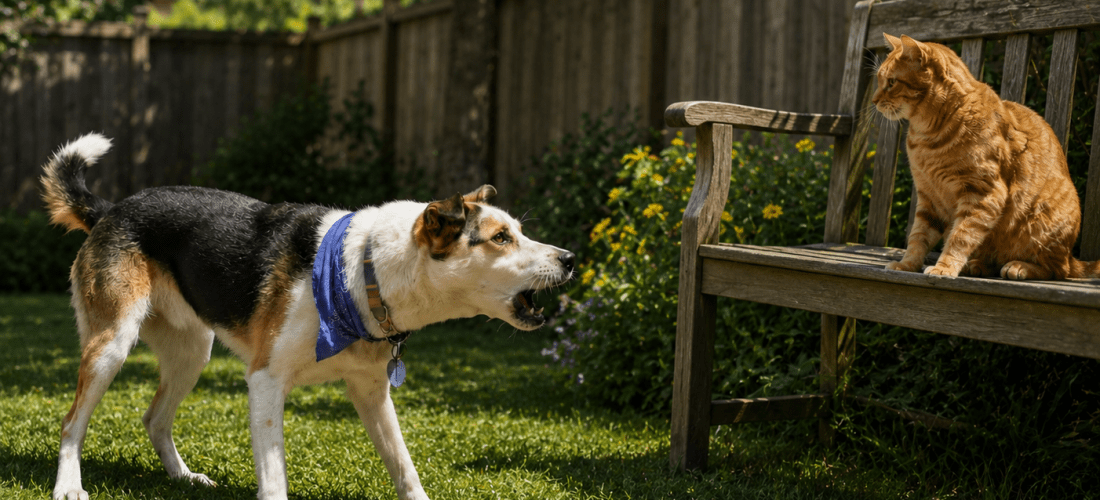
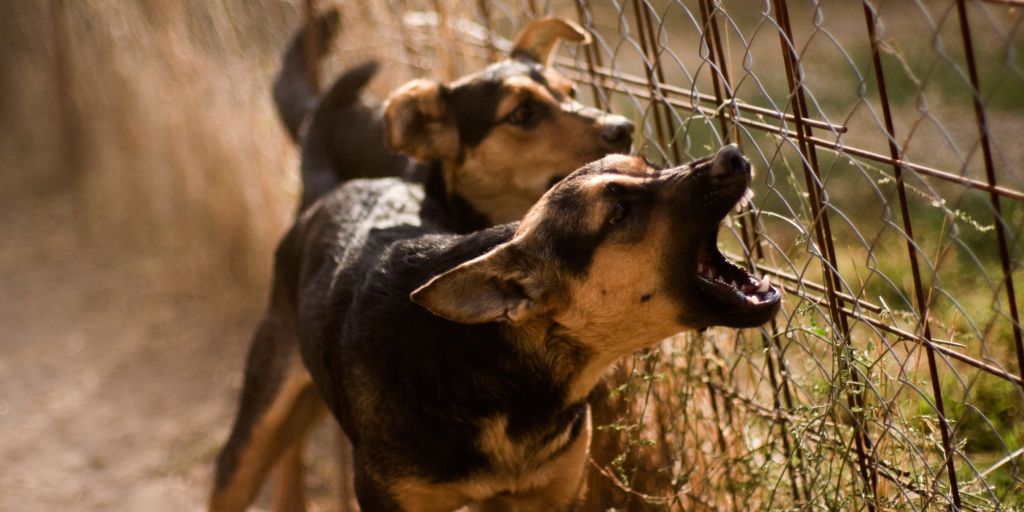
I let her outside to go pee and then headed to the bathroom myself. I could hear her barking outside; her classic “intruder alert” type of bark. I assumed it was just somebody walking by that she didn’t like the look of. Until the barking persisted. I was growing concerned that her barking would wake my kids up, so I quickly finished up and hurried outside in my bare feet.
There was Zelda, in the middle of the yard. She looked almost relieved to see me. She ran to where I stood on the deck and then back to where she’d been standing in the yard. She did this a few times, looking from me to the back corner of the yard, where the fire pit is. It was all very classic “Lassie” type behavior, and what she was trying to communicate was clear to me: “look! Look over there!”
My eyes followed where she was trying to direct my attention, and then I saw it—the intruder. It was a cat. Just a big fat orange tabby.
I said to Zelda, “It’s a CAT! What are you waiting for? Chase it off! Go get it!” and like a shot she was off. She chased the cat over the fence and hopefully back to its home. After reaching the fence line and finding the cat efficiently out of reach, she trotted back to me with a look of pure satisfaction. She looked so proud of herself, and looked to me to tell her she was the “good dog” she knew she was.
“Great job Zelda,” I told her, “now next time maybe start with that.”
But Zelda isn’t a dog that takes matters into her own paws without input. She isn’t a cattle dog or a guardian breed. She isn’t the lead dog of the team. She’s a “yes man” type of dog—and that’s okay. However, this story has made me think about how a lot of dogs actually operate.
Her job, like all good family dogs, is to let me know when something is wrong. And she did that. She just needed a little bit of direction on what to do next.
Once I really thought about it, I realized Zelda didn’t fumble by not chasing the cat right away. She did exactly what I’ve taught her to do.
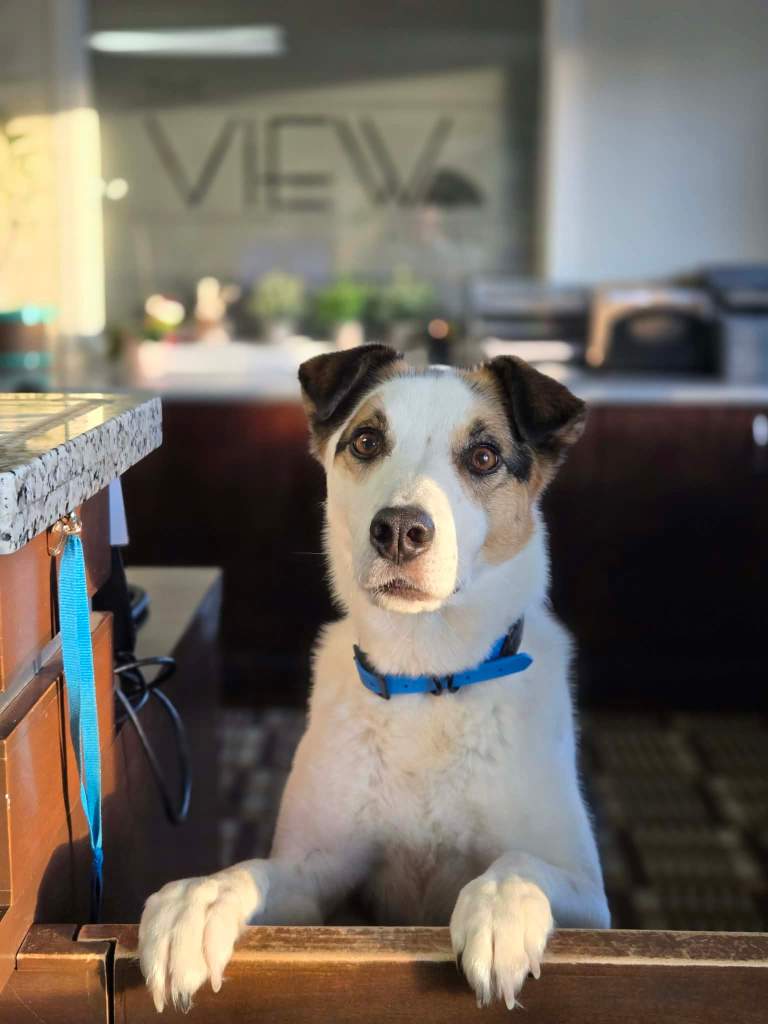
When we go for walks and a strange dog approaches, I put Zelda behind me and I handle it. When someone comes to our house, she sounds the alarm and I answer the door. When we’re working at the hotel, she lets me know someone is at the front desk with a gentle “woof”, and I go talk to them.
So of course when a cat shows up in the yard, her first job is the same: tell me.
Dogs come with built-in tendencies influenced by breed and personality. You see it when a Border Collie drops into a stalk over a ball, or when certain dogs are naturally more “alert first, act second.” That doesn’t go away—it just gets shaped.
Barking isn’t random. It’s communication. It’s information. It’s what dogs have been doing for us for thousands of years. Zelda wasn’t barking for no reason. She was doing exactly what she’s been taught to do: get my attention, and then we figure it out together.
So next time your dog is barking, it might not be “shut up” that’s needed. It might just be “okay, what are you telling me?”
Disclaimer: while the photo above is real, the header image at the top of his post is AI generated to help with visual story-telling.
Unless of course, you’re the boss, I would never advise you to just start bringing your dog to work without talking to anyone about it first. Have a conversation with your manager, maybe even with your coworkers too (you never know if someone has a fear or allergy to dogs).
START WITH A LOT OF RULES
Your dog should have a ton of rules when you first start bringing them to work. As time goes on and they learn the rules, you may be able to relax on them a bit but that will entirely depend on you, your dog and your job.
I work front desk at a hotel on the weekends. I bring Zelda with me and she has been very well-received by both my coworkers and the guests. That being said, there’s been a few times I’ve questioned whether bringing her with me was the right choice. She is a very well trained and well behaved dog, but as I always say; dogs are not robots. They are not 100% predictable.
Your rules are going to be different based on what your job is and what you need your dog to do. Here is an example of some of the rules I have for Zelda while we’re working at the hotel.
No going in the laundry room Front desk is connected to the laundry room and the door is usually open. Zelda has learned not to cross the threshold (though she does sometimes if her favorite coworkers is in there). I just don’t want dog hair all over the clean sheets and towels.
No going in the restaurant This seems pretty self-explanatory, but it’s a new rule for Zelda. We didn’t always have the restaurant in the hotel, it is fairly new.
Pets are only allowed in the lobby and on second floor (“and behind front desk” – I like to add this line when I’m checking guests in and they usually laugh). This includes Zelda. Occasionally she will come to 2nd floor with me as a chance to expose her to the elevator (she does not like the elevator). But for the most part, we stick to the lobby, front desk, and back hallway that leads to the loading dock (where I take her to pee).
She must walk at my side When I first started bringing Zelda with me, I had her on leash. Now I bring the leash with me but honestly never attach it to her. She has a custom-made tactical collar that allows me to grab hold of her easily when she is next to me. She has an excellent off-leash heel and usually sticks by my side unless I tell her “go Front Desk” then she will race ahead of me to her spot behind front desk.
Don’t bark at guests! This is probably the hardest rule for her to follow. Especially if I am in the laundry room or in the bathroom, she will bark when people approach front desk. People don’t usually have to ring the bell. But I don’t like her being hostile to guests, so I tend to correct the behavior and have her go lay down. I never worry about someone coming behind front desk that isn’t supposed to be there though. She lets my coworkers in but will bark at anyone else. Most guests are very understanding and we’ve yet to have a problem with it, but it is still a behavior I am working on and would like to gain more control over.
BRING WHAT YOUR DOG NEEDS
If you’re bringing your dog for an eight-hour shift you need to make sure you’re bringing essentials for your dog too.
water dish
leash
treats
food (if your dog normally eats in this time)
small first aid kit (I bring one just in case she steps on something in the parking lot etc.)
a bed or blanket to lay on (Zelda doesn’t use one, so I don’t, but your dog might use one)
BE PREPARED FOR THE IMPACT YOUR DOG MAKES
What I didn’t expect when I started taking Zelda to work with me was the impact she would have on my coworkers, the guests and myself. She brightens everyone’s day. When it’s a particularly busy and stressful day, one by one all of my coworkers pop in for some quick Zelda time. It boosts moral. I see people go from tired and done to smiling and ready to tackle more of the day.
When the guests notice her (she loves to pop up on the gate and startle them) it’s always met with smiles and laughter. They comment on how beautiful she is, how well behaved, how nice it is to see her, how much she makes them miss their dogs back home. It’s really sweet to see. Zelda LOVES children and the way she brightens their day in particular is very touching.
Recently, Zelda hurt her back leg and I decided to keep her home on Sunday after discovering it on the Saturday. That day at work felt depressing. It was so quiet. All day I felt like I was forgetting something, or like a piece of me was missing. I would catch myself starting to say something to her and then realize she’s not there. It felt really lonely without her. The way she picks me up, gives me an excuse to take a quick break in the sunshine, is there for me to talk to or play a quick game of fetch behind front desk… all those little things add up to make my day into a good day at work.
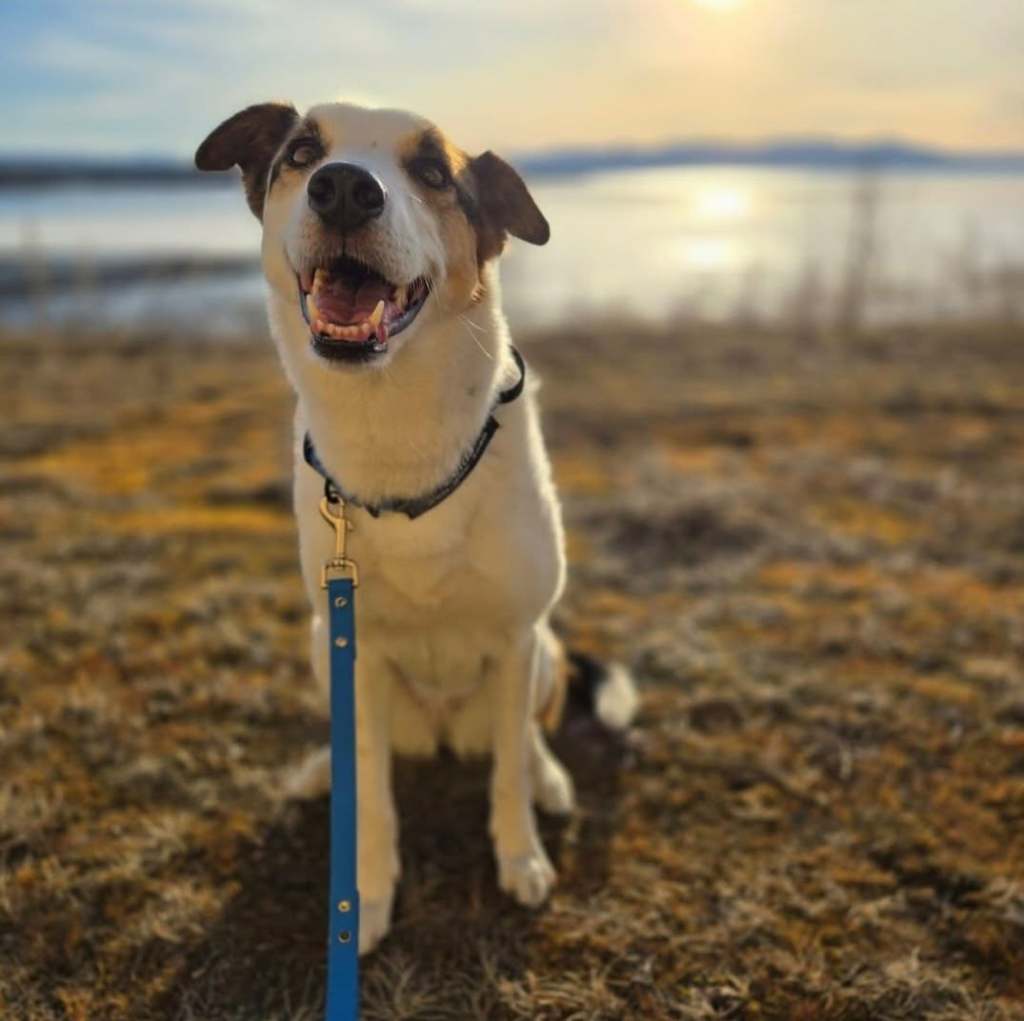
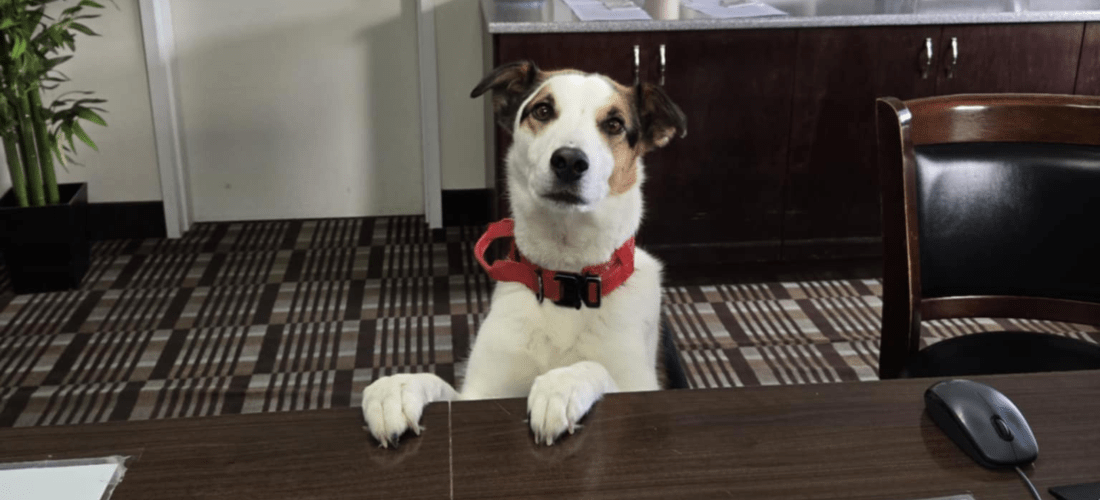
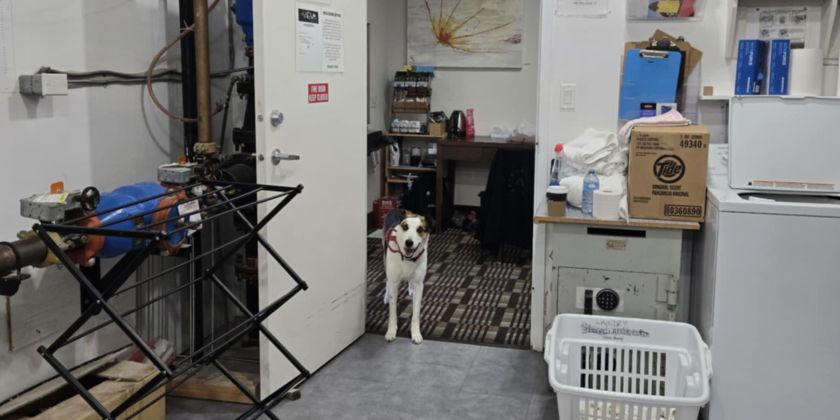
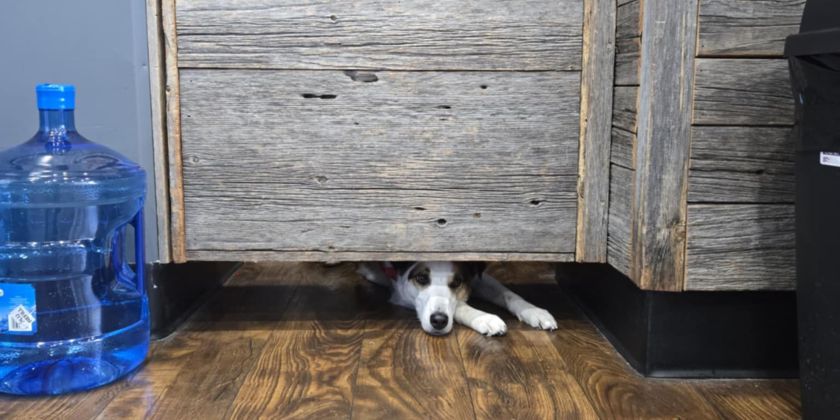
(yes, both of the above photos of Zelda were taken at my place of work. There’s a reason it’s called The View Hotel)
In week three of my Basic Obedience Workshop we talk about focus and reliability. Something I often talk about but don’t always see used by my students is teaching your dog to look at you when you say their name.
Linking a behavior to your dogs name is like a little life hack for training your dog. If you have your dogs focus before you give them the command they are much more likely to actually follow the command.
HOW TO TRAIN IT
To pair your dogs name with the behavior to look at you is simple repetition, repetition.
Say your dogs name; if they don’t look at you right away that’s okay. You can use their favorite treat to lure from their nose up to your eyes.
Give a reward when they look to your face.
Give a *Jackpot Reward* when they make eye contact.
Give an extra *Special Jackpot Reward* if they make eye contact or even look to your face without a lure.
HOW TO SHAPE IT
Shaping = praising your dog when they naturally perform the behavior you desire. You can then fine-tune it by withholding the treat for “more” from the behavior (dogs usually start guessing or adding in some flair to try to figure out what you want that will get the reward), and then rewarding them when they show a behavior that is or is closer to the behavior you desire.
You can naturally shape the behavior to look at you when you’re walking or playing with your dog and they naturally just look at you. Instantly praise “YES”. You can even start pairing it with their name “Yes, Fido!”. Even if you’re not trying to pair the behavior with their name (although I highly recommenced it) just rewarding for “checking in” with you will build good habits for off-leash work later on.
JACKPOT!
If you’re not sure what a “Jackpot Reward” is; it is when you give several small rewards in a row that your dog will count as a really big reward. Jackpot rewards are usually reserved for when your dog does something really well. Maybe something you’ve even been trying to get them to do for a while, or something they’ve been struggling to understand.
To a dog, several small treats in a row is a way bigger reward than the same amount of treats given in one pile. So make sure you’re giving those jackpot rewards one after another and not all at once.
You can also reserve very special rewards as jackpot rewards; this way you’re using less treats but they still hold higher value. Something very smelly and tasty that your dog loves.
REAL WORLD IMPLEMENTATION
The most common problem I see is dogs who don’t come when they’re called. Teach your dog to look to you out of habit every time you say their name and you can shout their name first before giving the recall command. That way your dog is much more likely to actually follow through and come when called because you got their attention first. They’re listening and it is the opportunity to call them once. “FIDO!” – dog looks to you – “COME!”. If your dog doesn’t listen, then it’s time to focus on recall drills and exercises.
Don’t over-use it: train and drill focus with their name and lots of jackpot rewards before you ever use it in a real-life scenario. You want it to become a second-nature habit before you ever actually need to use it.
Halloween is my absolute favorite holiday. It is all about having fun getting scared and eating candy, which are pretty much my two favorite things (other than dogs, of course). I love decorating my house all spooky for the month, taking the kids trick-or-treating, and watching horror movies with my husband.
It’s often easy to overlook our pets during the holidays when we are busy and our routines are disrupted. However, it’s important to take the time to make sure our furry buddies are feeling safe during the holidays as well.
One of the most well-loved Halloween traditions is, of course, dressing up! The first thing to consider is whether your dog will spook over someone in a costume or not. Dogs don’t understand the concept of Halloween or dressing up and it can be very easy to frighten them when everyone is suddenly covered in these strange clothes and makeup. The smells alone of the makeup and plastic can be unfamiliar and unsettling to a dog.
If you plan to dress your dog up, make sure to choose a costume that isn’t too constricting, too flashy or big that may startle your dog, and make sure it is sized appropriately. Once you have your costume selected you will need to teach your dog how to wear it. Don’t wait until October 31st to put the costume on your dog. You will want to try it on them well in advance and get them used to wearing it. If your dog has never worn a costume before, or if they spook easily, you are going to start with very small baby steps to teach them to wear it.
Start by letting them sniff it and reward for close proximity or interest in the garment. Use your dogs favorite treats to make it extra enjoyable. Do short sessions of this and gradually move the costume closer and begin to touch your dog with it. Depending on how the costume goes on, you may want to touch their feet and legs with it, brush it over their back or even place it on top of their head. Gradually move the costume more and more onto their body. Always rewarding for calm, accepting behavior. Once you can fasten the costume onto your dog you can try to get them to walk around with it. Some dogs may feel constricted, like they can’t move even if the costume is loose on them. Be patient and give them time to adjust, always rewarding for calm behavior. If your dog seems stressed, always take it a step back and try again later.
As your dog gets used to it, you can try leaving the costume on them for longer periods. Practice taking it on and off multiple times, giving lots of praise and rewards every time you do.
Of course dogs love treats! But not all treats are safe for dogs. Chocolate is a BIG no-no for dogs and can make them very sick and can even kill them in large amounts (bakers chocolate being the most toxic to them). Keep all candy far out of your dogs reach.
If you wish to include them in the special event, you can opt for dog-safe treats. Our local Ouellette’s Building Supplies has a great selection of dog treats, bones and chews!
Giving your dog a good hardy chew is a great way to keep them quiet, safe and feeling happy during the commotion of trick-or-treaters.
If you wish to take your dog with you trick-or-treating then my best advice is this: know your dog. If your dog is prone to shyness, spooks easily, gets nervous or has any sort of anxiety in public spaces, around people or around strange things then DO NOT TAKE THEM WITH YOU. They are MUCH better off at home, in a safe space where it’s quiet and they can try to relax.
If you have a “bomb proof dog”; meaning they are pretty unphased by crowds, other animals, traffic, etc. then taking them with you while you trick-or-treat can be a great way to further socialize and desensitize them and work on your training in these situations. Make sure to add some lights to their collar, harness or leash to make them easy to see in the dark, and keep them by your side at all times. Some children (and even some adults) may pet them unexpectedly and this is something you will need to know beforehand if your dog can handle that kind of uninvited touch.
Stay safe, keep your dog safe and Happy Halloween!
Use: once you have a moment of your dogs attention on you then you can give the next command with a better success rate
I have been moving more and more towards using a dogs name for this command instead of “watch me”. Using the dog’s name to get their attention is a natural response for most people and it just makes sense to train it to your dog this way.
Once you have your dogs attention on you it’s much easier to redirect them to something else and give them the next command. You will have a higher success rate with your commands when your dog is paying attention.
How To Train “Watch Me”
Training your dog to look at you is actually really easy. Like all training, it requires consistent practice. Start in a low-distraction environment like a quiet room in your house. Decide which command you’re going to use first and stick with it. Make sure it’s a command everyone in the household will use. In this example we’ll be using the dogs name.
Give your command, “Fido” and then hold a treat next to your face at eye level. When your dog looks to your face cue the action as correct using a clicker or a cue word like “YES” and reward your dog with the treat. Repeat, repeat, repeat. Keep practicing until you feel your dog is looking to your face without the lure of the treat.
Add Distractions
It’s important to always gradually add distractions when training any new command. Once your dog is understanding without a lure in a quiet room move on to a less quiet room. Start throwing in distractions of other people, animals, and different places. You can test your dog out by throwing a small box across the floor, have someone else blow a whistle, push a chair past the dog, throw a toy etc. There are endless ways to test your dog out. Create the distraction and then give the command. If your dog struggles to perform the correct behavior then you need a bit more work in the quiet room or with a less distracting challenge. Slowly build those distractions inside your home and then try outside your home. Try in your yard and then move on to a local park, beach, down town etc. If your dog struggles with the new level of challenge then you need to take a step back and work a bit more at a lower challenge for a while before moving on.
Training with treats is more common now than it used to be. When I took my course in 2007, our instructor told us that if we ever find ourselves using treats we should consider ourselves bad dog trainers. This stuck with me for many years until I found myself continuously reaching for them because it was the best way to make training fun for my dog. They seemed to make the connection faster when I used treats. I felt guilty about it for a while and then I thought maybe he was wrong? Many other trainers used treats and seemed to do well with it. I knew several trainers who trained with treats and had well-behaved and reliable dogs who could respond to commands off leash, in public and I rarely saw their trainer reward them with treats. I began to do some research about training with treats, purely positive training methods and what stumped me the most; how to remove the dependency on treats.
Training with treats is highly beneficial for your dog and your relationship with your dog. Using treats as a reward can boost the fun, eagerness to please, and encouragement for your dog. It gives a stronger connection of behavior to reward which helps the dog understand what type of behavior you’re asking from them.
You can use store bought treats or handmade. Learn to read ingredients on the bags of store bought treats, especially if your dog has any sensitivities or dietary restrictions. Look for labels with simple ingredients. For example; If your dog has food sensitivities you may need to look for something that is a single-protein treat.
If you make your treats at home, again, pay attention to the ingredients and whether your dog can handle eating them. Allergies and sensitivities are quite common in dogs these days. Making treats yourself can help you control exactly what is going into it.
TYPES OF TREATS
You don’t always have to use treats to train your dog, either. You can use scraps of meat, cheese or even the kibble from their dry dog food. If you use their kibble, make sure to use the portion amount they require for their size for one meal. Then skip giving them that meal in their dish, instead you will be giving it to them by hand. What type of treat you give your dog may depend on your dog. Some dogs are happy to eat their meal as a reward.
Sometimes flavored treats are too powerful and get a dog too excited during training. In that case, using their kibble can bring down that excitement to a manageable level while still acting as a reward to your dog.
Other dogs are extremely picky. You may need extra smelly, high-value rewards for those types of dogs just to get them motivated at all. For dogs who are not motivated by treats, I recommend exploring other forms of “currency” for your dog. Some dogs respond better to praise and physical touch from their owners and others will respond better to a favorite toy. Sometimes treats just aren’t their thing, and that’s okay.
The type of treat can also depend on what type of behavior you’re working on and the skill level of your dog. If you’re training something new and they start getting that “ah ha! moment” where they begin to understand what you’re asking from them, a high-value reward can give them the extra encouragement that they need. A particularly difficult task may also require a high-value reward for extra encouragement. However, for some dogs that high value reward can get them so excited that they’re not actually paying attention or learning anything.
JACKPOT REWARDS
A “jackpot” reward is when you give a dog lots of treats for doing really well. When your dog gets that “ah ha!” moment and does the behavior you’re asking for. You want a little extra encouragement to let them know they got it right. You can also give jackpot rewards at random so that your dog never knows when that extra reward is coming and it will encourage them a little more during times when treats aren’t given. You can use jackpot rewards on really important commands such as recall as well, for that extra encouragement.
Give a jackpot reward by giving more than one treat. When you give a dog a small pile of treats they’re going to gobble it up and enjoy that “one” treat. If you, instead, give the treats one after another then the dog thinks “oh wow I’m getting so many treats!” It was the same amount both times, but they seem to be able to count them better when it’s one after the other instead of all given together at once.
PHASE TREATS TO A MINIMUM
To keep your dog working for a treat without having to constantly carry treats in your pocket, you want to sort of phase out how often you use them and be completely unpredictable when you do give a food reward. Most things in dog training require consistency, but when it comes to giving treats; inconsistency is best. When first teaching a new behavior and command you want to consistently give treats when the dog gets it right. Give higher value rewards for getting it right (or at least, closer to being right) or for offering the behavior without the use of lures or physical force. Start phasing out treats once you feel your dog is understanding the behavior being asked.
It doesn’t mean your dog isn’t getting a reward for performing the behavior correctly. You will still be rewarding your dog using a clicker, your voice, physical reward, and/or toy rewards. Don’t completely ditch the treats. You want to continue to give them to the dog as a reward at sporadic, random times. The goal is that the dog will not know when a high-value treat reward is coming and when you will give a reward in other ways. Mix up what type of rewards you give your dog at different times. If the dog never knows when to expect food they will be more likely to respond to your command; because this time they just might get that extra special reward.
Treats should start to be “phased out” when you know for sure your dog understands and eagerly completes the command correctly. If you try to phase them out too soon or too quickly then your dog may quickly loose interest or develop the mentality “well you don’t have treats so I don’t need to listen”. Do it slowly and the key is very sporadic when you offer treats vs when you don’t.
All dogs need training, regardless of what type of home they’re in or what their purpose might be. Not all dogs require the same level of training, but any dog living with or working with humans needs training to help communicate to them what the expectations are.
Dog training is “not for the weak”. It takes time, patience and endless repetitions. My husband gets annoyed with me training the dog around him because it is annoying to listen to if you’re not involved in it. It is repetition, repetition, repetition. People tend to look at me like I’m crazy when I tell them that to have a reliable recall you need to go get your dog EVERY time they’re not listening. Rain or shine. Shoes or no shoes. GO GET THEM. Consistent training requires dedication. If you don’t go get them every time they’re going to think “this time I don’t have to listen right away” or even “I don’t have to come back, they’re not coming to get me”. You let them get away with it before, so why not this time? No, you go get them every time and every time they’re going to think they’d better listen or you’re going to come get them anyway.
BE CONSISTENT
Another great example of how dog training is not for the weak is when you teach your dog a place command during your meal times. It’s very important to be consistent and reinforce the behavior whenever your dog moves from her place. This means that you will have to get up multiple times during your meals until your dog learns to stay in her place. You may end up with some cold meals for a few days, but in the long-run you will have hot meals you can enjoy without your dog begging or surfing for crumbs under the table.
Consistency is the key to dog training. Once you decide what behavior you don’t want (or do want) from you dog then you need to follow through every time to show them what they need to be doing. Every time you let it slide because you’re tired, don’t care, or have had enough then you’re making it harder for yourself next time you do have the energy and desire to follow through. It also makes it confusing for your dog when you’re not consistent. Follow through every time and it will get easier. You won’t need to correct the behavior as often and eventually you’ll find you don’t need to correct it at all. It takes a lot of self discipline to have a well-trained dog.
BE MORE SUBORN THAN YOUR DOG
Just like people, not all dogs are the same. You may have one dog that is so easy to train and another that is more difficult. One of these dogs is not better than the other, they each may require different approaches to training. As the trainer, you need to figure out what it is that will work for you and your dog. This is why I do a consultation before a training session with my clients. I need more information before our session so that I have time to figure out what will most likely work for that dog. Even with that information and planning I still sometimes find myself thinking on the fly trying to figure a dog out. My plan doesn’t always work. They are unique individuals who can’t speak our language to us. Training often takes a little bit of detective work.
Once you find what works, you then have to be incredibly consistent to communicate to your dog exactly what your boundaries and expectations are. Every single time your dog is surfing for crumbs under the table when you’re eating dinner you will put him back to his bed. Every single time she is barking at the fence and won’t come to you then you will go get her and bring her back to the spot you called her from. Every time they jump on a house guest you will correct the behavior with a sit. If your dog thinks you won’t always enforce the rules they will think they’re free to push those boundaries to figure out just how lax you will be. They start making up their own boundaries and expectations. You have to follow through every time to let your dog know you mean it. You will not play any silly games about it.
The only time you shouldn’t follow through on correcting your dogs unwanted behavior is when it is unsafe to do so. For example, when he runs into a busy highway it’s not wise to blindly chase after him. Maybe you have children with you and you can’t leave them or take them with you safely to pursue the dog. Things happen, sticky situations occur. The best way to avoid those is to be preventative. Leash your dog with a well functioning collar and leash. Work on their obedience often and add in distractions as they get better at it. Proof their training when they’re ready for it and add more and more levels of challenge.
BE DEDICATED TO TRAINING YOUR DOG
If you want a well-trained dog you have to dedicate your time and effort into training your dog. You need to prioritize your dogs training. When you schedule a training event with your dog then you need to make sure it is marked on your calendar. You don’t wait to see what you’re doing because this is what you’re doing. You are training your dog.
Having a well-trained dog takes dedication. It takes time, patience, persistence, consistency and time to creating a strong bond with your dog. Every dog should have training. Think about these two truths together: training a dog takes all of this work and dedication and every dog needs to be trained. This means that if you want to own a dog you need to be ready to dedicate the time and energy it takes to train them. If you’re not ready for that you shouldn’t have a dog. This may be a controversial opinion for some, but if you can’t provide the care an animal deserves then you don’t deserve to have the animal. I understand that things happen. People lose their jobs, their homes or illness/injury may happen that prevents them from providing proper care (which includes training). I totally get that life is not black and white and I make room for “shit happens”… but if you are thinking of getting a dog right now and you know you can’t dedicate this level of training then you should reconsider if a dog is the right pet for you. In the very least, make sure you heavily consider the type of dog you get. Some breeds of dog require way more time and energy than others. Some dogs are more difficult to train, some need constant physical and mental stimulation. Do your homework before getting a dog and make sure that the type of dog you choose is suitable to you and your lifestyle.
BOARD AND TRAIN
Some trainers offer “board and train” which is where the dog is boarded with the trainer for an amount of time and the trainer works with the dog every day in a home environment. This may be a great arrangement for some dogs with certain problem behaviors, but when it comes to the average dog I strongly believe the best person to put the work in is the dogs owner.
Training is a way to communicate to your dog what you want from them. It’s also a good way to teach your dog to communicate with you so that their needs are met. Teaching a dog to ring a bell or bark to be let outside is way to train them to communicate with you. Some people go as far as to train their dogs to push buttons to actually talk to their humans (seriously, check it out; it is cool to watch). You don’t have to go that far with training your dog, but you should at least train the 5 basic commands: sit, down, stay, heel and recall (come). With those basic commands you can help your dog navigate your world in a way that is safe and acceptable.
The good news is that you won’t have to dedicate this level of training into your dog for their entire life. Once they understand the rules you set and once they learn that you will always follow through, they will test those boundaries less and less and respond desirable, more often. You will have a well responding dog eventually. You will still need to follow through should they forget the rules or decide one day to test you, but it won’t be as often as when you first started training. You won’t be running bare foot through the snow for the rest of your dogs life (and hey, throw some shoes by the back door if you’re really worried about that one). Training is a commitment for your dogs entire life, but the most important is the foundation you will set early in your training.
You should want to train your dog yourself. Training your dog builds a deep bond with your dog. Dogs are “mans best friend” because of their devotion to us. You will never find a human who loves as unconditionally and as forgiving as a dog. You owe it to them to teach them how to live in our world in a way that is respectful and kind. You owe it to them to socialize, raise, and train them in a way that they will understand.
ARM YOURSELF WITH KNOWLEDGE
You also owe it to your dog to take the time to learn their language too. You are different species living in cohabitation. If you expect your dog to learn the rules of the house then you’d better also learn your dog’s basic language. It is an art in subtlety; the way dogs communicate; and it will take time to learn and time to submit it to practice.
Hiring a dog trainer to help you is a great place to start. You can also start looking online, as there is a wealth of information there (although I do have a word of caution: you have to learn to tell what is right from wrong). You can start with my blog post about teaching kids warning signs from dogs.
I always try to be open to different training methods because I never know when that knowledge will come in handy. Dogs are individuals with individual personalities, breed traits, and thoughts. Dogs are emotional beings which will often shape their perception of the world. Understanding all of this, it’s no surprise that there are so many different training methods. As long as the method is not harmful, it should be considered as part of the “training tool inventory”.
Hiring a dog trainer can help you navigate this big world and find what will work best for your dog. Once your trainer has helped you get started it’s up to you to maintain that training and apply it to your every day life.
Dogs are smart beings that have several needs, and one that is often overlooked is their need for mental stimulation. The more you train your dog the more they will use their brain. A dog who is often challenged and taught new behaviors will actually learn to use those behaviors and problem solve on their own (at least, to the degree a dog is capable to). If not given enough mental stimulation (and physical exercise) a dog will often become bored and restless. This is when destructive behaviors start to occur. This is especially true for dogs who are naturally smart (some breeds that are naturally more intelligent would be border collies, Australian cattle dogs, standard poodles… basically any dog that was originally bred to do a job that requires some independent thinking and problem solving) if you don’t give a smart dog something to do they will find something to do for themselves. This will often be behaviors such as excessive barking, digging, fence jumping, or destructive chewing. There are several ways to fulfill your dogs needs for mental stimulation.
TRICK TRAINING
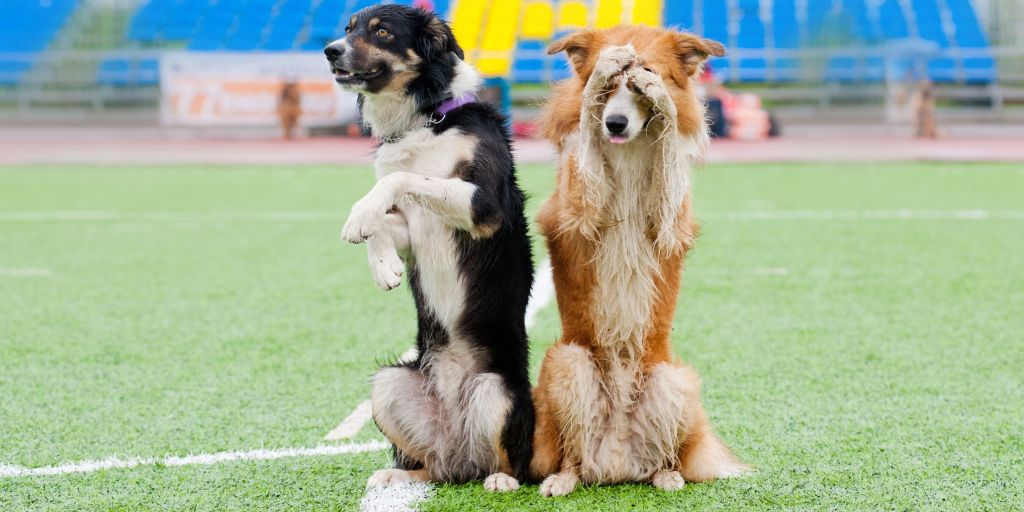
Training is a big one. Basic obedience, of course, but if you feel like your dog needs a challenge try training tricks. Tricks are a fun way to engage your dog, bond with your dog, and they’re super fun to show off to others.
Start with some simply tricks that are easy for most dogs to pick up. Shake a Paw is a pretty common trick that most dogs catch onto quickly. However, some dogs paw a lot to begin with, and so you may want to first consider whether your dog is like this. Boxers commonly like to use their paws a lot. When you train a dog like this to shake a paw it suddenly becomes their whole personality. They are the dog who shakes and shakes and shakes even when it’s not asked for. If you think this could happen to your dog, then I discourage training shake a paw.
There are lots of basic tricks to teach your dog such as roll over, sit pretty, spin, etc. and you can also build behaviors onto each other to create more complex tricks. Targeting (touching) your hand with their nose can then turn into closing a door or rolling a ball. There are literally hundreds of tricks you can teach your dog.
For more trick training ideas and tips check out Do More With Your Dog, where you can even get your dog titled for Trick Dog!
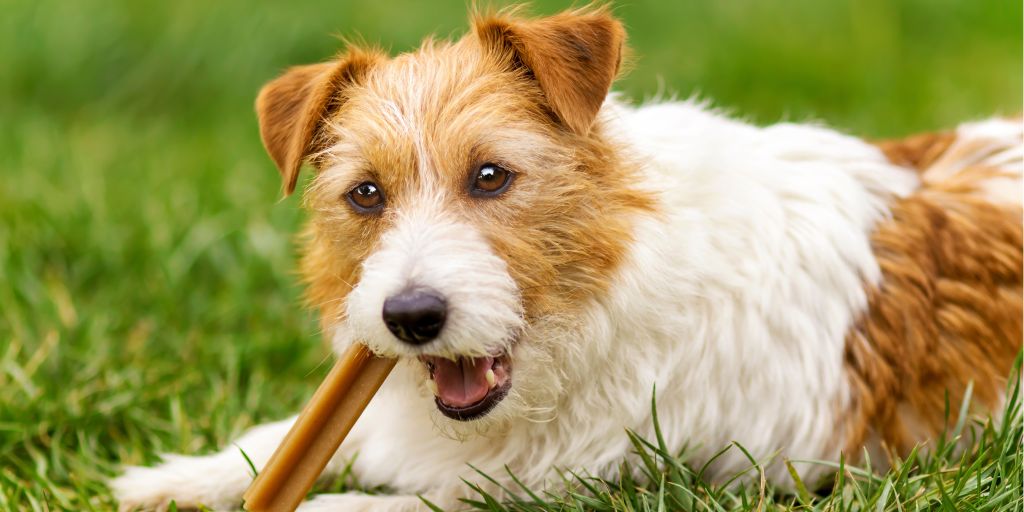
A good, deep chew is highly beneficial for a dog. It works their muscles, brain and promotes good oral hygiene (which helps fight bad breath). Chewing is also very instinctual; dogs will often find something to chew on if they’re not provided with it. Chewing releases endorphins which heightens the sense of pleasure and well-being for the dog.
To pick a good chew for your dog you will need to consider their size, breed, and personality. If your dog is a big, strong dog that loves to chew you’re going to need a big, strong chew. Something too hard can cause injury and break teeth. Something too soft can get stuck on teeth or tear to tiny pieces too easily. Something too big can be difficult to get a grip onto, which can also cause injury and may just build frustration in your dog. Something too small can get lodged in their throat or swallowed.
DON’T use hard, round balls or tennis balls. They are quite dangerous. Look for toys that are attached to a rope/handle or are hollow in the middle.
Raw meaty bones (RMB’s) an excellent source of protein and a good chew. Note; you should never give your dog cooked bones. Cooking makes the bones brittle and more likely to snap and splinter in sharp points that cane puncture and hurt your dog. RMB’s need to be selected based on size for the size of your dog. There is lots of information out there about raw feeding and using raw bones for recreational chewing. A great place to start is the Perfectly Rawsome website.
If you head to a pet store for a good chew product, it’s important to keep in mind that not all products sold as chews for dogs are actually safe for the dog. Rawhide is a great chew for a dog; as long as it’s been processed and prepared properly. Which unfortunately, cheap, bleached rawhide chews are often complete garbage and downright dangerous for your dog. A great alternative is to look for “pizzles” that are prepared naturally.
My personal favorite is a black Kong stuffed with peanut butter and treats. This will keep a dog busy and a Kong is a great toy for a heavy chewer. They vary in quality based on colour. Black Kongs are the strongest and least likely to be destroyed. Last I checked, they are also covered in Kong’s guarantee and if your dog does destroy a black Kong then the company will replace it.
PUZZLE TOYS
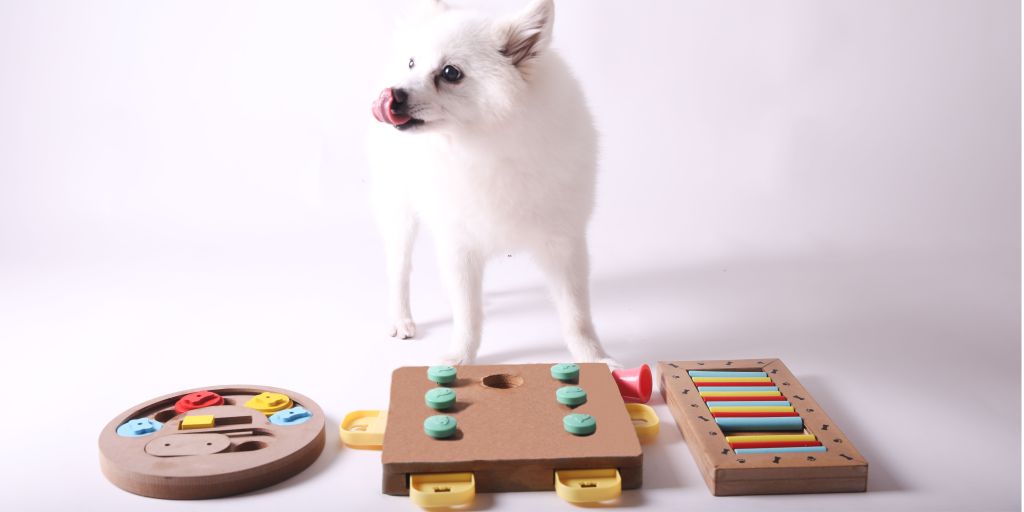
There are so many different kinds of really cool dog puzzle toys now. You can buy endless different kinds and you can also construct your own with objects found around your home. For example, you can lay out an old towel and sprinkle dog food or treats on it and then roll the towel up. Or place food in a muffin tin and cover each with a tennis ball. There are lots of ideas, The American Kennel Club has some good DIY ideas.
Here’s the catch on puzzle toys, and this is how I see them often fail for people; you have to train your dog how to use them. Some dogs may figure it out on their own, but I’d say most need to be taught what to do (or at least shown that there is food involved). For example, for the type of puzzle toys that has little sliding windows will need to be started with food in the compartments but with the doors open. The dog needs to first learn there is a reward in the compartments to have a desire to try to solve the puzzle. Next you would partly close the doors, and finally close them completely. You may add a level of difficulty with food in some compartments, but not others.
OBSTACLE COURSE
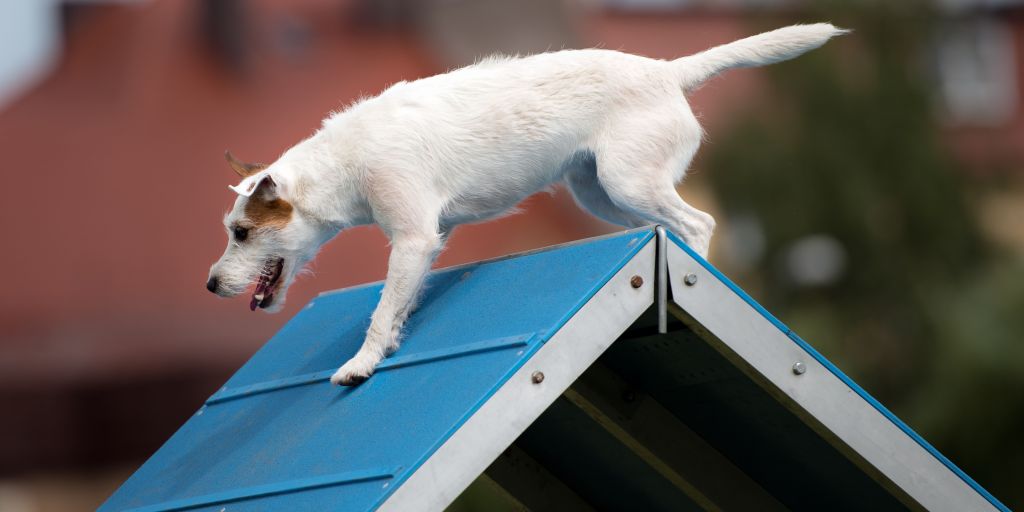
A great way to stimulate your dog both mentally and physically is obstacle course training. If you’re lucky enough to have a local dog agility club, then I highly recommend checking them out. If you have the ability and room then you can create some backyard agility equipment. Your obstacles don’t need to be dog agility regulation, unless you plan to compete in agility trials with your dog.
You don’t even need equipment, you can use your surroundings, so long as you take the time to train your dog properly. You need to be their spotter and you need to be aware of your dogs body language and what they’re telling you. You are there to guide them and teach them the behavior broken down in easy to understand steps. Using your surroundings as an obstacle course is called “parkour”, and when dogs do it it’s called “barkour”; which I think is adorable. You can use a wall, a tree, a playground, whatever you have access to with your dog. If you’re interested in this I recommend checking out the Instagram accounts @parkour.ninja and @parkour.dogs.
A note on “corrections”: A “correction” is a way to teach a dog that what they’ve done is wrong and not the behavior your requested. A correction may mean different things to different people, based on your training methods. It may involve a training collar (e-collar, prong collar, check chain, etc) or it may involve a firm “NO” followed by showing the dog the correct behavior and giving them an opportunity to try again.
I often tell my clients to make sure they are practicing their training around the house in “real life” scenarios. When you’re eating breakfast, have your dog down/stay in their bed. When your brewing your coffee or tea take a couple of minutes to practice a few commands in the kitchen. When you are leaving the house have your dog sit and wait before going through the front door. When you head out to water your flowers or take your garbage out bring your dog with you and work with their boundary training and recall (make sure you work at their level of training; use a long line if you need to).
If you get creative, there are lots of ways to incorporate training into your day-to-day life with your dog. It doesn’t have to be an hour dedicated to training every day or even every week. 5-minute training sessions once or twice a day will have a huge impact on your dog.
How else is the dog supposed to learn how to act under these conditions? In order to perform how I want her to under regular every-day conditions I need her to learn it in those conditions.
Here are a few examples of every day life training situations. This is not a step-by-step how-to post, but rather a detailed explanation of the type of training I’m talking about. If you’re looking for step-by-step instructions please feel free to send me a message and set up a consultation for a training session.
Condition Them to Touch
All dogs should be conditioned to touch so that they are not overwhelmed by it for basic care such as grooming and vet care. You can do this when you’re sitting at home watching TV. Put your dog in front of you and condition them to hands touching all over their body. Focus on touching their ears, mouth, paws, legs and tail. You can make a positive association by making a relaxing time of it and rewarding with treats.
If your dog will need to be on a grooming table, prop them up on a table at home and make positive associations for your dog in this scary situation. Some dogs feel really uneasy their first time up on a table. Make them feel more comfortable by getting them used to it through multiple exposures and associating something positive (like treats) with being on the table. For more about grooming your dog, check out my post Grooming and Care.
While conditioning your dog to touch, keep in mind the kind of touch that may be required for their basic grooming and vet care. This may involve picking the feet right up, holding it firmly and maybe even splaying the toes apart to be able to trim each nail. This will be uncomfortable and weird for your dog, so approach each type of touch separately. You will need a lot of patience and to condition your dog slowly in baby steps over the course of time. If you’re worried about giving your dog too many treats, you can hand-feed them using their kibble as a reward for accepting your touch. As long as you remember to use a meal rather than adding extra food, and as long as your dog actually likes their food, they will still make a positive association.
Boundary Train
Boundary training is by far one of the most important real life training. Teach your dog what spaces they’re allowed to be in and under what circumstances. Use cue words to let your dog know whether they can exit the property and establish a boundary that is easy for your dog to understand (such as the edge of the lawn). Take your dog out on a long line any time you are outside. You can practice it when you’re out gardening, enjoying the sunshine, shoveling snow etc. Let the long line drag behind your dog but keep an eye on them. As soon as they cross the boundary you’d like to establish correct your dog and put them back within the boundary. Work on this every time they’re outside with you and work on it often. Eventually your dog will learn where the boundary is and not to cross it.
You can also use this as an opportunity to work on your dogs recall. When your dog is away from you and distracted with just being a dog then use this as a chance to call them. Call your dog to you sporadically at random times when they’re in different places within the boundary. If they don’t come when called, you can use the long line to correct and/or guide your dog back to you.
Door Dashing
Teach your dog not to dash out of an open door. This should be a rule applied to when you’re leaving the house and in the case of a door left open. Teach your dog these techniques for the doors to your house and any gates that could be potentially left open and your dog escape. For example, one day when I was sick in bed, my husband was mowing the lawn and he left the gate open. My dog Zelda was inside, but the door was open with the screen closed and the cats like to open the screen door to let themselves out. If the screen is open enough for her to get her muzzle through then Zelda will push the screen door open too. Within 15 minutes she escaped and was long gone. We were able to track her down through posting on the community Facebook page and tracking sightings of her. After that I decided to teach her she was not allowed out of the gate unless one of us gave her the go ahead.
Likewise, your dog should learn not to dash out of any open doors. We have a split-level entry which makes getting in and out of our house crowded and annoying to begin with. Add an excited, uncontrolled dog into the mix and it’s a recipe for someone falling down the stairs. For this reason, I’ve taught Zelda not to dash down the stairs or out the front door.
Every time you open the door, have your dog sit and wait (on leash). If the dog dashes out the door correct them and put them back in the same spot or further back from the door. Every time you leave with your dog make them wait until you give a cue (‘lets go’, etc). The dog should not be allowed to leave the house through that door without the cue word.
Go To Place
Teach your dog to have a place that is just his to go lay down on. Teach a command to send your dog to his bed to keep him out from under foot, while you’re eating or when you have company over. “Go to bed” is a good cue to use. Teaching your dog to go to place will be a lot easier if they already know how to lay down and stay on command.
Going to place is a very handy “real world” command for your dog to know. Tell your dog to go to place when you’re eating meals, when you have guests over or whenever you just don’t want your dog under foot.
It’s very important that your dogs place (whether it’s a bed, blanket, crate or rug) is used by only the dog. Don’t allow children to play on it or other pets to lay on it. This is your dog’s safe space to relax.
If you’d like more information or help training any of the above “real world commands” please don’t hesitate to contact me to schedule a consultation and training session.






 Shara Walsh