Boundary Training

Dog Blog, FSJ Dog Training, Training Workshop

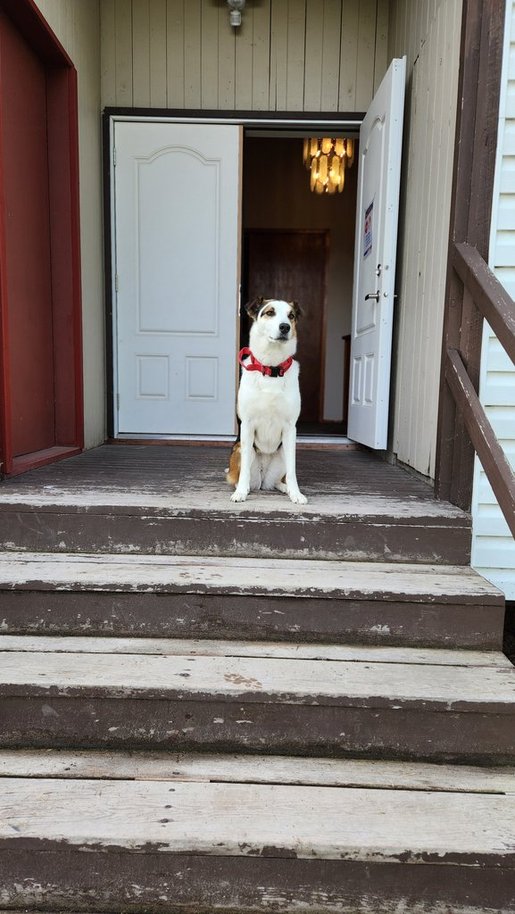
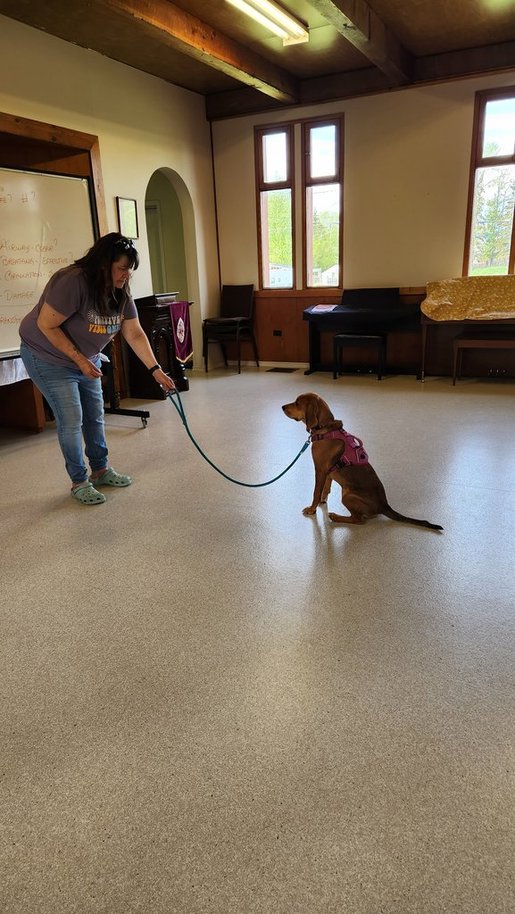
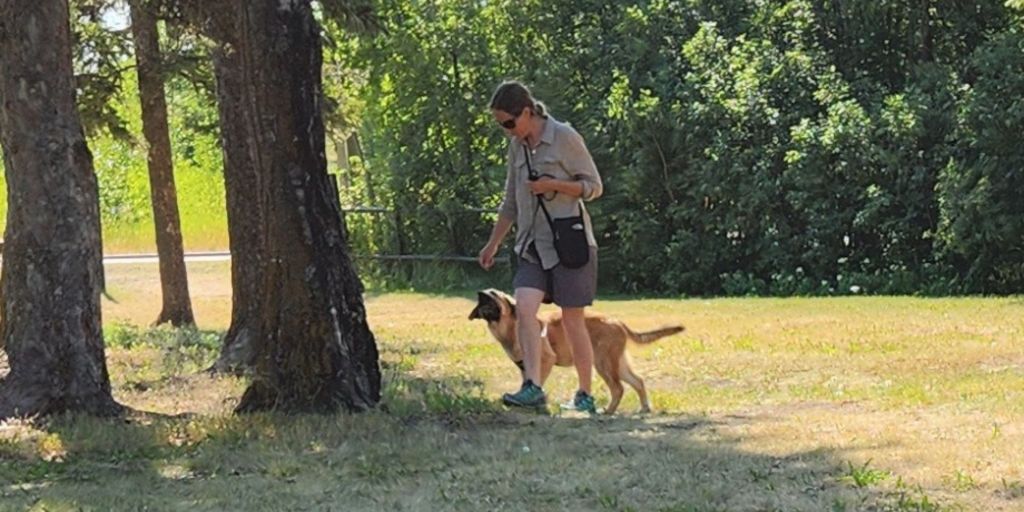
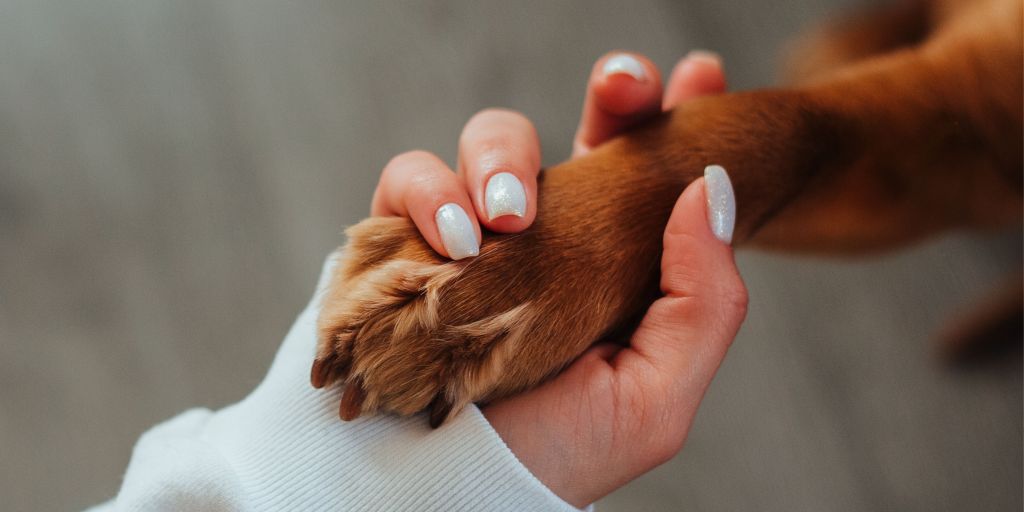
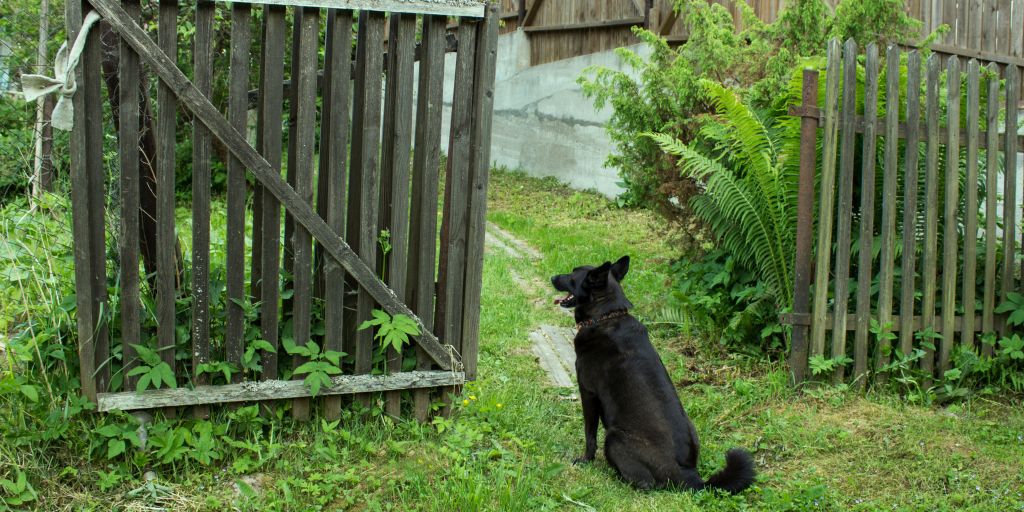
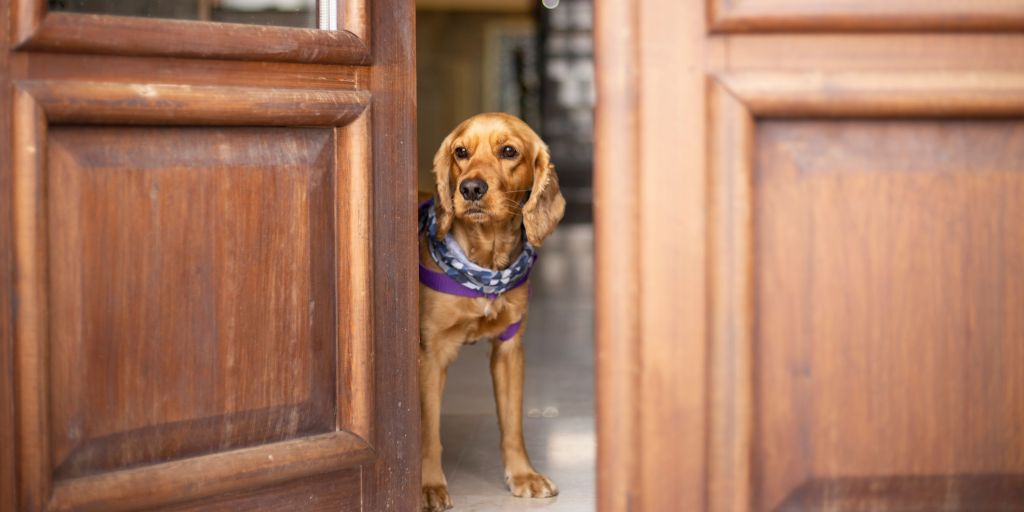
Boundary training is the process of training your dog to stay within a defined space. This may be your unfenced yard or to not bolt through open gates or doors.

DISCLAIMER: Boundary training is not for dogs with behavior problems such as aggression (towards dogs or people), high prey drive or for females in heat. Boundary training is also not a way to contain your dog and should only be implemented under supervision.

WHY BOUNDARY TRAIN YOUR DOG?

– keep your dog from bolting through open doors or gates
– lessens the chances of your dog slipping out and escaping
– teaches your dog self-control around distractions such as people or other dogs walking by
– your dog can learn to wait their turn to go through a doorway or gate
– you can work in your yard with peace of mind
– you can eat your meals in peace (includes a bonus piece about teaching your dog to stay out of a room)
– strengthens your bond with your dog

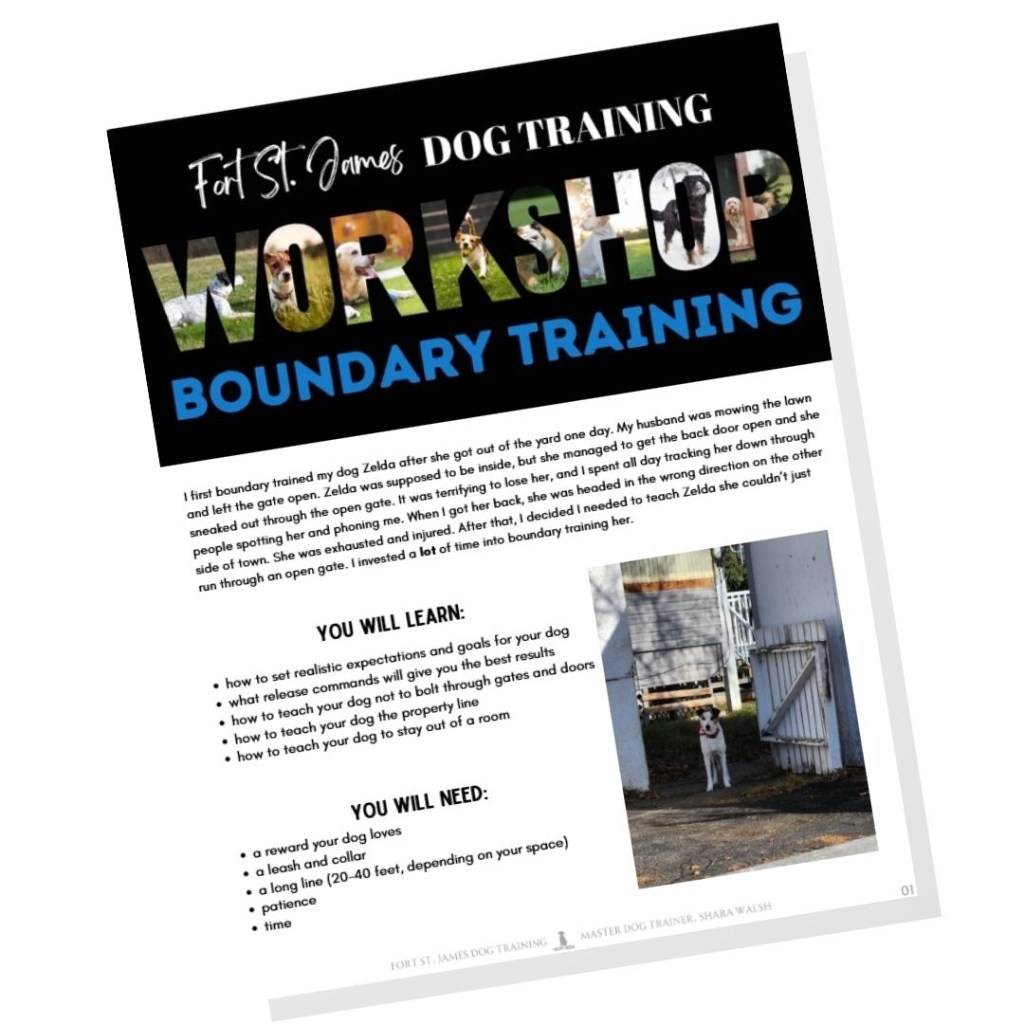
I recognize that people (and dogs!) don’t all learn new things the same way. Some people learn best by reading, some learn best by watching and listening and some learn best by doing. It’s with this understanding that I’m offering three ways to learn about boundary training; a 10 page PDF document, a 15:39 minute long video or a one-hour in-person training session. Both video file and training session come with the 10 page document. When it comes to boundary training, it’s best if the training is done in your home which makes a group training workshop impossible. However, I think with the combination of PDF document, video and in-person training anyone can learn to boundary train their dogs themselves.

Select which part of the workshop you’d like:

PDF document
15 minute video + PDF document
1 hour in person + PDF document

A NOTE ON THE IN-PERSON TRAINING SESSION:

My current availability to come to your house for a training session is Tuesdays between 10am and 2pm. I understand that this is not ideal for a lot of people, and I apologize for the inconvenience. It is just my current circumstances.

In-person training sessions are only available in Fort St. James.

July Update

Dog Blog, Dog Rescue, FSJ ACT, FSJ ACT, FSJ Dog Training, Monthly Update, Pack in the Park, Puppies in the Park, update

Apparently, after promising to at least commit to the monthly updates I completely skipped June. I really didn’t have a whole lot going on in June, to be honest. My group class (that only had one person) ended in the beginning of June and then I just focused my time on my family for a little while.

Dog training picked up in July and I’ve been semi-consistently busy this month. LOTS of puppies! Which is always fun, I love working with puppies (I mean, who doesn’t?).

FAVORITE NAME FOR JULY

I feel like I should say my favorite name for July is Nova, since that is my youngest daughters name, but I sorry Nova, I think I have to go with Mungo for my favorite dog name of July. It’s honestly just so fun to say. I’m not sure if it has any sort of meaning behind it, I really should have asked the owner. But it doesn’t even have to have any sort of meaning, it’s just fun to say.

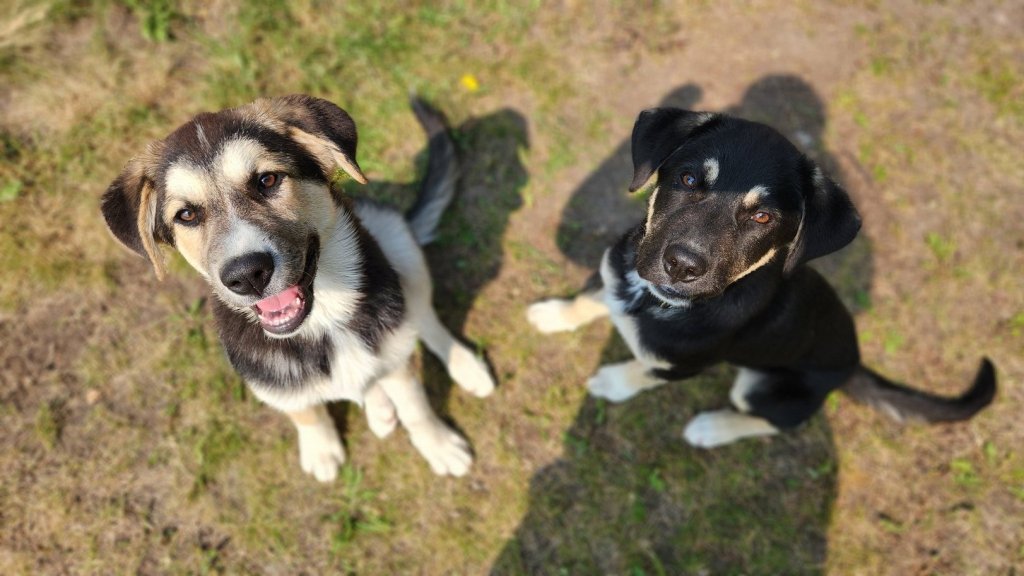
Mungo is one of the puppies that our Animal Care Team took in. In our care, his name was Dusky. He was a foster fail, and his new family just adores him and gave him the name Mungo. Which I think really suits him.

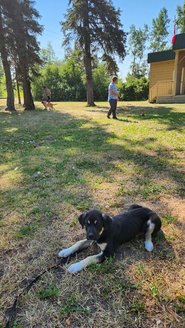
I didn’t get any photos of Mungo during our training session, but I did get the above photo of Mungo and his owner working beautifully together during Puppies in the Park.

FSJ ACTS UPDATE

FSJ ACTS officially has Society status now, which is so exciting. It means we will have access to a lot more funding. Unfortunately, we are still not a registered non-profit and can’t issue receipts for tax purposes, but with society status we will be able to help the animals just a bit more.

On July 7th I picked up my foster puppy Boss. FSJ ACTS has lots of puppies looking for homes that are currently in foster care. We have an awesome team of volunteers to help with kennel duty, but we wanted to give our volunteers a break and give our puppies a chance to learn how to live life in a family and home environment.

Boss has fit in really nicely. Zelda wasn’t too sure about him at first but he slowly grew on her and now they are Besties. He’s great with my two girls (7 and 2 years old) and is learning not to steal snacks or toys. He’s learning a lot of things in our house and I’ve given him a slow adjustment to house life. To make this easier for him to learn the rules (especially for house training) I have kept him on leash in the house a lot of the time. He gets leashed to either myself or a study piece of furniture so that I can keep him within eye sight at all times. He’s also been introduced to the cats. My older cat Jarroko has been extremely patient and the best cat to teach him the ropes about cats. My poor younger cat Alice is terrified of him and has been living behind the hot tub for the last couple weeks.

Boss knows how to sit, down and “go kennel”. He’s learning to sit at doorways and gates (this is very tough for him), he sits for his meals and he sits to be leashed. He is a very sweet boy who loves people and wants to please. This makes him quite trainable. He has the sweetest disposition and loves catching a nap in a good sun patch. Boss is also really great on leash and responds well to loose-leash training.

If you’re interested in adopting Boss, please let me know if you’d like to arrange to meet him!

FSJ ACTS FUNDRAISERS

For the month of July the Fort St. James Bottle Depot collected donations for FSJ ACTS. The total raised in the month was $1,000. Thank you SO much for your generosity. This money will go towards our vet bills.

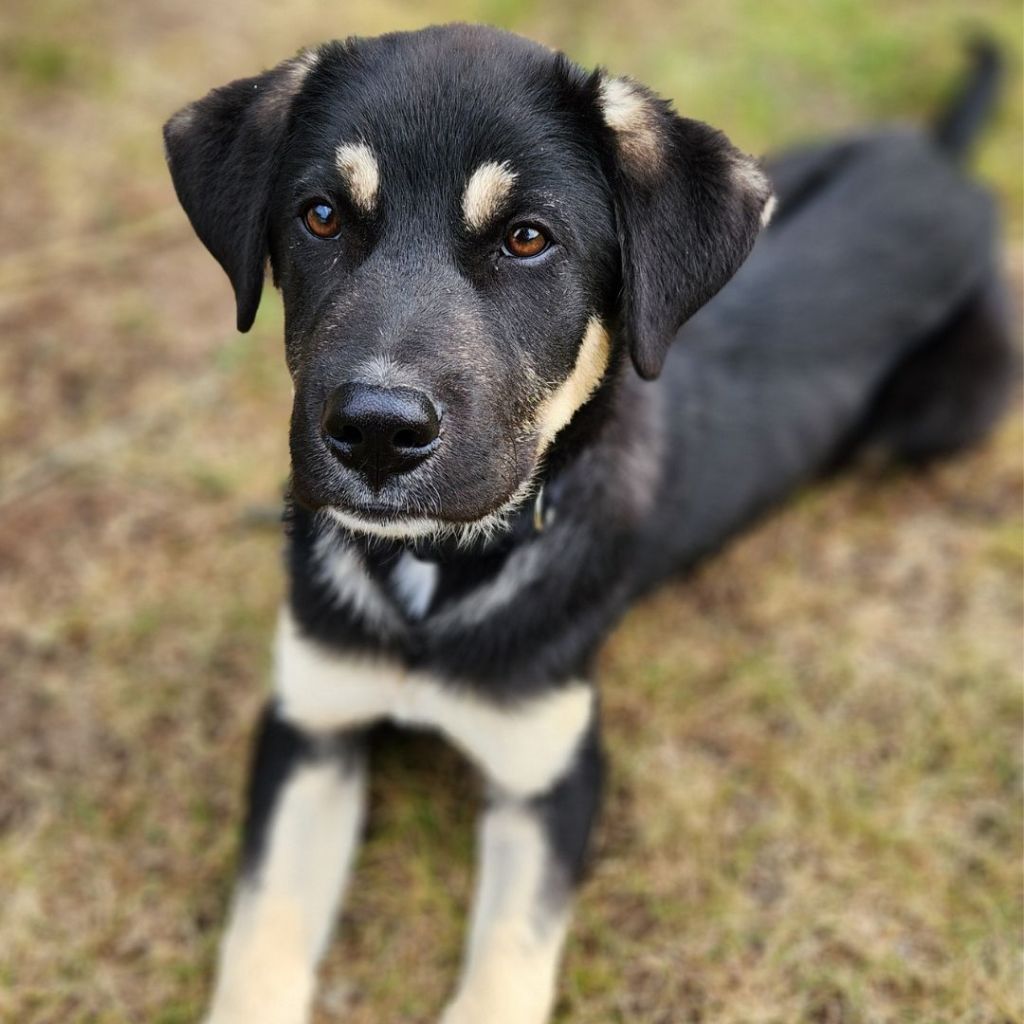
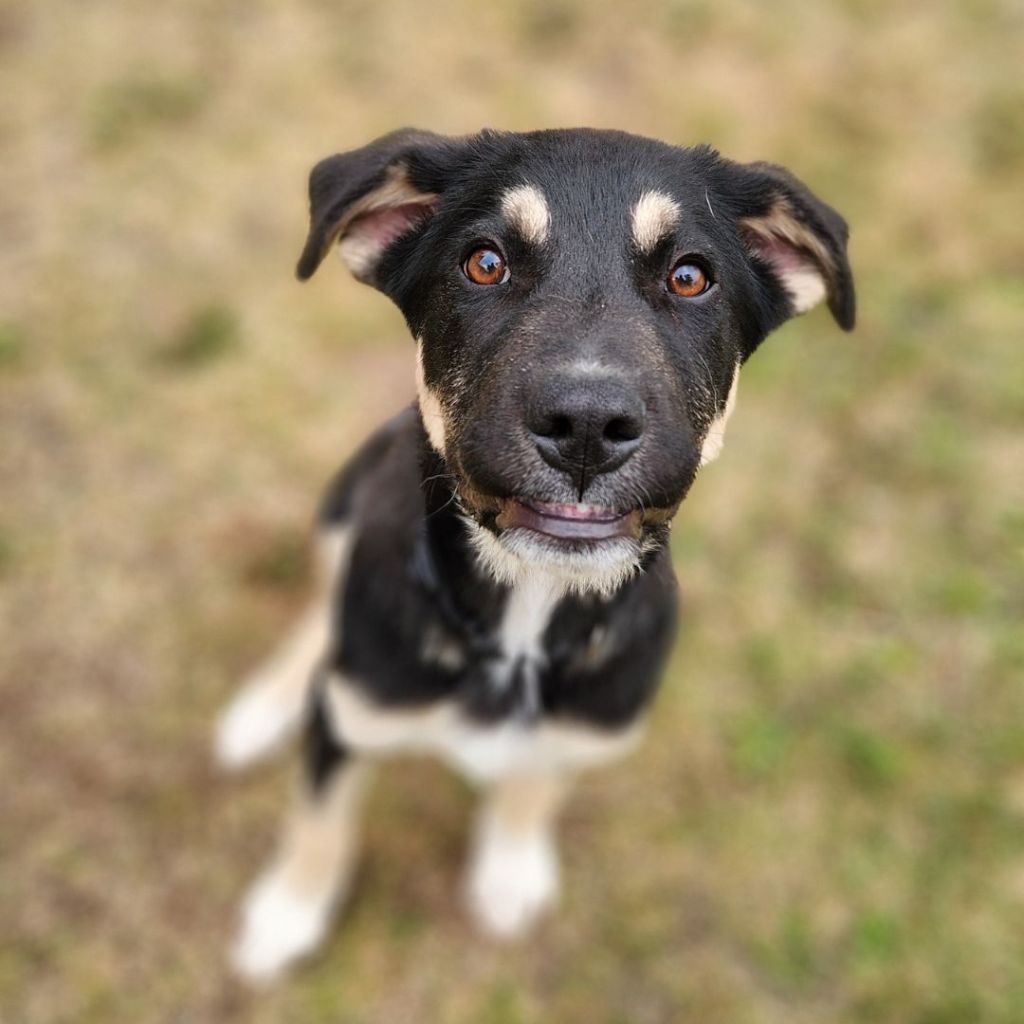
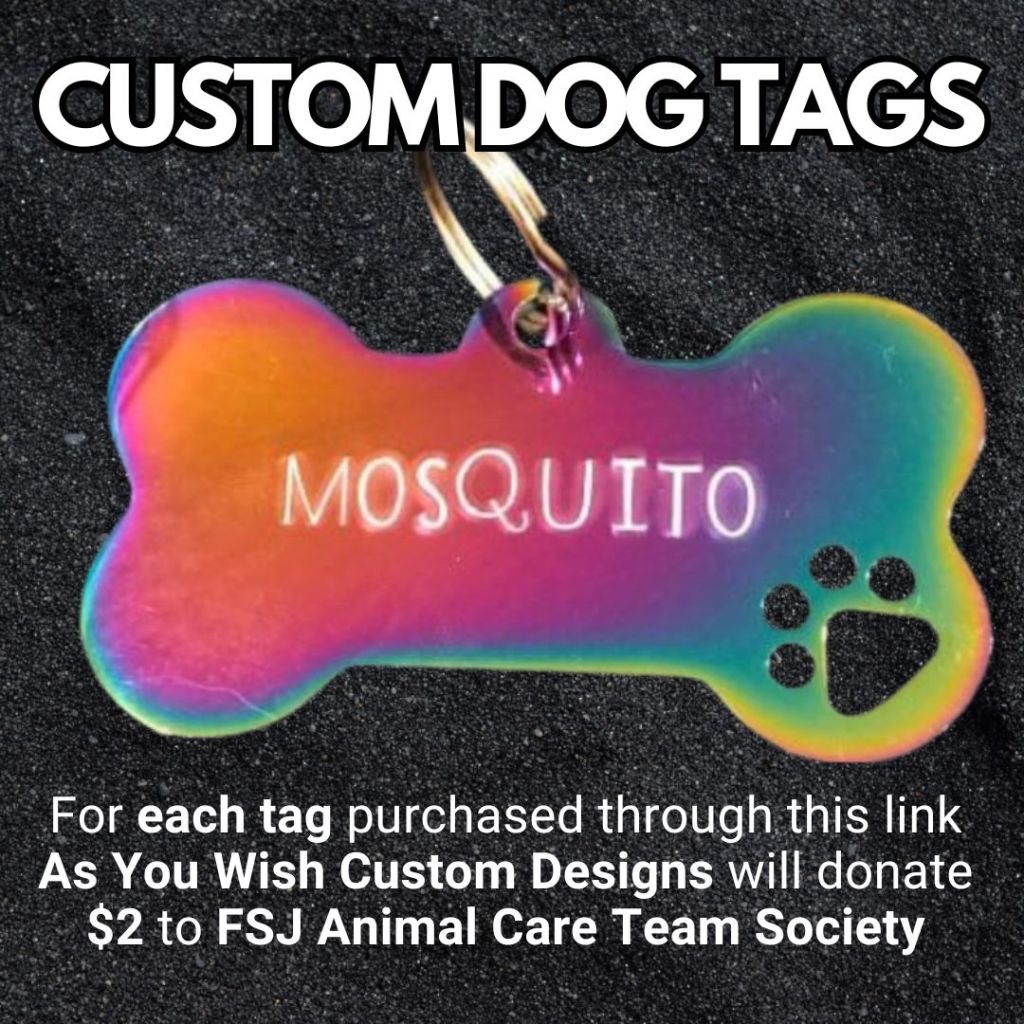
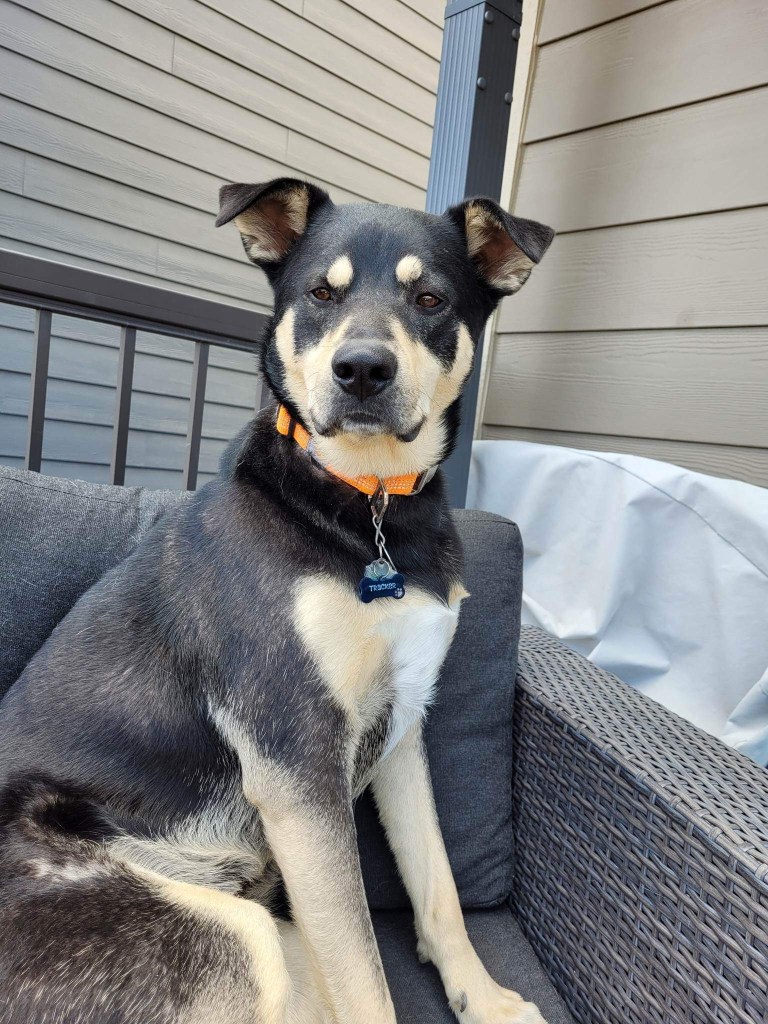
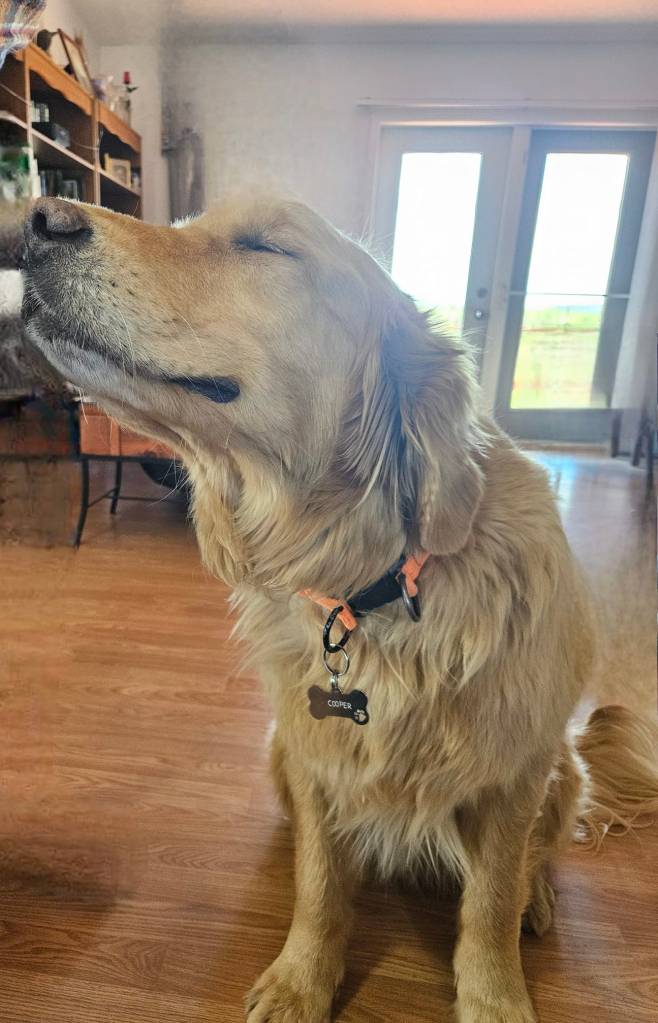
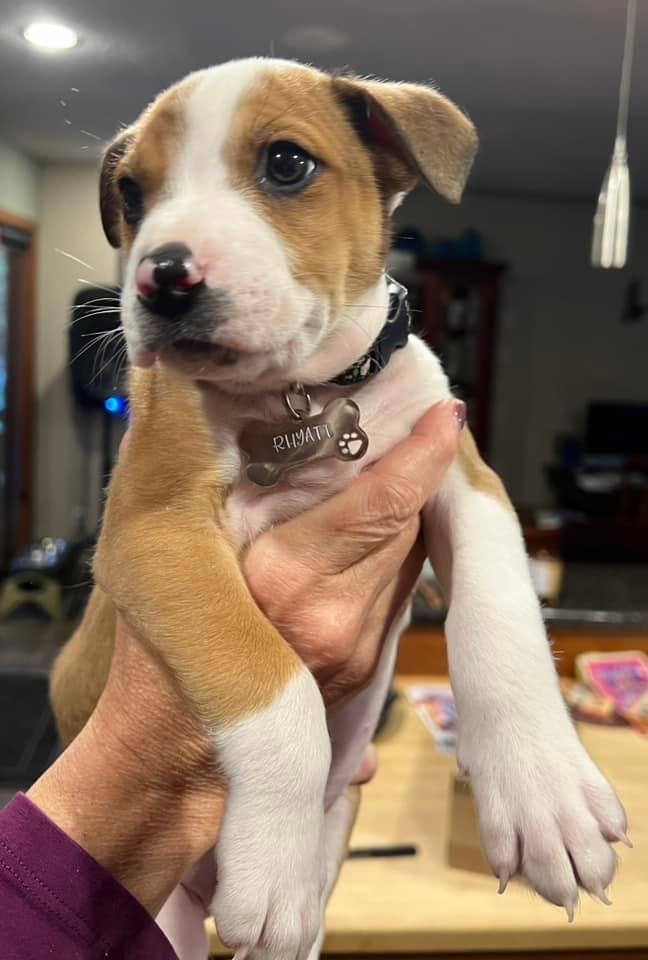
There is a fundraiser through As You Wish Custom Designs (based in Prince George) where $2 for every purchase goes to FSJ ACTS. FOLLOW THE LINK to order yours! Here are some handsome pooches with their stylish custom tags…

PUPPIES IN THE PARK

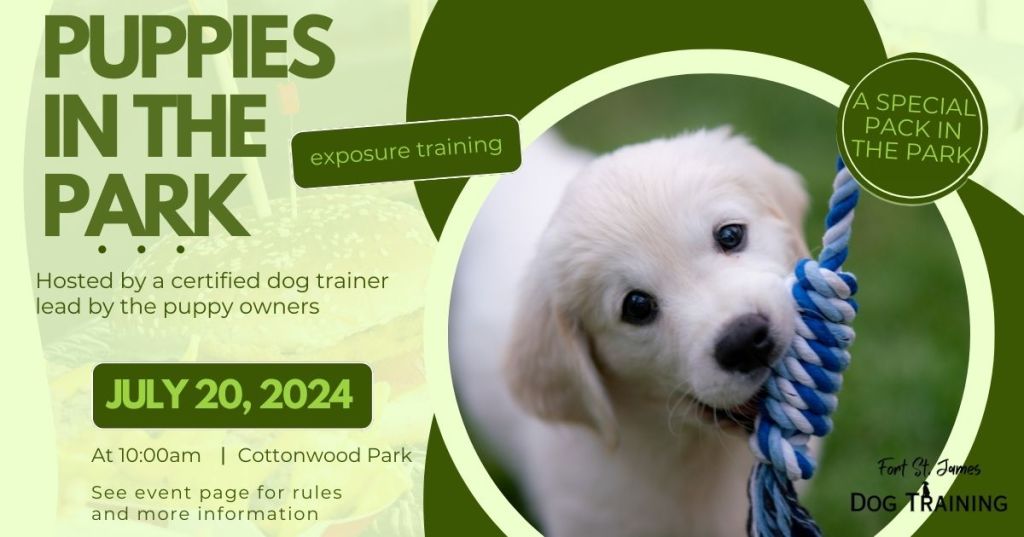
On July 20th I hosted the first Puppies in the Park; a spin on our classic “Pack in the Park” but it was for puppies up to 10 months old (who have been vaccinated). There’s a lot of fear about Parvo (and for good reason) so I had a lot of interest but a lot of puppies who aren’t vaccinated enough yet to attend public dog events like this. I had a couple of people attend and it was a blast of course, puppies always are, but there is a definite need to do this again next month once more puppies have had their shots.

I’ve had tons of people ask me about when I’ll do another Pack in the Park and I decided to create a texting list for those who want to be notified when the next Pack in the Park is happening. If you’d like to join this list, please let me know.

Dog Training: Watch Me

Dog Blog, FSJ Dog Training, GUIDE 5: DOG TRAINING, Training

Definition: look at my face/eyes

Command Variations: “watch”, “look”, dog’s name

Behavior: dog looks at you

Use: once you have a moment of your dogs attention on you then you can give the next command with a better success rate

I have been moving more and more towards using a dogs name for this command instead of “watch me”. Using the dog’s name to get their attention is a natural response for most people and it just makes sense to train it to your dog this way.

Once you have your dogs attention on you it’s much easier to redirect them to something else and give them the next command. You will have a higher success rate with your commands when your dog is paying attention.

How To Train “Watch Me”

Training your dog to look at you is actually really easy. Like all training, it requires consistent practice. Start in a low-distraction environment like a quiet room in your house. Decide which command you’re going to use first and stick with it. Make sure it’s a command everyone in the household will use. In this example we’ll be using the dogs name.

Give your command, “Fido” and then hold a treat next to your face at eye level. When your dog looks to your face cue the action as correct using a clicker or a cue word like “YES” and reward your dog with the treat. Repeat, repeat, repeat. Keep practicing until you feel your dog is looking to your face without the lure of the treat.

Add Distractions

It’s important to always gradually add distractions when training any new command. Once your dog is understanding without a lure in a quiet room move on to a less quiet room. Start throwing in distractions of other people, animals, and different places. You can test your dog out by throwing a small box across the floor, have someone else blow a whistle, push a chair past the dog, throw a toy etc. There are endless ways to test your dog out. Create the distraction and then give the command. If your dog struggles to perform the correct behavior then you need a bit more work in the quiet room or with a less distracting challenge. Slowly build those distractions inside your home and then try outside your home. Try in your yard and then move on to a local park, beach, down town etc. If your dog struggles with the new level of challenge then you need to take a step back and work a bit more at a lower challenge for a while before moving on.

Basic Obedience 4 Week Workshop

Dog Blog, FSJ Dog Training, Training Workshop

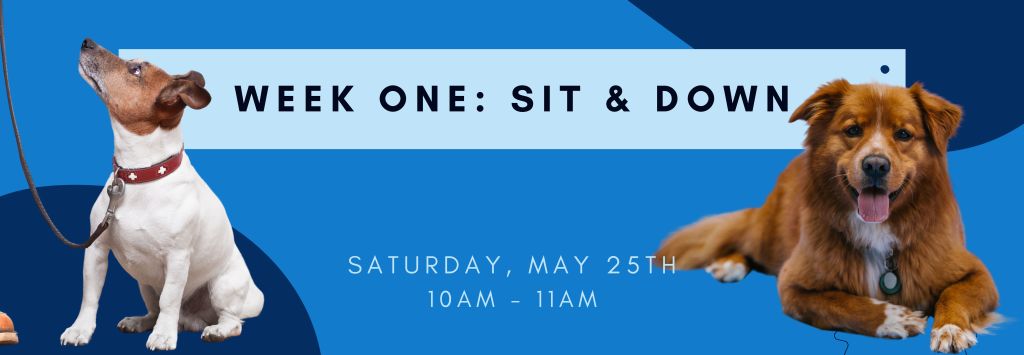
Starting May 25th

This is a four-week workshop that consists of one hour of class time per-week. There is practice time at the end of each class, but you will be expected to practice what you learn with your dog throughout the week between each class as well. The workshop covers basic obedience that can be taught to all levels and ages of dog.

PLEASE NOTE: intact female dogs in heat will not be allowed to attend this class.

YOU WILL LEARN:

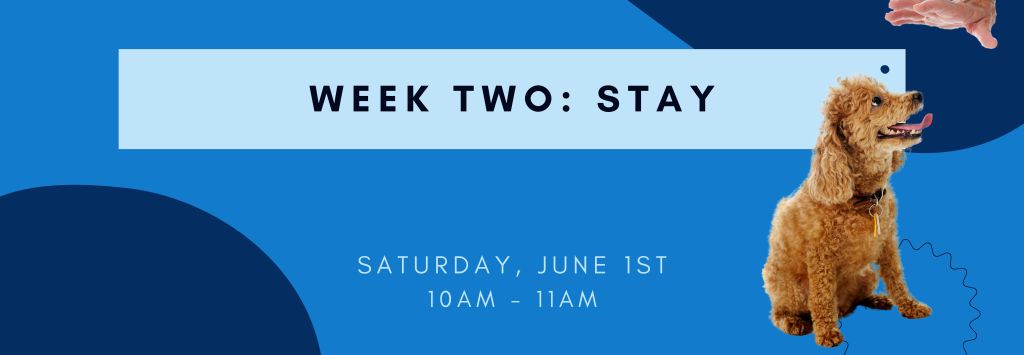
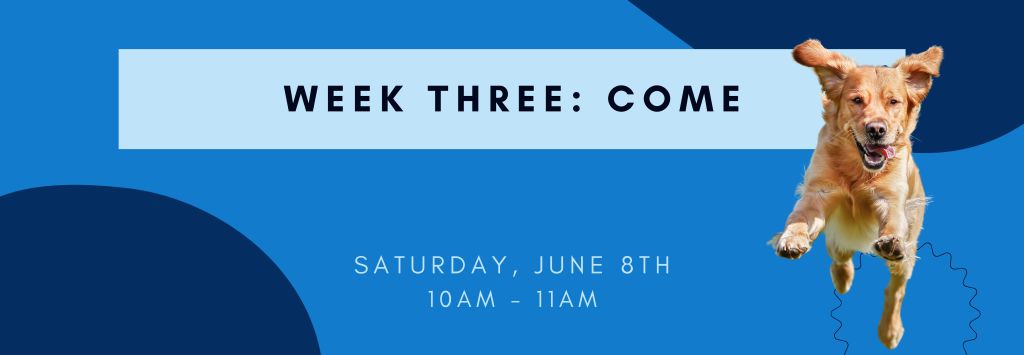
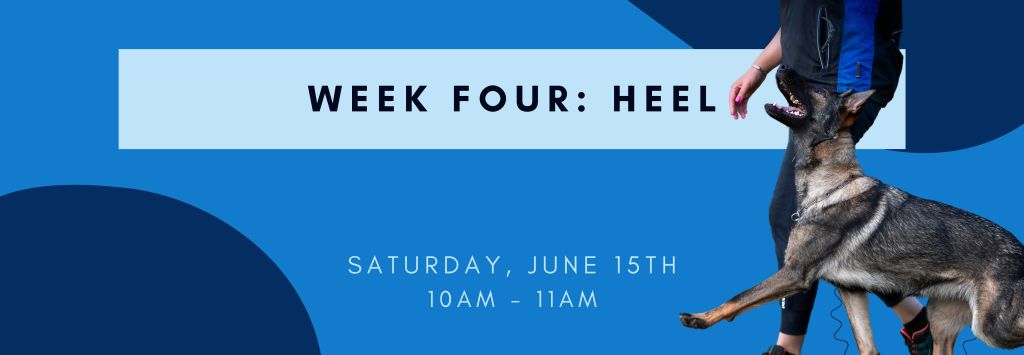
– the 5 basic commands; sit, down, stay, heel and come

– basic leash skills; how to hold your leash & types of appropriate leashes and collars

– building distractions and challenges

– all about cues, markers and lures

– automatic sit paired with commands

– how to use treats as rewards and how to phase them out

– how to hold your leash, types of leashes and appropriate leashes and collars

– how to use cues, markers, lures and commands

– how to train sit

– how to train down

– down vs off

– practice time

– building distractions and challenges

– how to train stay

– the stay circle

– how to use jackpot rewards

– practice time

– introduce the automatic sit

– “watch” command

– how to train recall (come)

– practice time

– phasing out treats

– how to train heel

– practice time

DISCLAIMER/RULES

This is not a dog social group.

This is not doggy play time.

This is an obedience class.

All dogs must remain on leash.

Dogs must not meet face-to-face during class.

You will see progress if you continuously work with your dog outside of class time.

You will not see progress if you don’t work with your dog outside of class time.

All owners must pick up after their dogs. (Poop bags & cleaners provided)

Don’t touch my demo dog Zelda without permission.

Don’t touch any of the other dogs without permission of the owner.

Training With Treats

Dog Blog, GUIDE 3: TRAINING TOOLS, GUIDE 5: DOG TRAINING

Training with treats is more common now than it used to be. When I took my course in 2007, our instructor told us that if we ever find ourselves using treats we should consider ourselves bad dog trainers. This stuck with me for many years until I found myself continuously reaching for them because it was the best way to make training fun for my dog. They seemed to make the connection faster when I used treats. I felt guilty about it for a while and then I thought maybe he was wrong? Many other trainers used treats and seemed to do well with it. I knew several trainers who trained with treats and had well-behaved and reliable dogs who could respond to commands off leash, in public and I rarely saw their trainer reward them with treats. I began to do some research about training with treats, purely positive training methods and what stumped me the most; how to remove the dependency on treats.

Training with treats is highly beneficial for your dog and your relationship with your dog. Using treats as a reward can boost the fun, eagerness to please, and encouragement for your dog. It gives a stronger connection of behavior to reward which helps the dog understand what type of behavior you’re asking from them.

You can use store bought treats or handmade. Learn to read ingredients on the bags of store bought treats, especially if your dog has any sensitivities or dietary restrictions. Look for labels with simple ingredients. For example; If your dog has food sensitivities you may need to look for something that is a single-protein treat.

If you make your treats at home, again, pay attention to the ingredients and whether your dog can handle eating them. Allergies and sensitivities are quite common in dogs these days. Making treats yourself can help you control exactly what is going into it.

TYPES OF TREATS

You don’t always have to use treats to train your dog, either. You can use scraps of meat, cheese or even the kibble from their dry dog food. If you use their kibble, make sure to use the portion amount they require for their size for one meal. Then skip giving them that meal in their dish, instead you will be giving it to them by hand. What type of treat you give your dog may depend on your dog. Some dogs are happy to eat their meal as a reward.

Sometimes flavored treats are too powerful and get a dog too excited during training. In that case, using their kibble can bring down that excitement to a manageable level while still acting as a reward to your dog. 

Other dogs are extremely picky. You may need extra smelly, high-value rewards for those types of dogs just to get them motivated at all. For dogs who are not motivated by treats, I recommend exploring other forms of “currency” for your dog. Some dogs respond better to praise and physical touch from their owners and others will respond better to a favorite toy. Sometimes treats just aren’t their thing, and that’s okay.

The type of treat can also depend on what type of behavior you’re working on and the skill level of your dog. If you’re training something new and they start getting that “ah ha! moment” where they begin to understand what you’re asking from them, a high-value reward can give them the extra encouragement that they need. A particularly difficult task may also require a high-value reward for extra encouragement. However, for some dogs that high value reward can get them so excited that they’re not actually paying attention or learning anything.

JACKPOT REWARDS

A “jackpot” reward is when you give a dog lots of treats for doing really well. When your dog gets that “ah ha!” moment and does the behavior you’re asking for. You want a little extra encouragement to let them know they got it right. You can also give jackpot rewards at random so that your dog never knows when that extra reward is coming and it will encourage them a little more during times when treats aren’t given. You can use jackpot rewards on really important commands such as recall as well, for that extra encouragement. 

Give a jackpot reward by giving more than one treat. When you give a dog a small pile of treats they’re going to gobble it up and enjoy that “one” treat. If you, instead, give the treats one after another then the dog thinks “oh wow I’m getting so many treats!” It was the same amount both times, but they seem to be able to count them better when it’s one after the other instead of all given together at once.

PHASE TREATS TO A MINIMUM

To keep your dog working for a treat without having to constantly carry treats in your pocket, you want to sort of phase out how often you use them and be completely unpredictable when you do give a food reward. Most things in dog training require consistency, but when it comes to giving treats; inconsistency is best. When first teaching a new behavior and command you want to consistently give treats when the dog gets it right. Give higher value rewards for getting it right (or at least, closer to being right) or for offering the behavior without the use of lures or physical force. Start phasing out treats once you feel your dog is understanding the behavior being asked. 

It doesn’t mean your dog isn’t getting a reward for performing the behavior correctly. You will still be rewarding your dog using a clicker, your voice, physical reward, and/or toy rewards. Don’t completely ditch the treats. You want to continue to give them to the dog as a reward at sporadic, random times. The goal is that the dog will not know when a high-value treat reward is coming and when you will give a reward in other ways. Mix up what type of rewards you give your dog at different times. If the dog never knows when to expect food they will be more likely to respond to your command; because this time they just might get that extra special reward.

Treats should start to be “phased out” when you know for sure your dog understands and eagerly completes the command correctly. If you try to phase them out too soon or too quickly then your dog may quickly loose interest or develop the mentality “well you don’t have treats so I don’t need to listen”. Do it slowly and the key is very sporadic when you offer treats vs when you don’t.

Dog Training is Not For the Weak

Dog Blog, FSJ Dog Training, GUIDE 5: DOG TRAINING, Real Life Training, Training

All dogs need training, regardless of what type of home they’re in or what their purpose might be. Not all dogs require the same level of training, but any dog living with or working with humans needs training to help communicate to them what the expectations are.

Dog training is “not for the weak”. It takes time, patience and endless repetitions. My husband gets annoyed with me training the dog around him because it is annoying to listen to if you’re not involved in it. It is repetition, repetition, repetition. People tend to look at me like I’m crazy when I tell them that to have a reliable recall you need to go get your dog EVERY time they’re not listening. Rain or shine. Shoes or no shoes. GO GET THEM. Consistent training requires dedication. If you don’t go get them every time they’re going to think “this time I don’t have to listen right away” or even “I don’t have to come back, they’re not coming to get me”. You let them get away with it before, so why not this time? No, you go get them every time and every time they’re going to think they’d better listen or you’re going to come get them anyway.

BE CONSISTENT

Another great example of how dog training is not for the weak is when you teach your dog a place command during your meal times. It’s very important to be consistent and reinforce the behavior whenever your dog moves from her place. This means that you will have to get up multiple times during your meals until your dog learns to stay in her place. You may end up with some cold meals for a few days, but in the long-run you will have hot meals you can enjoy without your dog begging or surfing for crumbs under the table.

Consistency is the key to dog training. Once you decide what behavior you don’t want (or do want) from you dog then you need to follow through every time to show them what they need to be doing. Every time you let it slide because you’re tired, don’t care, or have had enough then you’re making it harder for yourself next time you do have the energy and desire to follow through. It also makes it confusing for your dog when you’re not consistent. Follow through every time and it will get easier. You won’t need to correct the behavior as often and eventually you’ll find you don’t need to correct it at all. It takes a lot of self discipline to have a well-trained dog.

BE MORE SUBORN THAN YOUR DOG

Just like people, not all dogs are the same. You may have one dog that is so easy to train and another that is more difficult. One of these dogs is not better than the other, they each may require different approaches to training. As the trainer, you need to figure out what it is that will work for you and your dog. This is why I do a consultation before a training session with my clients. I need more information before our session so that I have time to figure out what will most likely work for that dog. Even with that information and planning I still sometimes find myself thinking on the fly trying to figure a dog out. My plan doesn’t always work. They are unique individuals who can’t speak our language to us. Training often takes a little bit of detective work.

Once you find what works, you then have to be incredibly consistent to communicate to your dog exactly what your boundaries and expectations are. Every single time your dog is surfing for crumbs under the table when you’re eating dinner you will put him back to his bed. Every single time she is barking at the fence and won’t come to you then you will go get her and bring her back to the spot you called her from. Every time they jump on a house guest you will correct the behavior with a sit. If your dog thinks you won’t always enforce the rules they will think they’re free to push those boundaries to figure out just how lax you will be. They start making up their own boundaries and expectations. You have to follow through every time to let your dog know you mean it. You will not play any silly games about it.

The only time you shouldn’t follow through on correcting your dogs unwanted behavior is when it is unsafe to do so. For example, when he runs into a busy highway it’s not wise to blindly chase after him. Maybe you have children with you and you can’t leave them or take them with you safely to pursue the dog. Things happen, sticky situations occur. The best way to avoid those is to be preventative. Leash your dog with a well functioning collar and leash. Work on their obedience often and add in distractions as they get better at it. Proof their training when they’re ready for it and add more and more levels of challenge.

BE DEDICATED TO TRAINING YOUR DOG

If you want a well-trained dog you have to dedicate your time and effort into training your dog. You need to prioritize your dogs training. When you schedule a training event with your dog then you need to make sure it is marked on your calendar. You don’t wait to see what you’re doing because this is what you’re doing. You are training your dog.

Having a well-trained dog takes dedication. It takes time, patience, persistence, consistency and time to creating a strong bond with your dog. Every dog should have training. Think about these two truths together: training a dog takes all of this work and dedication and every dog needs to be trained. This means that if you want to own a dog you need to be ready to dedicate the time and energy it takes to train them. If you’re not ready for that you shouldn’t have a dog. This may be a controversial opinion for some, but if you can’t provide the care an animal deserves then you don’t deserve to have the animal. I understand that things happen. People lose their jobs, their homes or illness/injury may happen that prevents them from providing proper care (which includes training). I totally get that life is not black and white and I make room for “shit happens”… but if you are thinking of getting a dog right now and you know you can’t dedicate this level of training then you should reconsider if a dog is the right pet for you. In the very least, make sure you heavily consider the type of dog you get. Some breeds of dog require way more time and energy than others. Some dogs are more difficult to train, some need constant physical and mental stimulation. Do your homework before getting a dog and make sure that the type of dog you choose is suitable to you and your lifestyle.

BOARD AND TRAIN

Some trainers offer “board and train” which is where the dog is boarded with the trainer for an amount of time and the trainer works with the dog every day in a home environment. This may be a great arrangement for some dogs with certain problem behaviors, but when it comes to the average dog I strongly believe the best person to put the work in is the dogs owner.

Training is a way to communicate to your dog what you want from them. It’s also a good way to teach your dog to communicate with you so that their needs are met. Teaching a dog to ring a bell or bark to be let outside is way to train them to communicate with you. Some people go as far as to train their dogs to push buttons to actually talk to their humans (seriously, check it out; it is cool to watch). You don’t have to go that far with training your dog, but you should at least train the 5 basic commands: sit, down, stay, heel and recall (come). With those basic commands you can help your dog navigate your world in a way that is safe and acceptable.

The good news is that you won’t have to dedicate this level of training into your dog for their entire life. Once they understand the rules you set and once they learn that you will always follow through, they will test those boundaries less and less and respond desirable, more often. You will have a well responding dog eventually. You will still need to follow through should they forget the rules or decide one day to test you, but it won’t be as often as when you first started training. You won’t be running bare foot through the snow for the rest of your dogs life (and hey, throw some shoes by the back door if you’re really worried about that one). Training is a commitment for your dogs entire life, but the most important is the foundation you will set early in your training.

You should want to train your dog yourself. Training your dog builds a deep bond with your dog. Dogs are “mans best friend” because of their devotion to us. You will never find a human who loves as unconditionally and as forgiving as a dog. You owe it to them to teach them how to live in our world in a way that is respectful and kind. You owe it to them to socialize, raise, and train them in a way that they will understand.

ARM YOURSELF WITH KNOWLEDGE

You also owe it to your dog to take the time to learn their language too. You are different species living in cohabitation. If you expect your dog to learn the rules of the house then you’d better also learn your dog’s basic language. It is an art in subtlety; the way dogs communicate; and it will take time to learn and time to submit it to practice.

Hiring a dog trainer to help you is a great place to start. You can also start looking online, as there is a wealth of information there (although I do have a word of caution: you have to learn to tell what is right from wrong). You can start with my blog post about teaching kids warning signs from dogs.

I always try to be open to different training methods because I never know when that knowledge will come in handy. Dogs are individuals with individual personalities, breed traits, and thoughts. Dogs are emotional beings which will often shape their perception of the world. Understanding all of this, it’s no surprise that there are so many different training methods. As long as the method is not harmful, it should be considered as part of the “training tool inventory”.

Hiring a dog trainer can help you navigate this big world and find what will work best for your dog. Once your trainer has helped you get started it’s up to you to maintain that training and apply it to your every day life.

Mental Stimulation

Dog Blog, FSJ Dog Training, Real Life Training, Training, Trick Training

Dogs are smart beings that have several needs, and one that is often overlooked is their need for mental stimulation. The more you train your dog the more they will use their brain. A dog who is often challenged and taught new behaviors will actually learn to use those behaviors and problem solve on their own (at least, to the degree a dog is capable to). If not given enough mental stimulation (and physical exercise) a dog will often become bored and restless. This is when destructive behaviors start to occur. This is especially true for dogs who are naturally smart (some breeds that are naturally more intelligent would be border collies, Australian cattle dogs, standard poodles… basically any dog that was originally bred to do a job that requires some independent thinking and problem solving) if you don’t give a smart dog something to do they will find something to do for themselves. This will often be behaviors such as excessive barking, digging, fence jumping, or destructive chewing. There are several ways to fulfill your dogs needs for mental stimulation.

TRICK TRAINING

Training is a big one. Basic obedience, of course, but if you feel like your dog needs a challenge try training tricks. Tricks are a fun way to engage your dog, bond with your dog, and they’re super fun to show off to others.

Start with some simply tricks that are easy for most dogs to pick up. Shake a Paw is a pretty common trick that most dogs catch onto quickly. However, some dogs paw a lot to begin with, and so you may want to first consider whether your dog is like this. Boxers commonly like to use their paws a lot. When you train a dog like this to shake a paw it suddenly becomes their whole personality. They are the dog who shakes and shakes and shakes even when it’s not asked for. If you think this could happen to your dog, then I discourage training shake a paw.

There are lots of basic tricks to teach your dog such as roll over, sit pretty, spin, etc. and you can also build behaviors onto each other to create more complex tricks. Targeting (touching) your hand with their nose can then turn into closing a door or rolling a ball. There are literally hundreds of tricks you can teach your dog.

For more trick training ideas and tips check out Do More With Your Dog, where you can even get your dog titled for Trick Dog!
TRICK OF THE MONTH

February – Target
March – Center

CHEWS

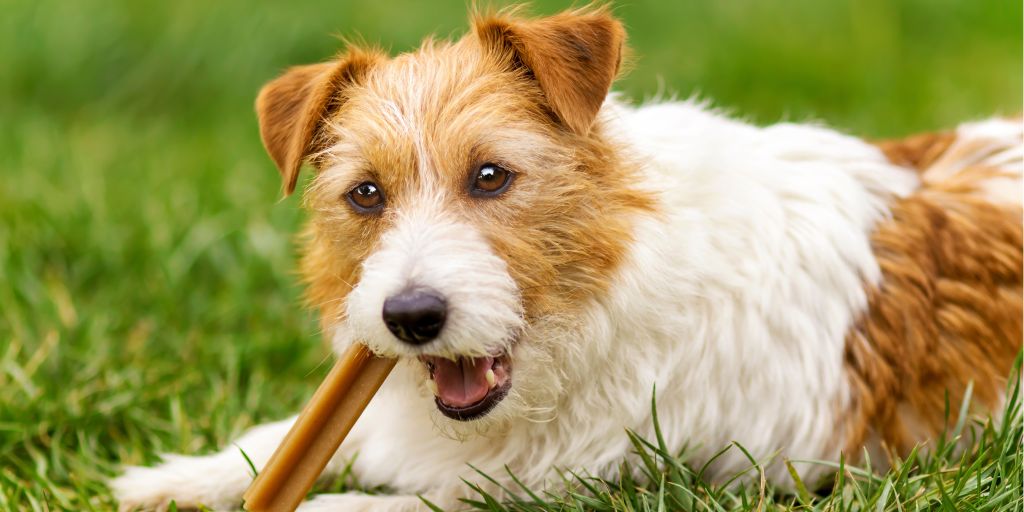
A good, deep chew is highly beneficial for a dog. It works their muscles, brain and promotes good oral hygiene (which helps fight bad breath). Chewing is also very instinctual; dogs will often find something to chew on if they’re not provided with it. Chewing releases endorphins which heightens the sense of pleasure and well-being for the dog.

To pick a good chew for your dog you will need to consider their size, breed, and personality. If your dog is a big, strong dog that loves to chew you’re going to need a big, strong chew. Something too hard can cause injury and break teeth. Something too soft can get stuck on teeth or tear to tiny pieces too easily. Something too big can be difficult to get a grip onto, which can also cause injury and may just build frustration in your dog. Something too small can get lodged in their throat or swallowed.

DON’T use hard, round balls or tennis balls. They are quite dangerous. Look for toys that are attached to a rope/handle or are hollow in the middle.

Raw meaty bones (RMB’s) an excellent source of protein and a good chew. Note; you should never give your dog cooked bones. Cooking makes the bones brittle and more likely to snap and splinter in sharp points that cane puncture and hurt your dog. RMB’s need to be selected based on size for the size of your dog. There is lots of information out there about raw feeding and using raw bones for recreational chewing. A great place to start is the Perfectly Rawsome website.

If you head to a pet store for a good chew product, it’s important to keep in mind that not all products sold as chews for dogs are actually safe for the dog. Rawhide is a great chew for a dog; as long as it’s been processed and prepared properly. Which unfortunately, cheap, bleached rawhide chews are often complete garbage and downright dangerous for your dog. A great alternative is to look for “pizzles” that are prepared naturally.

My personal favorite is a black Kong stuffed with peanut butter and treats. This will keep a dog busy and a Kong is a great toy for a heavy chewer. They vary in quality based on colour. Black Kongs are the strongest and least likely to be destroyed. Last I checked, they are also covered in Kong’s guarantee and if your dog does destroy a black Kong then the company will replace it.

PUZZLE TOYS

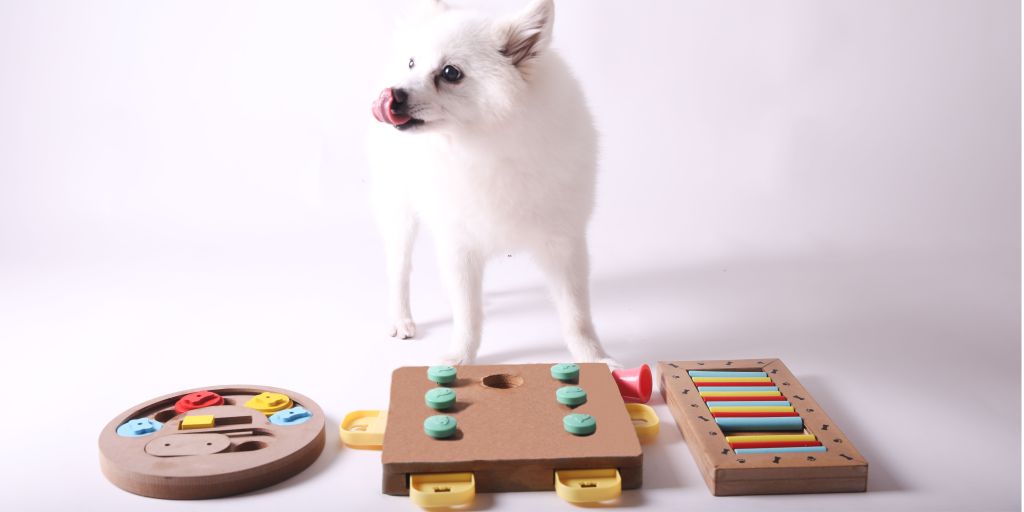
There are so many different kinds of really cool dog puzzle toys now. You can buy endless different kinds and you can also construct your own with objects found around your home. For example, you can lay out an old towel and sprinkle dog food or treats on it and then roll the towel up. Or place food in a muffin tin and cover each with a tennis ball. There are lots of ideas, The American Kennel Club has some good DIY ideas.

Here’s the catch on puzzle toys, and this is how I see them often fail for people; you have to train your dog how to use them. Some dogs may figure it out on their own, but I’d say most need to be taught what to do (or at least shown that there is food involved). For example, for the type of puzzle toys that has little sliding windows will need to be started with food in the compartments but with the doors open. The dog needs to first learn there is a reward in the compartments to have a desire to try to solve the puzzle. Next you would partly close the doors, and finally close them completely. You may add a level of difficulty with food in some compartments, but not others.

OBSTACLE COURSE

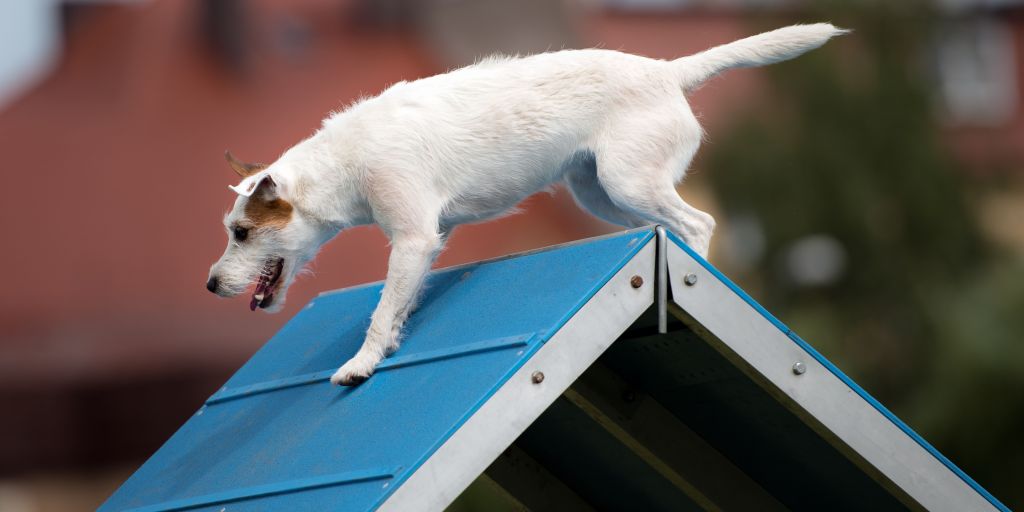
A great way to stimulate your dog both mentally and physically is obstacle course training. If you’re lucky enough to have a local dog agility club, then I highly recommend checking them out. If you have the ability and room then you can create some backyard agility equipment. Your obstacles don’t need to be dog agility regulation, unless you plan to compete in agility trials with your dog.

You don’t even need equipment, you can use your surroundings, so long as you take the time to train your dog properly. You need to be their spotter and you need to be aware of your dogs body language and what they’re telling you. You are there to guide them and teach them the behavior broken down in easy to understand steps. Using your surroundings as an obstacle course is called “parkour”, and when dogs do it it’s called “barkour”; which I think is adorable. You can use a wall, a tree, a playground, whatever you have access to with your dog. If you’re interested in this I recommend checking out the Instagram accounts @parkour.ninja and @parkour.dogs.

“Real Life” Training

Dog Blog, FSJ Dog Training, GUIDE 5: DOG TRAINING, Real Life Training, Training, Vet Care

Jump to: [ Condition to Touch ] [Boundary Training ] [ Door Dashing ] [ Go to Place ]

A note on “corrections”: A “correction” is a way to teach a dog that what they’ve done is wrong and not the behavior your requested. A correction may mean different things to different people, based on your training methods. It may involve a training collar (e-collar, prong collar, check chain, etc) or it may involve a firm “NO” followed by showing the dog the correct behavior and giving them an opportunity to try again.

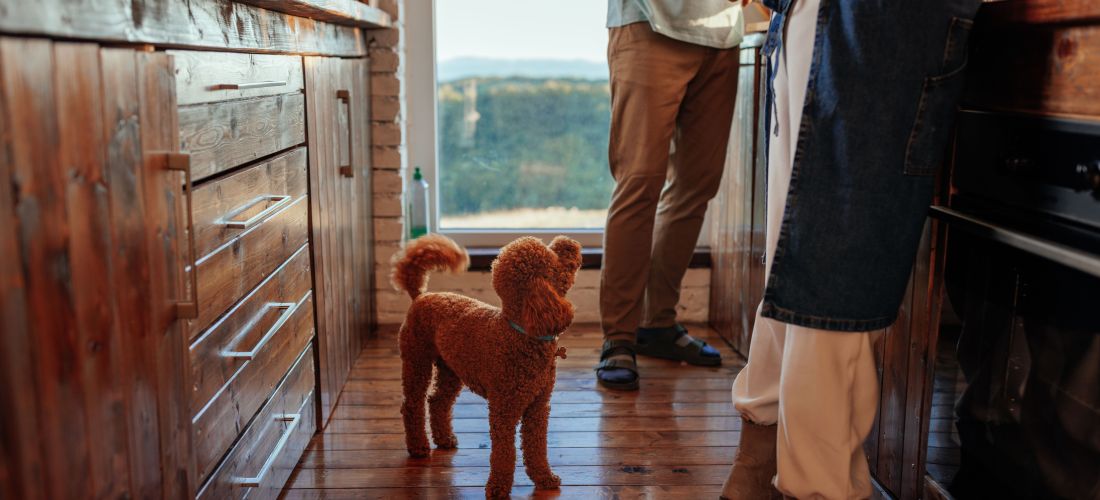
I often tell my clients to make sure they are practicing their training around the house in “real life” scenarios. When you’re eating breakfast, have your dog down/stay in their bed. When your brewing your coffee or tea take a couple of minutes to practice a few commands in the kitchen. When you are leaving the house have your dog sit and wait before going through the front door. When you head out to water your flowers or take your garbage out bring your dog with you and work with their boundary training and recall (make sure you work at their level of training; use a long line if you need to).

If you get creative, there are lots of ways to incorporate training into your day-to-day life with your dog. It doesn’t have to be an hour dedicated to training every day or even every week. 5-minute training sessions once or twice a day will have a huge impact on your dog.

How else is the dog supposed to learn how to act under these conditions? In order to perform how I want her to under regular every-day conditions I need her to learn it in those conditions.

Here are a few examples of every day life training situations. This is not a step-by-step how-to post, but rather a detailed explanation of the type of training I’m talking about. If you’re looking for step-by-step instructions please feel free to send me a message and set up a consultation for a training session.

Condition Them to Touch

All dogs should be conditioned to touch so that they are not overwhelmed by it for basic care such as grooming and vet care. You can do this when you’re sitting at home watching TV. Put your dog in front of you and condition them to hands touching all over their body. Focus on touching their ears, mouth, paws, legs and tail. You can make a positive association by making a relaxing time of it and rewarding with treats.

If your dog will need to be on a grooming table, prop them up on a table at home and make positive associations for your dog in this scary situation. Some dogs feel really uneasy their first time up on a table. Make them feel more comfortable by getting them used to it through multiple exposures and associating something positive (like treats) with being on the table. For more about grooming your dog, check out my post Grooming and Care.

While conditioning your dog to touch, keep in mind the kind of touch that may be required for their basic grooming and vet care. This may involve picking the feet right up, holding it firmly and maybe even splaying the toes apart to be able to trim each nail. This will be uncomfortable and weird for your dog, so approach each type of touch separately. You will need a lot of patience and to condition your dog slowly in baby steps over the course of time. If you’re worried about giving your dog too many treats, you can hand-feed them using their kibble as a reward for accepting your touch. As long as you remember to use a meal rather than adding extra food, and as long as your dog actually likes their food, they will still make a positive association.

Boundary Train

Boundary training is by far one of the most important real life training. Teach your dog what spaces they’re allowed to be in and under what circumstances. Use cue words to let your dog know whether they can exit the property and establish a boundary that is easy for your dog to understand (such as the edge of the lawn). Take your dog out on a long line any time you are outside. You can practice it when you’re out gardening, enjoying the sunshine, shoveling snow etc. Let the long line drag behind your dog but keep an eye on them. As soon as they cross the boundary you’d like to establish correct your dog and put them back within the boundary. Work on this every time they’re outside with you and work on it often. Eventually your dog will learn where the boundary is and not to cross it.

You can also use this as an opportunity to work on your dogs recall. When your dog is away from you and distracted with just being a dog then use this as a chance to call them. Call your dog to you sporadically at random times when they’re in different places within the boundary. If they don’t come when called, you can use the long line to correct and/or guide your dog back to you.

Door Dashing

Teach your dog not to dash out of an open door. This should be a rule applied to when you’re leaving the house and in the case of a door left open. Teach your dog these techniques for the doors to your house and any gates that could be potentially left open and your dog escape. For example, one day when I was sick in bed, my husband was mowing the lawn and he left the gate open. My dog Zelda was inside, but the door was open with the screen closed and the cats like to open the screen door to let themselves out. If the screen is open enough for her to get her muzzle through then Zelda will push the screen door open too. Within 15 minutes she escaped and was long gone. We were able to track her down through posting on the community Facebook page and tracking sightings of her. After that I decided to teach her she was not allowed out of the gate unless one of us gave her the go ahead.

Likewise, your dog should learn not to dash out of any open doors. We have a split-level entry which makes getting in and out of our house crowded and annoying to begin with. Add an excited, uncontrolled dog into the mix and it’s a recipe for someone falling down the stairs. For this reason, I’ve taught Zelda not to dash down the stairs or out the front door.

Every time you open the door, have your dog sit and wait (on leash). If the dog dashes out the door correct them and put them back in the same spot or further back from the door. Every time you leave with your dog make them wait until you give a cue (‘lets go’, etc). The dog should not be allowed to leave the house through that door without the cue word.

Go To Place

Teach your dog to have a place that is just his to go lay down on. Teach a command to send your dog to his bed to keep him out from under foot, while you’re eating or when you have company over. “Go to bed” is a good cue to use. Teaching your dog to go to place will be a lot easier if they already know how to lay down and stay on command.

Going to place is a very handy “real world” command for your dog to know. Tell your dog to go to place when you’re eating meals, when you have guests over or whenever you just don’t want your dog under foot.

It’s very important that your dogs place (whether it’s a bed, blanket, crate or rug) is used by only the dog. Don’t allow children to play on it or other pets to lay on it. This is your dog’s safe space to relax.

If you’d like more information or help training any of the above “real world commands” please don’t hesitate to contact me to schedule a consultation and training session.

What Can You Expect from FSJ Dog Training?

Dog Blog, FSJ Dog Training, update

I get a lot of confusion on how my dog training is set up. I don’t have group classes (at this time), you don’t get a certificate of completion when your dog is done training with me, there is no structured repeated sessions unless you want them. What I do is customize your training session so that you get the most success out of it. I do not stick to one type of training method, I use many methods and many training tools to help support the owners training goals, their dog’s individual personality as well as the personal morals of the owner. If you don’t want to use a training collar we will find another way. If you don’t like using treats we will work on phasing them out and relying on other forms of praise. I’m here to help you and support you during your training journey with your dog.

My name is Shara and I run Fort St. James Dog Training. I got my certification for Advanced Obedience & Kennel Management and Master Dog Trainer in 2007, and my certificate for Behavior Evaluator in 2008. I stopped training for a long time and focused on starting my family and my artwork until 2023 when I jumped back into dog training. I was certified for Canine CPR and Emergency First Aid in the summer of 2023.

There are several steps to getting a training session set up with me, and I will walk you through the process below.

Step One: First Contact

It is up to you, the owner, to contact me. There are many ways people do this, but my preferred method of contact is via email (slsartistryinfo@gmail.com) or Facebook Messenger on my Fort St. James Dog Training page.

When you first contact me, there really isn’t a lot of need to go into too much detail about your dog and any problem behaviors you’re experiencing. We will cover all of that very soon. All I need to know is that you’re interested, you’d like to get some training on your dog, and whether you live in Fort St. James or one of the surrounding towns and communities.

I will give you the same speech I give everyone who contacts me, I want to be upfront and transparent about my style of training, the cost, and what my training sessions feature. For the sake of this post, I will get into more detail on these features below.

Step Two: Consultation

Before your session can be booked you will first need to do a consultation. The consultation helps me understand what your goals are for your dog, your morals around different training methods, and information about your dog so that I know what kind of training methods they may respond to best and where any problem behaviors may be stemming from. All of the information I gather during the consultation helps me to put together a training session for you that is custom-designed to meet your needs.

There are two ways to complete the consultation.

The Online Consultation is $20 CAD and most convenient for you and myself because you can fill it out whenever and I will take the time to go over it when it’s best for me (I usually go over it within 24 hours of you submitting your online consultation).

The Over-the-Phone Consultation is $40 CAD and because we get to talk over the phone there is more back-and-forth, allowing follow up and extra questions that I may come up with as we go over the consultation questions. You also get a chance to ask me any questions you may have and I am able to get a little more in-depth information to best create your training session. The over-the-phone consultation sometimes takes longer to take place due to scheduling conflicts.

The same questionnaire is used for both consultations, but the over-the-phone consultation allows for back-and-forth conversation.

Step Three: Book The Training Session

The training session can be booked at any time, but if you do not pay for and complete the consultation by 2 days before your scheduled session, then it will be canceled.

Your training session can be booked through my Online Booking Calendar or by Facebook Messenger, e-mail or over the phone with me.

My current available times are Tuesdays and Thursday 11AM or 1PM. If these times don’t work for you I can make arrangements to book on the weekend or a different day, but it may take me time to arrange childcare (whereas I already have it lined up for Tues and Thurs).

Step Four: Your Training Session

The type of training session you receive will be decided by me after reviewing your consultation. Most owners have an idea of what type of session they will need before I tell them, though. Each training session is 1-hour long. This is a very long time to train a dog for (you usually want to spend 5-10 minutes on it at a time) but we spend a lot of time discussing a lot of things and we will spend 1/4 to 1/2 the session actually working hands-on with your dog.

A Note on Articles

I write a lot of articles to go with many common topics. I will give you either a paper copy or PDF digital copy of these articles based on your consultation and your training session. It will be on topics that relate to what we discuss and what you and your dog are learning.

Most of these articles are still heavily in the editing phase, so I ask all my clients to ignore basic typos and grammar errors, but to let me know if the wording doesn’t make sense or something isn’t explained very clearly.

Step Five: Follow Up

I am here to help you with your dog. I want to know if you run into any problems or the advice I give you doesn’t work. I also want to know if it does! I have no way of knowing if you’re successful in reaching your training goals with my aid unless you keep in touch and tell me. I always love hearing updates from my clients.
If something isn’t helpful or your struggling with it then I want to know so that I can further help you. Once you are signed up for dog training with me I am committed to helping you for the rest of your dogs life! You can contact me any time with any problem or success. If I feel like you have a lot of problems or particular things to work on, or that it might be more helpful for me to be able to demonstrate with your dog in-person then I might suggest another training session.

If you need additional sessions, the type of session will be decided on after a brief conversation with you during booking. A consultation is not required for additional sessions that are within 6 months of each other. If it’s been 6 months or longer you will need to purchase a consultation again.

Dog Reactive vs Dog Aggressive

Dog Blog, Pack in the Park

Dogs who are dog aggressive can be dog reactive but it doesn’t mean all dog reactive dogs are aggressive. Aggression is really the intention behind the behavior, whereas reactivity is the behavior itself, and therefore there is all kinds of intent behind reactivity.

What is Dog Aggression?

Dog aggression is when what fuels a dogs behavior is the desire to act aggressively. They want to attack another dog because they enjoy the act of attacking. Dogs who are acting aggressively will often bark, growl, snarl, lunge, hold their tails high and actually wag their tails. Something in their brain has been wired to enjoy the aggressive act. The chemical release in their brain is so rewarding when they bite, shake, tear etc that it encourages them to keep doing it. They just enjoy it.

One often missed signal is a dog wagging it’s tail when it reacts aggressively. People often think “he was wagging his tail, he wasn’t being aggressive” but the reason he was wagging his tail was because he was enjoying being aggressive.

It’s been my experience that most dog’s aren’t truly aggressive but instead fall somewhere under “reactive”.

What is Dog Reactivity?

A reactive dog is one that doesn’t behave ideally when encountering other dogs, people, animals etc. A dog reactive dog will react in an undesirable way when it sees another dog. This behavior can widely vary from nervous behavior, i.e.; cowering, pulling away, rolling over, barking, and under pressure may result in a growl and eventually if pushed hard enough, a bite. There is a wide scale of dog reactivity and not all dogs will react the same.

Some reactive dogs just have no clue how to greet another dog. They get way too excited at the sight of another dog. They just want to get to them, they want to introduce themselves and become best friends. These are often the “my dog is friendly” types. The dog is friendly but way too exuberant. If on leash this can display in loud, obnoxious behavior, i.e.; jumping, barking, lunging, screeching/screaming, dragging the owner etc. When off leash these dogs bound up to everyone they meet, whether anyone else wants to meet them or not. They don’t take social cues from other dogs, they don’t seem to understand canine etiquette. They push their friendship on everyone.

Then there’s a whole myriad of dogs in between who may react in different ways when encountering another dog on a walk. Basically, any behavior other than walking calmly at their owners side is considered “reactive” behavior.

A Growl Doesn’t Always Mean Aggression

A dog’s growl is a form of communication. It doesn’t always equal aggression. In fact, really aggressive dogs don’t waste their time with a warning they just go straight to their aggressive behavior. A growl is just that; a warning. It is a way for dogs to communicate that they don’t like what someone else is doing. It’s their way of saying “I don’t like that, please stop”. A growl doesn’t indicate aggression. In fact, I think a growl is a very important tool.

If you punish your dog when they growl you are essentially teaching them that their voice doesn’t matter. You should never punish a growl. If a growl is punished enough, the dog will stop using it. They will go straight from feeling uncomfortable to biting. They will skip the warning because you’ve taught them their warning is bad. Any dog, if pushed enough, can react with a bite. Most of those dogs would rather give a warning growl firsts before resorting to a bite though.

Don’t punish a dog for growling. Instead, take it as the warning that is is, and respect your dogs wishes. Remove them (or the other dog, or whatever it may be that they growled at) and bring them back to a space (both physically and mentally) where they feel safe and secure again. Respect the growl because it’s the most respectful thing your dog can do when they’re feeling cornered, scared, or uneasy in any way.

How to Deal With Reactivity

The best way to overcome your dogs reactivity is to slowly expose them to more and more to the things that they react to. You want to do it at a distance that allows your dog to be comfortable. They may show curiosity but they shouldn’t be barking, lunging, pulling etc. If they are reacting that means you need to put more distance between them and the stimuli (the dog they’re reacting to). Move to a distance they are comfortable with and then praise and refocus them with basic obedience training.

Our Pack in the Park exposure training is a great way to work with dogs that are reactive.